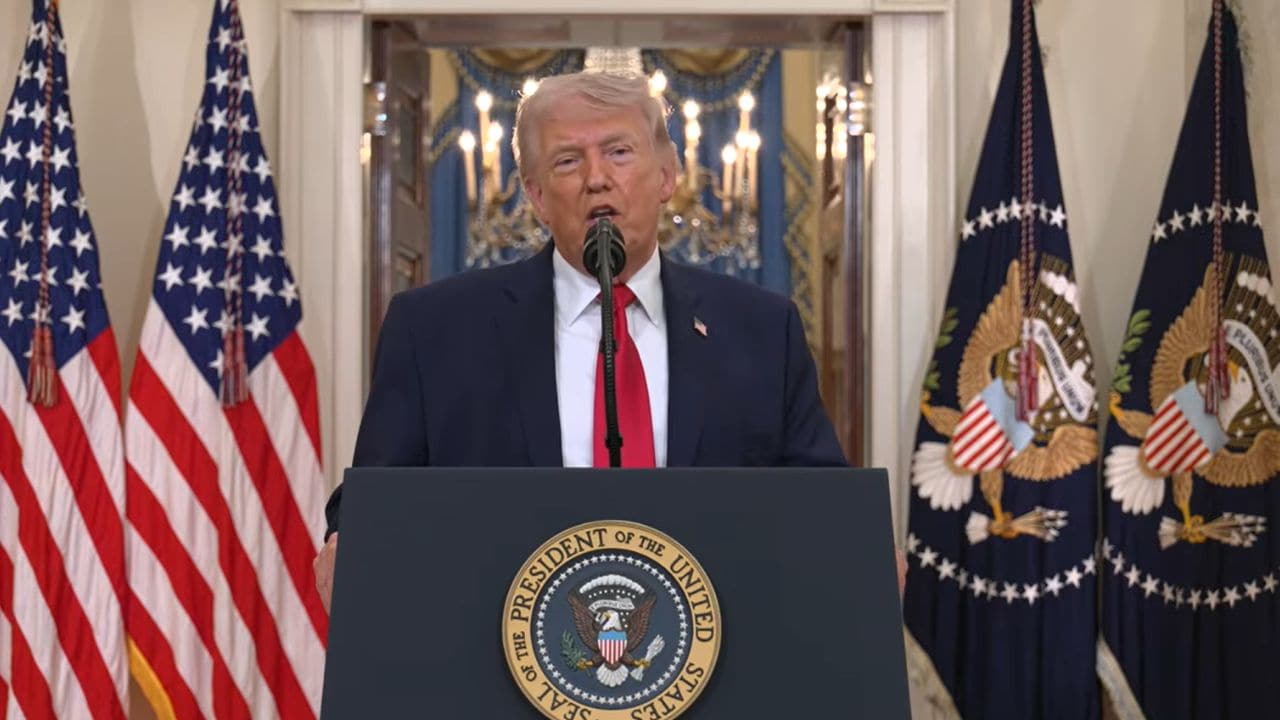
The pause in kinetic operations against Iranian targets represents a calculated recalibration of the escalatory ladder rather than a cessation of hostilities. This maneuver functions as a stress test for Iranian command and control, designed to determine if the Teheran leadership maintains the operational authority to halt proxy activity or if the regional network has transitioned into a decentralized, autonomous state. By establishing a fourteen-day window contingent on a specific condition—likely the verifiable cessation of militia strikes on U.S. assets or progress in nuclear transparency—the administration shifted the burden of escalation from Washington to the Islamic Revolutionary Guard Corps (IRGC).
The Strategic Logic of a Time-Bound Ultimatum
The two-week duration is not an arbitrary selection; it mirrors the logistical and diplomatic cycle required to verify behavioral shifts on the ground. A shorter window would be insufficient for the IRGC to transmit and enforce orders across its disparate network in Iraq, Syria, and Yemen. A longer window would allow the Iranian regime to reorganize its defenses and mitigate the impact of previous strikes. This timeframe forces a binary choice within the Iranian "Deep State": comply and risk appearing weak to domestic hardliners, or continue operations and provide the U.S. with the moral and strategic justification for a massive, uninhibited kinetic campaign.
The mechanism of "conditional restraint" creates a feedback loop. In game theory, this is a TIT-FOR-TAT strategy where the first move is cooperative but subsequent moves are dictated by the opponent’s previous action. The administration is essentially pricing the cost of peace. If Iran fails to meet the condition, the subsequent strikes are no longer viewed as isolated aggressive acts but as the inevitable outcome of Iranian non-compliance.
Quantifying the Threshold of Success
Success in this context is defined by three specific metrics that move beyond vague notions of "stability."
- Kinetic Silence: A total cessation of rocket, drone, and IED attacks against U.S. personnel and diplomatic facilities. This is a binary metric.
- Proxy Decoupling: Observational data showing a lack of coordination between Tehran and groups like Kata'ib Hezbollah or the Houthis. If the proxies continue to fire while Tehran claims a ceasefire, the U.S. gains the intelligence needed to map the internal fractures of the Iranian "Axis of Resistance."
- Nuclear Compliance Velocity: If the condition involves the IAEA, success is measured by the immediate granting of access to disputed sites.
The primary bottleneck in this strategy is the "Sovereignty Gap." The U.S. assumes Tehran can control its proxies with 100% efficiency. If a rogue local commander fires a single drone, does that constitute a violation? The administration’s refusal to define the margin of error suggests a "Zero Tolerance" policy, which places the Iranian leadership in a high-stakes position where they are responsible for the actions of their least disciplined allies.
The Cost Function of Iranian Non-Compliance
Should the two-week pause expire without meeting the stated conditions, the return to kinetic operations will likely follow a "Rapid Dominance" model. The previous strikes were likely calibrated to degrade capability without triggering a total regional war. Post-pause, the target list shifts from munitions depots to "High-Value Infrastructure" and leadership nodes.
The cost for Iran is not just physical; it is economic and structural.
- Asset Depletion: Every interceptor fired by Iran costs significantly more than the munitions being neutralized.
- Political Legitimacy: A failure to stop the bombing after being given a clear out-ramp erodes the regime's standing with its own population, which is already under severe economic duress.
- Strategic Encirclement: The pause allows the U.S. to solidify its coalition. Allies who were hesitant to support a "hot war" are more likely to join a coalition if they perceive the U.S. as the party that exhausted all diplomatic avenues.
The Intelligence Imperative during the Interregnum
The fourteen-day period is an "Intelligence Goldmine." When a military force pauses, its opponent inevitably moves. Signals intelligence (SIGINT) will be focused on the internal communications within the Iranian military hierarchy.
- Traffic Analysis: Are orders being sent to stand down, or are they moving assets into hardened shelters?
- Human Intelligence (HUMINT): The pause creates a window for potential defectors or informants within the Iranian system to provide data, fearing the "inevitable" escalation that follows a failed ceasefire.
- Imagery Intelligence (IMINT): Satellite coverage will monitor the movement of mobile missile launchers. If Iran uses the pause to reposition offensive assets, it signals an intent to strike rather than comply.
This data allows the U.S. to refine its "Target Folder." If the pause fails, the first sixty minutes of the resumed campaign will be informed by two weeks of fresh, high-fidelity intelligence on exactly where the regime's most critical assets are hidden.
Diplomatic Friction and Global Oil Markets
The energy sector views these two weeks as a volatility dampener. However, the market is pricing in the "Expiration Risk." While the pause may cause a temporary dip in Brent Crude prices, the looming deadline creates a "Pre-Strike Premium." Traders are hedging against the possibility that Day 15 results in strikes on Iranian energy infrastructure or a blockage of the Strait of Hormuz.
The diplomatic landscape is equally fraught. European allies see the pause as an opportunity to revive the JCPOA or a similar framework. However, the U.S. administration appears to be using the pause as a tactical tool rather than a bridge to a long-term treaty. This divergence in intent creates a friction point within the Western alliance. The U.S. is signaling that the era of "Open-Ended Diplomacy" is over, replaced by "Time-Bound Ultimatums."
The Iranian Response Matrix
Tehran’s response will likely fall into one of three categories:
- The Strategic Retreat: Full compliance to preserve the regime's core assets. This is the "North Korean Model"—shouting loudly but retreating when the carrier groups arrive.
- The "Third Party" Provocation: Encouraging a minor proxy to strike while maintaining "Plausible Deniability." This tests whether the U.S. "Zero Tolerance" policy is literal or flexible.
- The Counter-Ultimatum: Iran could announce its own conditions for the pause, such as the lifting of specific sanctions. This transforms a military ultimatum into a diplomatic negotiation, which usually favors the party willing to wait longer.
The administration’s strategy hinges on the assumption that the U.S. has a higher "Pain Tolerance" than the Iranian leadership. This is a risky bet. While the U.S. has vastly superior military hardware, Iran has "Strategic Depth"—a network of allies and a population conditioned for decades of hardship.
Operational Recommendation for the 14-Day Window
The U.S. must avoid the "Sunk Cost Fallacy." If, on Day 10, there is a minor infraction, the temptation will be to "wait and see" to protect the diplomatic progress. This would be a catastrophic failure of the framework. For a time-bound ultimatum to have any deterrent value, the consequence of violation must be automated and overwhelming.
The military must utilize this period to finalize the "Contingency Operations Plan" (CONPLAN) for a multi-theater strike. This includes pre-positioning carrier strike groups and B-2 assets within striking distance of the Iranian mainland. The message to Tehran must be unambiguous: the pause is not a sign of hesitation, but the quiet before a systematic dismantling of their regional architecture.
The strategic play is to move from a "Reactive" posture—responding to proxy attacks—to a "Proactive" posture where the U.S. dictates the tempo of the conflict. By setting the clock, Washington has seized the initiative. The next 336 hours will determine if the Middle East enters a period of managed tension or moves toward a decisive kinetic resolution. Compliance is the only variable that prevents the latter.