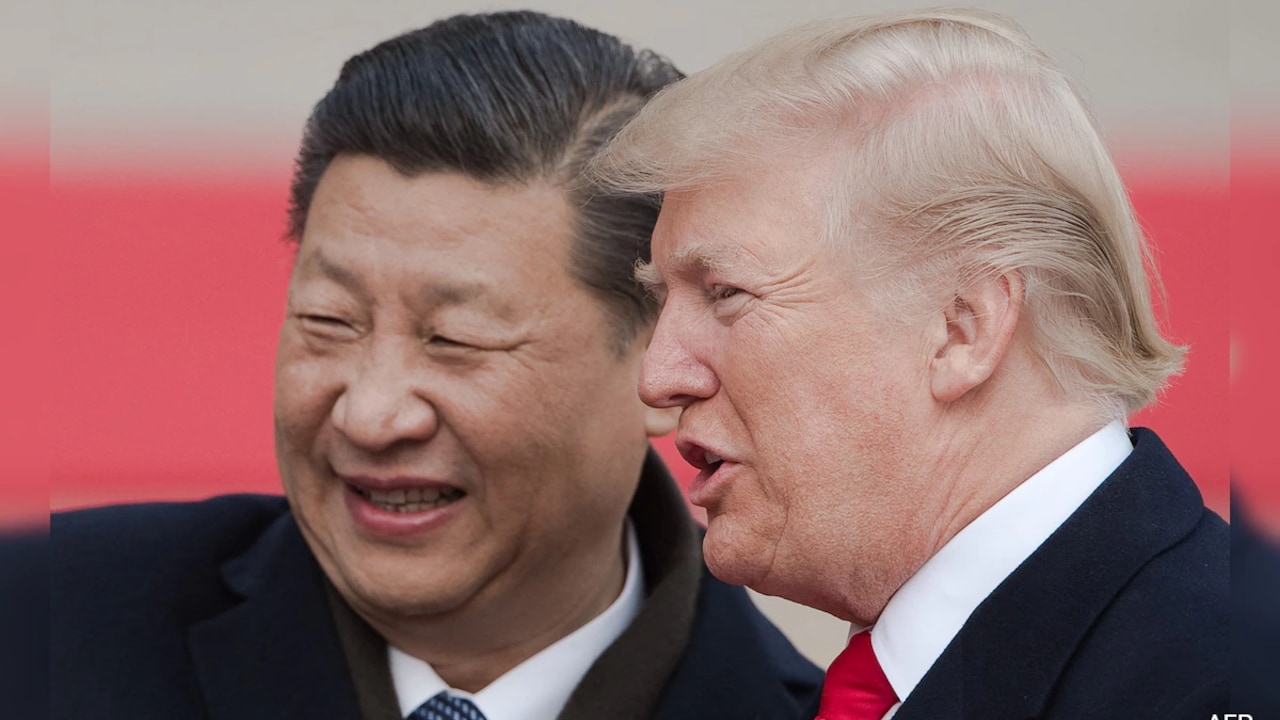
National security claims operate as instruments of strategic leverage, designed to reshape diplomatic balances and domestic political narratives simultaneously. The anticipation surrounding a primetime address on foreign election interference highlights a critical convergence: the intersection of executive authority, intelligence transparency, and the economic calculus of state-sponsored influence.
Analyzing these developments requires moving past the superficial sensationalism of political theater. Instead, we must dissect the underlying mechanics of international espionage, the structural bottlenecks in intelligence sharing, and the geopolitical incentives that govern how superpowers deploy accusations of electoral subversion. Recently making waves in related news: The Dangerous Lie of the US Iran Diplomatic Theater.
The Strategic Triad of Electoral Influence
State-sponsored foreign interference is not a monolithic activity; it is a calculated distribution of resources across three distinct vectors. Understanding these vectors explains how modern nations attempt to shift the political equilibrium of their adversaries without triggering kinetic military responses.
                  [ State-Sponsored Influence ]
                               |
       +-----------------------+-----------------------+
       |                       |                       |
[ Cyber-Tactical ]     [ Cognitive-Narrative ]   [ Economic-Targeting ]
       |                       |                       |
Voter Registry Hacks   Information Operations   Targeted Trade Tariffs
1. Cyber-Tactical Penetration
This vector involves direct attempts to compromise physical or digital election infrastructure. Tactics include scanning and exploiting vulnerabilities in state-level voter registration databases, spear-phishing election administrators, or attempting to breach vote-tallying networks. While intelligence assessments frequently conclude that altering actual vote counts is technologically prohibitive and highly detectable, the mere exfiltration of voter registry data serves a dual purpose: it builds detailed demographic profiles for targeted psychological operations and undermines public confidence in the integrity of the process. Further insights regarding the matter are covered by Al Jazeera.
2. Cognitive-Narrative Operations
This represents the soft-power manipulation of public discourse. State actors leverage state-run media, proxy websites, and automated social media networks to amplify existing domestic cleavages. Rather than inventing new controversies, the objective is to increase the amplitude of domestic disputes, thereby paralyzing the adversary's legislative capacity and eroding trust in democratic institutions.
3. Economic-Targeting Campaigns
A more overt but highly strategic tool involves the retaliatory deployment of trade policy to punish specific domestic constituencies. By designing tariffs or import restrictions that disproportionately affect geographic areas critical to an incumbent administration's electoral map—such as agricultural hubs or manufacturing corridors—foreign adversaries attempt to generate localized economic pain that translates directly into political pressure at the ballot box.
The Intelligence Asymmetry and Executive Friction
A core point of contention in modern statecraft is the flow of sensitive threat intelligence between the national security apparatus and the executive branch. Allegations that intelligence agencies withheld information regarding foreign database compromises reflect a deeper structural tension inherent in the classification and dissemination of intelligence.
                     +---------------------------+
                     |  Raw Signal Intelligence  |
                     +-------------+-------------+
                                   |
                                   v
                     +---------------------------+
                     |  Intelligence Analysis/   |
                     |       Verification        |
                     +-------------+-------------+
                                   |
              +--------------------+--------------------+
              | (High Confidence)                       | (Low/Moderate Confidence)
              v                                         v
+---------------------------+             +---------------------------+
|   Standard Briefing to    |             |  Internal Dissemination/  |
|    Executive Branch       |             |     Further Analysis      |
+---------------------------+             +---------------------------+
This friction is governed by two competing operational priorities:
- The Verification Bottleneck: The intelligence community operates under strict evidentiary standards. Raw signals intelligence indicating that an adversary has accessed voter registration data must undergo rigorous analysis to determine the scope, intent, and attribution of the breach. Prematurely briefing executive leadership on unverified threats carries the risk of inducing erratic policy responses or exposing sensitive collection methods before the threat is fully understood.
- The Politicalization Risk: Conversely, from the executive perspective, delayed transmission of security threats is viewed as an analytical blindspot or, worse, deliberate obstruction. This information asymmetry creates a trust deficit, enabling political actors to frame intelligence delays as institutional bias rather than standard operational caution.
The Cost-Benefit Calculus of Beijing's Cyber Doctrine
To evaluate the validity of electoral interference claims, we must analyze China's strategic motivations through a rational-actor model. For Beijing, the decision to engage in active electoral subversion is governed by a strict cost function:
$$C_{\text{interference}} = f(\text{Risk of Detection}) + f(\text{Economic Retaliation}) + f(\text{Strategic Realignment})$$
Historically, Beijing’s cyber operations have favored intellectual property theft, industrial espionage, and long-term influence campaigns over active, disruptive electoral interference. This preference is shaped by several distinct strategic calculations:
The Risk of Destabilizing Bilateral Trade
The Chinese economy remains deeply integrated with global financial and consumer markets. Active interference that crosses the threshold of altering election infrastructure or aggressively manipulating campaigns risks triggering severe, coordinated economic sanctions. For Beijing, the marginal utility of influencing a specific election outcome rarely outweighs the severe macroeconomic disruptions caused by retaliatory trade measures.
The Problem of Predictability
Unlike highly targeted, short-term disruptive cyberattacks, the political outcomes of electoral interference are notoriously difficult to predict. Attempting to suppress or elevate a specific political candidate can trigger a powerful domestic backlash if the operations are exposed. Historically, public exposure of foreign interference has united disparate domestic factions against the intruding nation, yielding a net-negative strategic return for the instigating state.
The Strategy of Long-Term Influence
Rather than attempting to micro-manage the outcomes of individual election cycles, Chinese foreign policy traditionally prioritizes shaping long-term policy environments. This involves establishing deep-rooted relationships with corporate, academic, and local political leaders to cultivate a favorable regulatory and trade climate over decades. Disruptive, short-term electoral interventions run directly counter to this philosophy of gradual, institutional alignment.
Strategic Implications for National Security Policy
Addressing the vulnerabilities exposed by both foreign cyber capabilities and domestic political narratives requires a systematic upgrade of defensive protocols. Treating election security as a purely political issue leaves systemic vulnerabilities unaddressed.
First, the Department of Homeland Security and state-level election boards must accelerate the transition to zero-trust architectures for all voter registration databases. Securing these systems requires real-time, automated threat-sharing protocols that bypass political channels to ensure technical vulnerabilities are patched instantly.
Second, the intelligence community must establish clearer, non-partisan protocols for the declassification and dissemination of foreign threat assessments. By standardizing how and when cyber intrusion data is shared with both political campaigns and the public, the government can neutralize the weaponization of classified information, transforming election defense from a reactive political dispute into a resilient, programmatic shield.