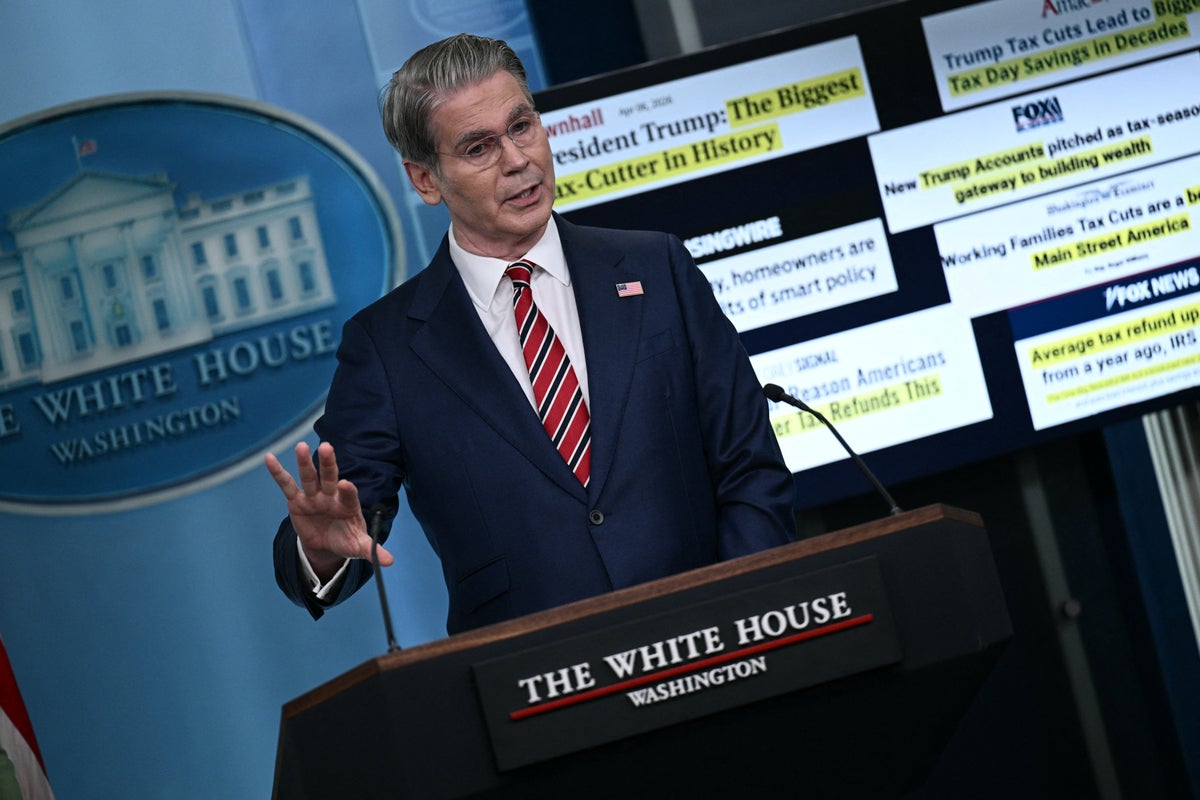
Scott Bessent was supposed to be the steady hand that calmed the global markets. Instead, a series of unforced errors during a recent press briefing has turned into a diplomatic and rhetorical firestorm, handing his political rivals a gift-wrapped opportunity to question the administration's competence. The fallout centers on a slip of the tongue—referring to the "Straits of Vermouth" instead of the Straits of Hormuz—which has triggered a wave of mockery from Democrats and raised serious questions about the preparation levels within the new cabinet.
While a verbal gaffe might seem like a minor "gotcha" moment in a 24-hour news cycle, the implications in the world of high-stakes finance and Middle Eastern diplomacy are anything but trivial. When the person tapped to lead the Treasury and influence global trade policy confuses a fortified chokepoint responsible for 20% of the world’s oil consumption with a fortified wine, the markets don't just laugh; they flinch. This isn't just about a wrong word. It is about the perception of a leadership team that may be out of its depth when the margin for error is zero.
A Technical Failure Masked by Rhetoric
The briefing was intended to outline a "maximum pressure" campaign against Iran, focusing on tightening sanctions and secondary enforcement. However, the narrative shifted instantly when the "Straits of Vermouth" comment went live. Within minutes, high-ranking Democratic lawmakers were on social media, linking Bessent’s lack of geographical precision with the broader perceived volatility of the Trump cabinet’s foreign policy.
The mockery wasn't limited to the Treasury Secretary. By extension, the gaffe pulled in other cabinet members, creating a "two-for-one" roast that targeted both the economic and defense wings of the administration. Critics argued that if the administration cannot get the names of the world's most critical shipping lanes right, their strategy for securing them is likely built on sand.
The Market Sensitivity Problem
Wall Street prefers predictability. Scott Bessent, a veteran macro investor, was chosen specifically because he speaks the language of the pits and the boardrooms. He was the "adult in the room" meant to offset the more populist, unpredictable elements of the incoming administration.
When a figure of his stature makes a fundamental error during a discussion on Iranian oil exports, it creates a "credibility gap." Investors begin to wonder if the policy details are as shaky as the delivery. The Straits of Hormuz are the world’s most important oil transit point. Any hint of instability or lack of focus regarding this region sends crude futures into a tailspin. By misnaming the location, Bessent didn't just invite jokes; he signaled a potential lack of rigor in the briefing process that underpins major economic decisions.
Why the Logistics Matter
To understand the severity, one must look at the math of the region. Approximately 21 million barrels of oil pass through the Hormuz daily. If the U.S. Treasury plans to implement a "shadow fleet" crackdown, the Secretary must have a surgical understanding of the local geography and the players involved.
- Sanctions Enforcement: Requires precise coordination with maritime authorities.
- Insurance Blockades: Depends on clear communication with London-based shipping registries.
- Diplomatic Pressure: Relies on showing allies that the U.S. has a firm grip on the tactical reality.
A slip-up of this nature suggests that the briefing materials might be getting distilled into soundbites before the principals have actually mastered the underlying facts. This is a recurring theme in the critique of the current administration: a preference for the "show" over the "substance."
The Two-Cabinet Roast
The Democratic response was swift and coordinated. By linking Bessent’s error to the broader "hawks" in the cabinet, they successfully framed the administration as both aggressive and ill-informed. The strategy is clear: paint the cabinet as a collection of wealthy loyalists who are more interested in televised appearances than the gritty details of governance.
The second target of the "Straits of Vermouth" roast was the incoming National Security Advisor. Critics pointed out that the economic and security strategies are now so intertwined that a failure in one department is a failure in both. If the Treasury is handling the "war by other means" (sanctions), they must be in perfect lockstep with the Pentagon and the NSC. The gaffe suggests a lack of inter-agency rehearsal. In a crisis, that lack of coordination translates to lives and trillions of dollars.
The Strategy of Maximum Pressure vs. Maximum Precision
The administration’s Iran policy is predicated on the idea that they can bankrupt the regime through sheer force of will and economic isolation. This requires an almost supernatural level of precision. You are threading a needle between global inflation and regional war.
If the U.S. overreaches or makes a tactical error because they don't understand the geography of the Persian Gulf, the result isn't a "roast" on X (formerly Twitter)—it’s a spike in gas prices that could derail the domestic economy. The "Straits of Vermouth" becomes a symbol of a larger danger: the risk of an accidental escalation born from ignorance.
Historical Precedents of Policy Gaffes
We have seen this before. In the 1970s and 80s, minor geographical or technical errors by cabinet officials often signaled a deeper rot in the policy-making process. It’s rarely just a slip of the tongue. Usually, it’s an indicator that the person in the chair is being briefed on the fly, perhaps in the car ride to the podium, rather than living and breathing the data.
For a man like Bessent, who built a career on the granular analysis of global trends, this is an especially bitter pill. He is a man who knows better, which makes the failure to perform under the bright lights of a government briefing even more concerning. It suggests that the transition process is frazzled, understaffed, or perhaps over-confident.
The Intelligence Gap
Investigative look into the briefing process reveals a transition team that is increasingly insular. Information is being tightly held by a small circle of advisors, often bypassing the career professionals at the State Department and Treasury who have spent decades studying the Middle East. When you cut out the "deep state" experts, you also cut out the people whose job it is to make sure you don't say "Vermouth" when you mean "Hormuz."
This insularity is a choice. The administration views career bureaucrats with suspicion, preferring the loyalty of political appointees. But loyalty doesn't provide a map of the Persian Gulf. This "expertise vacuum" is where these errors are born. Until the administration learns to balance political loyalty with technical proficiency, these incidents will continue to occur, each one chipping away at the "maximum pressure" the U.S. is trying to project.
How to Fix the Credibility Leak
Restoring faith after a public drubbing requires more than a corrected transcript. The Treasury needs to demonstrate a win. They need to show that their understanding of the Iranian oil trade is so deep that they can identify individual tankers by their hull vibrations.
- Immediate Technical Briefings: Bessent needs to move away from the "visionary" rhetoric and dive into the "mechanics." A series of detailed, error-free technical announcements regarding sanctions would bury the "Vermouth" narrative.
- Inter-Agency Rehearsal: No cabinet member should be speaking on foreign soil or foreign policy without a joint sign-off from the relevant departments. The "lone wolf" briefing style is clearly failing.
- Acknowledge the Gaffe: The best way to kill a joke is to own it. A brief, self-deprecating nod to the error followed by a masterclass in the actual geography of the region would flip the script.
The Brutal Reality of Global Perception
Our adversaries are watching. Tehran, Moscow, and Beijing do not view this as a funny social media moment. They view it as a signal of a distracted and potentially incompetent adversary. In the cold world of realpolitik, if you don't know the name of the door you are trying to kick in, you aren't perceived as a threat; you are perceived as a nuisance.
The "Straits of Vermouth" will likely be a footnote in the history of this administration, but it serves as a loud, clear warning. The transition from the boardroom to the world stage is not just about changing your title. It is about a level of preparation and precision that leaves no room for the easy punchline. If the administration wants to be taken seriously on Iran, they need to start by knowing exactly where they are on the map.
The pressure is now on Bessent to prove he is more than just a talented fund manager playing at being a statesman. The markets are waiting for the substance. The opposition is waiting for the next slip. The world is just waiting to see if anyone in the room knows the difference between a cocktail and a chokepoint.
The margin for error in the Middle East is measured in blood and barrels. There is no room for a second glass.