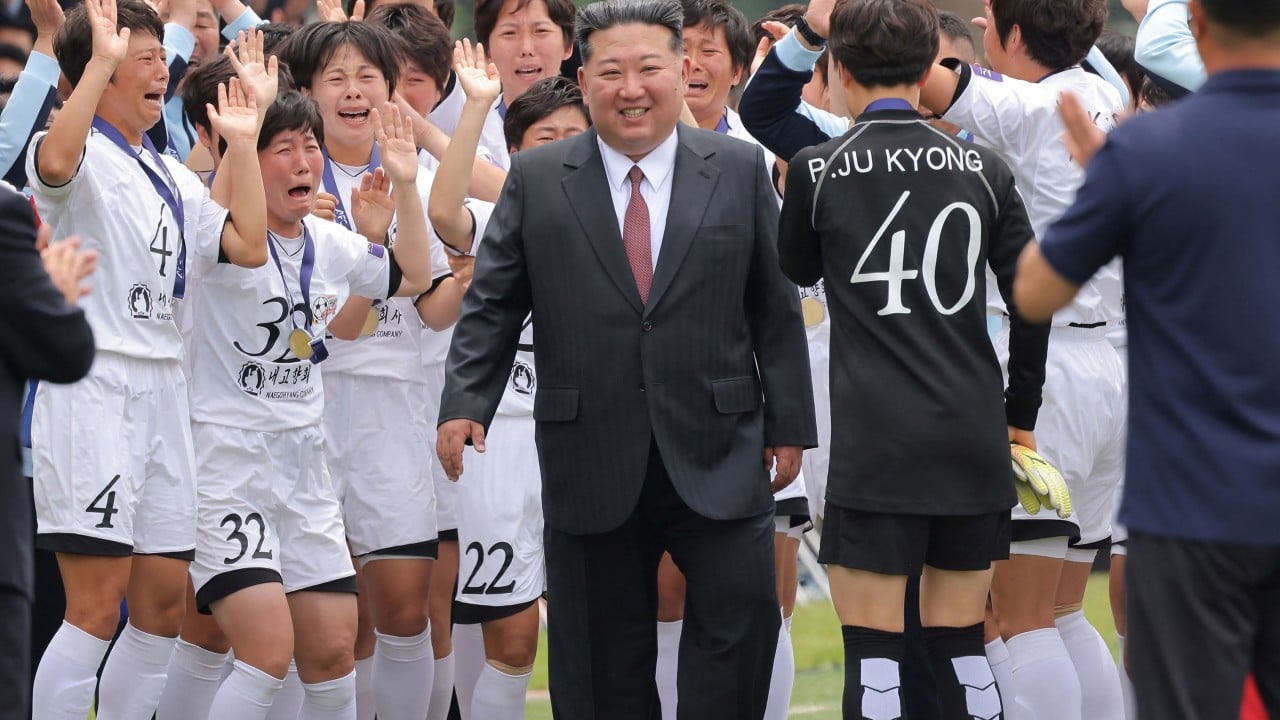
The utilization of elite sports as an instrument of statecraft is historically optimized when internal structural strain intersects with external diplomatic isolation. The recent reception hosted by Kim Jong Un for Naegohyang Women’s FC—following their victory over Tokyo Verdy in the AFC Women’s Champions League final in Suwon, South Korea—serves as a case study in high-yield geopolitical signaling. While external media depictions focus primarily on the emotional dimensions of the interaction, a rigorous structural analysis reveals that the event functions as a highly calculated validation of the regime’s altered constitutional doctrines, domestic resource allocation models, and international soft-power strategies.
Elite athletic success under the current Pyongyang administrative framework is not merely a byproduct of national pride. It is a highly managed output within a state-directed production function designed to generate specific geopolitical dividends.
The Strategic Framework: Sports as Asymmetric Power
The institutional architecture behind North Korea's athletic apparatus operates on a resource-allocation model that prioritizes fields where western and regional competitors cannot easily monetize or replicate their structural advantages. Women's association football represents an optimal asymmetric domain.
The Asymmetric Yield Matrix
The state-directed focus on elite women's football relies on three distinct structural advantages:
- Low Global Capital Intensity: Unlike men's professional football, where elite performance is tightly correlated with multibillion-dollar commercial ecosystems and club revenues, the global women's game remains structurally undercapitalized. This lower entry barrier allows a centralized, command-economy sports budget to achieve disproportionate international success.
- Total Closed-Loop Training Environments: The state isolates elite athletes from market distractions, establishing an uncompromising institutional focus on physical conditioning, tactical indoctrination, and collective synchronization.
- High Sovereign Return on Investment: A victory in a continental club tournament yields immediate domestic propaganda value and international visibility that far outweighs the capital required to sustain the program.
The success of Naegohyang FC—founded in 2012 as part of a targeted modernization push within the domestic sports apparatus—demonstrates the efficacy of this matrix. By defeating a highly organized Japanese side in a tournament hosted by South Korea, the club achieved a multi-layered diplomatic outcome that state-run media could instantly convert into domestic political capital.
Validation of the Dual-Hostile-State Doctrine
The timing and geographic context of the tournament injected acute geopolitical significance into the sporting outcome. The delegation's transit to South Korea marked the first official cross-border athletic deployment in eight years, occurring amidst a fundamental shift in Pyongyang's constitutional framework.
The Constitutional Bottleneck
The current administrative doctrine officially rejects the traditional, decades-long policy of eventual peaceful Korean reunification. The regime has formally designated South Korea as a hostile, foreign adversary state. This policy shift creates a distinct ideological friction point when North Korean citizens travel to the peninsula for competitive fixtures.
[Traditional Reunification Rhetoric] ---> (Abolished by Constitutional Amendment)
                                                   |
                                                   v
[Two-Hostile-States Doctrine] ----------> [Athletic Victory in Suwon]
                                                   |
                                                   v
[Propaganda Output: Sovereign Dominance Over a Declared Adversary State]
The success of Naegohyang FC solved this ideological challenge by shifting the narrative from ethnic reconciliation to outright sovereign dominance. The victory in Suwon was framed not as an exchange between compatriots, but as a triumphant foray into adversarial territory. The closed-loop behavior of the athletes at Incheon International Airport—ignoring cross-border civic banners and maintaining strict group discipline—underscores the total enforcement of the dual-state paradigm.
The Political Mechanics of Public Affect
The imagery broadcast by the official state organ, the Rodong Sinmun, detailing the interaction between the supreme leadership and the returning athletes, follows a precise operational playbook designed to project internal cohesion.
The Domestic Optimization Engine
The deliberate display of emotion during these state receptions serves specific internal stability functions:
- Humanization of Absolute Authority: By placing the leadership at the center of highly emotional, triumphant youth athletes, the state media creates a visual counter-narrative to external depictions of economic hardship or political isolation.
- Reinforcement of the Loyalty-Reward Loop: The public celebration of the athletes—including motorized parades through the main avenues of Pyongyang—signals to the broader domestic populace that total devotion to state objectives yields immense material and social prestige within the sovereign hierarchy.
- Transmutation of Economic Scarcity into Athletic Dominance: The narrative emphasizes that superior ideological conditioning can overcome the material advantages of capitalist sports programs, transforming international trophies into proof of the regime's systemic validity.
Structural Bottlenecks and External Financial Limitations
Despite the domestic success of this soft-power deployment, the strategy faces an absolute barrier when intersecting with the global financial system. International sanctions impose rigid constraints on the regime's capacity to extract direct economic value from its athletic investments.
The AFC Women's Champions League carries substantial prize money intended for club development. However, global banking compliance frameworks and United Nations sanctions against Pyongyang restrict the transfer of large capital sums into the country.
This financial disconnect creates a clear structural limitation. The regime can successfully convert athletic victories into domestic ideological compliance and international soft-power visibility, but it cannot convert these triumphs into liquid foreign currency reserves. The sports apparatus must therefore remain a net-drain on the centralized state budget, funded entirely for its political and strategic yield rather than commercial viability.
The Strategic Projection
The administrative focus on elite sports will likely intensify as traditional diplomatic channels remain closed. The regime recognizes that women's football provides a unique, sanitized medium through which it can engage with the international community without compromising its security posture or admitting external cultural influences.
Expect the state sports commission to increase capital allocation toward youth development academies in the immediate term. The objective is to maintain total dominance over continental club and national tournaments, ensuring a steady stream of highly visible, internationally validated propaganda victories. These athletic achievements will continue to be leveraged as empirical proof of domestic system superiority, serving as a critical offset to ongoing regional security tensions and international economic isolation.