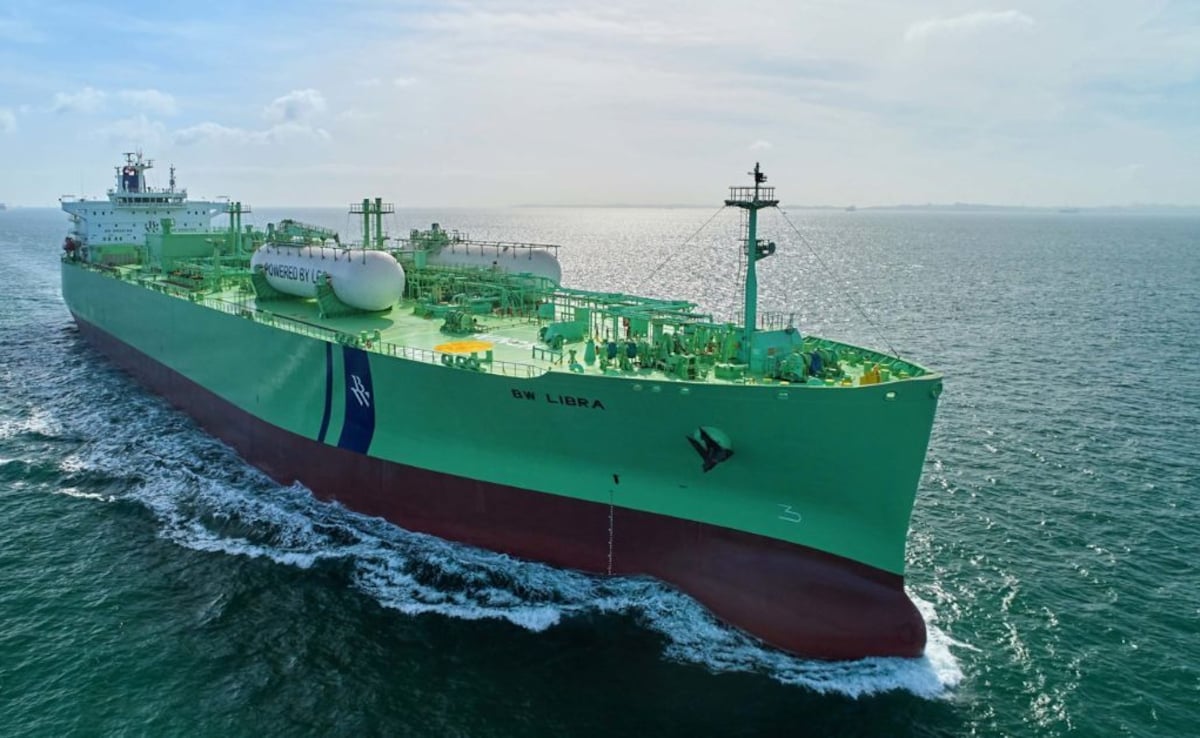
The Ukrainian demand for Israel to seize a Russian-linked vessel allegedly transporting stolen grain is not a simple request for legal assistance; it is a calculated stress test of international maritime law and diplomatic neutrality. This maneuver forces a choice between the enforcement of sovereign property rights and the maintenance of delicate regional security balances. The core of this conflict lies in the intersection of three specific domains: the technical tracking of bulk carriers via AIS (Automatic Identification System) manipulation, the legal framework of "state-owned property" vs. "private commercial assets," and the economic friction of global food security.
The Triad of Maritime Attribution
Proving that a cargo of grain is "stolen" requires more than diplomatic assertion. It necessitates a rigorous chain of custody that is increasingly difficult to maintain in contested waters. To understand the friction in this specific case, one must evaluate the three layers of evidence required to trigger a legal seizure in a foreign port.
1. The AIS Disconnect and Dark Activity
Modern maritime tracking relies on the Automatic Identification System. When a vessel engaged in transporting grain from occupied territories enters the Black Sea, "dark activity"—the intentional switching off of AIS transponders—often occurs. This creates a data gap that prevents a continuous digital breadcrumb trail from the point of origin (the port of loading) to the destination.
Identifying a vessel in Haifa or Ashdod as the same vessel that loaded in a sanctioned port like Sevastopol requires a fusion of:
- Synthetic Aperture Radar (SAR) Imagery: Which can penetrate cloud cover to identify vessel dimensions and deck configurations even when transponders are silent.
- Optical Satellite Intelligence: High-resolution photography that confirms the "draft" of the ship—how low it sits in the water—before and after a suspected loading operation.
- Acoustic Signatures: Unique engine noises that serve as a maritime fingerprint.
2. Forensic Agricultural Analysis
The second layer of proof is biological. Grain is not a generic commodity; its chemical composition is a reflection of the soil and climate in which it was grown. Stable isotope ratio analysis (SIRA) allows scientists to map the origin of wheat or barley. By measuring the ratios of isotopes like Carbon-13 and Nitrogen-15, investigators can determine with high statistical probability whether a shipment originated in the Kherson region or the Russian interior. For a state like Israel to execute a seizure, the legal threshold typically requires this level of empirical evidence to withstand a counter-suit from the ship's owners.
3. Documentation and "Flag Hopping"
The legal complexity is compounded by the use of "flags of convenience" and shell companies. A vessel may be Russian-owned but fly the flag of Panama or Liberia. Under the United Nations Convention on the Law of the Sea (UNCLOS), the "flag state" holds primary jurisdiction over the vessel. A port state like Israel faces significant "legal blowback" risks if it seizes a ship without a direct court order or a clear violation of domestic laws. Ukraine’s strategy relies on convincing Israeli authorities that the cargo itself constitutes "proceeds of a crime," which would trigger different protocols under international anti-money laundering and theft statutes.
The Incentive Structure of Neutrality
Israel’s hesitation to act on these requests is not a failure of intelligence, but a calculated response to a complex cost-benefit function. The strategic calculus involves several competing variables.
The Russian Security Presence in Syria
The most significant variable in the Israeli decision-making process is the deconfliction mechanism with Russia in Syrian airspace. Russia maintains a significant military footprint, including S-400 missile systems, in the Levant. Any move to seize Russian assets—even those disguised as commercial shipping—risks a retaliatory "closing" of the skies over Syria, which would directly compromise Israel’s ability to conduct operations against Iranian proxies.
The Precedent of Maritime Law
Seizing a commercial vessel on the grounds of "stolen cargo" sets a precedent that could be turned against any nation. If Israel establishes that a diplomatic request is sufficient to bypass standard evidentiary procedures, it opens the door for other nations to request the seizure of Israeli-linked vessels under different geopolitical pretexts. The preservation of the "freedom of navigation" principle is often prioritized over individual property disputes to prevent a breakdown in global trade.
The Mechanics of the Seizure Request
Ukraine is utilizing a "Public Diplomacy-Legal Hybrid" model. By making the request public, they are not just seeking the grain; they are seeking to increase the political cost of Israeli neutrality.
The Evidentiary Burden
In a standard commercial dispute, the claimant must provide:
- A Bill of Lading (BoL) proving ownership.
- Evidence of a breach of contract or illegal acquisition.
- A local court injunction.
Ukraine’s challenge is that the original owners of the grain—often private Ukrainian farmers in occupied zones—cannot easily produce valid documentation for grain that was requisitioned by an occupying force. The "theft" occurs at the point of harvest or storage, making the entire subsequent supply chain legally "toxic" but difficult to prosecute under maritime lien laws.
The Role of Technology in Enforcement
If a state decides to comply with a seizure request, the operational steps involve:
- Port State Control (PSC) Inspection: Detaining the ship under the guise of safety or environmental violations to buy time for legal processing.
- Cargo Impoundment: Offloading the grain into neutral silos while the case is litigated.
- Judicial Forfeiture: A court-ordered transfer of ownership.
The bottleneck here is the speed of the judiciary versus the perishability of the asset. Grain is a biological product; if it sits in a ship's hold during a multi-year legal battle, its value evaporates, leaving the port state with a massive storage bill and a mountain of rotting biomass.
The Economic Friction of Stolen Commodities
The global market for "sanctioned" or "stolen" grain operates on a heavy discount. This creates a secondary economy where certain buyers—often in the Global South or countries with high food inflation—are willing to overlook provenance in exchange for lower prices.
The Cost Function of Traceability
Implementing a global "Grain Fingerprint" database would be the technological solution to this problem, but the implementation costs are high. It would require:
- Mandatory SIRA testing at every major grain elevator.
- Blockchain-based ledgers for every shipment.
- Global standardization of "legal origin" definitions.
Without this infrastructure, the burden of proof remains on the victim of the theft, which in a theater of war, is an almost insurmountable hurdle.
Strategic Forecast and Recommendation
The friction between Ukraine and Israel over maritime seizures will likely intensify as the Black Sea remains a contested corridor. However, a physical seizure of a vessel in an Israeli port is statistically unlikely in the short term. The risk to the Syrian deconfliction agreement outweighs the moral or legal benefits of returning a single shipment of grain.
The Strategic Play for Ukraine:
Instead of focusing on physical seizures, which trigger massive diplomatic resistance, the more effective strategy is the "Financial Poisoning" of the cargo. By providing the specific chemical and digital signatures of the stolen grain to international insurers (like Lloyd's of London) and P&I (Protection and Indemnity) clubs, Ukraine can make the cargo uninsurable.
A vessel without insurance cannot enter most major ports and cannot transit the Suez Canal. By targeting the financial infrastructure of the shipment rather than the physical hull of the ship, Ukraine can achieve a "soft seizure"—effectively devaluing the cargo to zero without forcing a neutral state like Israel into a direct military or diplomatic confrontation with Russia. This shift from physical enforcement to financial attrition represents the next evolution in the weaponization of the agricultural supply chain.