The ink on a voter’s pinky finger in Jakarta takes days to fade. It is a semi-permanent stain, a indelible mark of participation in one of the world’s largest single-day elections. For decades, that stain represented a clear-cut choice between the ghosts of Indonesia’s authoritarian past and the chaotic promise of its democratic future. But by 2024, the lines had blurred. The stain remained, but the certainty was gone.
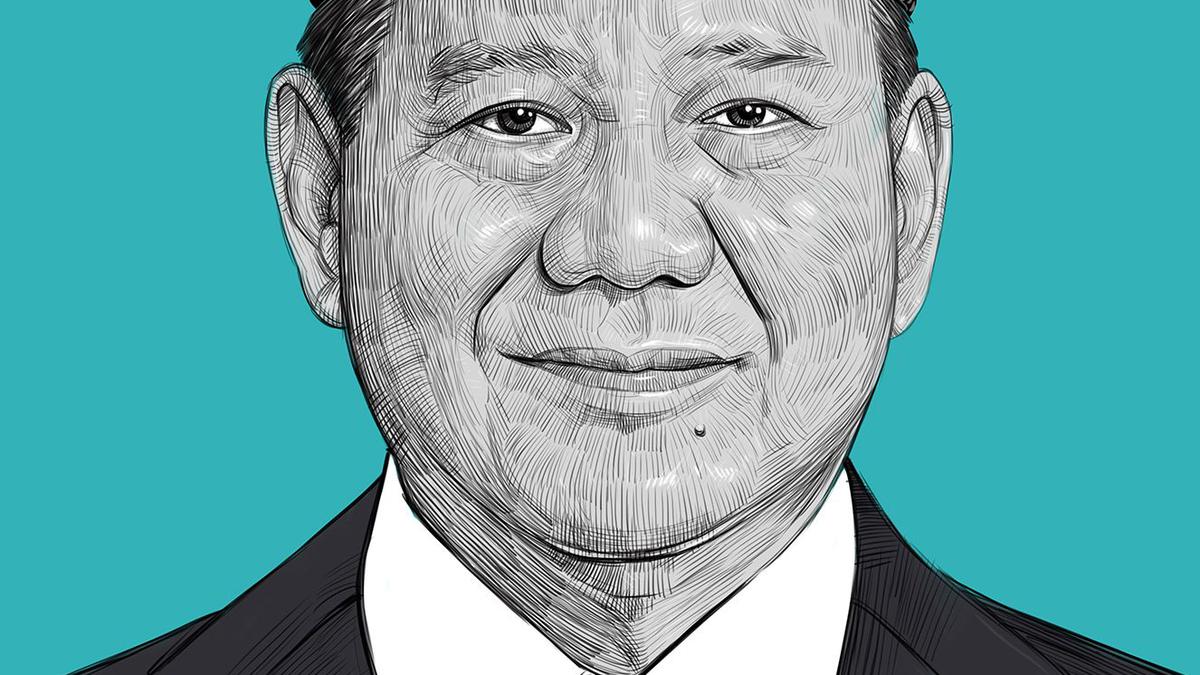
To understand modern Indonesia, you have to stand in the suffocating heat of a campaign rally and watch a seventy-two-year-old former general dance. He does not dance well. It is a stiff, awkward bobbing of the shoulders, a gentle shuffling of the feet that looks more like a grandfather trying to amuse a toddler than a military man who once commanded the country's most feared elite forces. Yet, when Prabowo Subianto danced, millions of young Indonesians screamed in delight. They called him gemoy—adorable.
History is a malleable thing. It bends under the weight of a well-executed marketing campaign. For those who remember the late 1990s, the image of an adorable Prabowo is not just jarring; it is surreal. This is the man who was dismissed from the military amid allegations of kidnapping pro-democracy activists, a man once banned from entering the United States over human rights concerns. He was the former son-in-law of the dictator Suharto, the ultimate insider of a regime that ruled with an iron fist for thirty-two years.
The transformation of Prabowo Subianto from a feared military commander to the president of Indonesia is not merely a political comeback. It is a masterclass in psychological rebranding. It reveals a profound shift in how a nation remembers its pain and how a new generation, detached from the trauma of the past, views its future.
The Architecture of Amnesia
Step back to 1998. The Asian financial crisis had ripped through Indonesia like a wildfire. The rupiah was in freefall. Riots consumed the streets of Jakarta. Smoke rose from burning shopping malls, and the air was thick with tear gas and fear. Students occupied the parliament building, demanding the ouster of Suharto.
In the shadows of this chaos moved Prabowo, then the head of the Strategic Reserve Command (Kostrad). When the regime collapsed, he was cut loose. The military elite sidelined him; activists condemned him. He chose self-imposed exile in Jordan, his political career seemingly buried beneath the rubble of the New Order.
But power has a long memory and an even longer patience.
Consider how a nation heals, or fails to heal, from trauma. When a society undergoes a massive democratic transition, there is a brief, golden window for accountability. Indonesia had its Reformasi period. It built institutions, freed the press, and decentralized power. Yet, it never fully purged the oligarchs and generals who thrived under the old guard. They did not disappear; they simply waited. They adapted to the new rules of the game.
Prabowo returned. He founded a political party, Gerindra. He ran for the presidency in 2014 and again in 2019, positioning himself as a fiery, nationalistic strongman. He wore immaculate white shirts, rode stallions at his ranch outside Jakarta, and pounded lecterns during speeches. He promised to restore Indonesia's dignity. He lost. Both times, he lost to Joko Widodo, popularly known as Jokowi, a former furniture maker who represented the civilian antithesis of the old military elite.
Then came the pivot that changed everything.
Instead of fighting the man who defeated him, Prabowo joined him. In 2019, Jokowi made a calculation that shocked purists but made perfect sense in the Machiavellian world of Indonesian politics: he appointed his bitter rival as Defense Minister.
The Digital Wash
This coalition was the catalyst. It neutralized the opposition and began the slow, systematic softening of Prabowo’s image. He was no longer the angry outsider shouting at the gates. He was a statesman, working within the system, flanked by the immensely popular incumbent.
But the real alchemy happened on the screens of eighty million young Indonesians.
More than half of the electorate in the recent election were under the age of forty. They have no living memory of the shortages, the censorship, or the vanished activists of 1998. To them, the New Order is a chapter in a textbook, dry and abstract. What is real to them is TikTok.
On social media, the terrifying general vanished. In his place emerged a cuddly, cat-loving grandpa. Algorithms do not care about historical human rights records; they care about engagement. A video of Prabowo feeding his cat, Bobby, or performing his signature awkward dance moves generated millions of views. The platform flattened history. It turned a complex, controversial figure into a meme.
This was not accidental. It was a highly sophisticated, data-driven strategy designed to exploit a specific vulnerability in human psychology: we prefer comfort over complication. It is far easier to vote for a cute, dancing grandfather who promises continuity and jobs than it is to reckon with the unresolved questions of a nation’s past.
The strategy worked brilliantly. By selecting Jokowi’s millennial son, Gibran Rakabuming Raka, as his vice-presidential running mate, Prabowo secured the implicit endorsement of the outgoing president. He effectively married the nostalgia for strongman stability with the modern craving for youthful representation.
The Price of Continuity
What happens when a nation decides that stability is more important than accountability?
We see the answer in the quiet anxiety of the activists who still gather every Thursday outside the presidential palace in Jakarta. They wear black and hold black umbrellas, a silent protest known as Aksi Kamisan. For years, mothers of the disappeared have stood there, demanding to know where their children are buried. For them, the normalization of Prabowo is a recurring nightmare, a literal erasure of their grief.
The argument for the "reformed" general is built entirely on pragmatism. His supporters point to his tenure as Defense Minister, which was largely stable and professional. They argue that Indonesia, a vast archipelago of over 270 million people, requires a firm hand to navigate the treacherous waters of modern geopolitics, particularly the growing tension between the United States and China. They see a man who has traveled the world, who understands power, and who can protect Indonesia’s economic interests.
This is the trade-off that democracies around the world are increasingly making. It is the temptation to sacrifice institutional depth for executive efficiency.
During his campaign, Prabowo promised to continue Jokowi’s mega-projects, including the construction of a massive new capital city, Nusantara, in the jungles of Borneo. He promised free school lunches for tens of millions of children. These are tangible, material promises that resonate deeply with families struggling against inflation and underemployment. When you are worried about your child's nutrition, the abstract concepts of democratic checks and balances feel like a luxury for the wealthy.
Yet, the invisible stakes are immense. The institutions that guard Indonesian democracy—the Constitutional Court, the Corruption Eradication Commission (KPK)—have already seen their independence eroded in recent years. With a former general who once questioned the necessity of direct elections occupying the highest office, the guardrails feel thinner than ever.
The Unfading Stain
The transformation is complete. The man who was once cast out of the kingdom now holds the keys to it.
On inauguration day, there were no tanks in the streets, no violent overthrows. There was only applause, a smooth transition of power, and a nation watching to see which version of the man will govern. Will it be the pragmatic statesman who dances for the cameras, or the iron-willed commander of old?
The pinky fingers of the voters have long since washed clean. The purple ink is gone, leaving no trace on the skin. But the choice made in those voting booths remains, a silent shift in the current of a young democracy that decided it was finally time to stop looking back.