The failure rarely looks dramatic.
In a sterile laboratory lit by the hum of fluorescent strips, a researcher slides a small glass microscope tray under the lens. The numbers on the screen do not lie, but they do betray. Six months ago, a promising chemical compound cured cancer with staggering efficiency. Tumors vanished in mice. Lungs cleared. Blood tests came back pristine. The board room popped champagne. The press releases wrote themselves.
Today, looking through the ocular, the human tissue sample tells a radically different story. The cells are bloated, dying, drowning in toxicity. The compound that saved the mouse is quietly destroying the human liver.
Translation failure. It is the quiet, dirty secret of modern medicine.
For a century, humanity has outsourced its biological future to rodents. We have taken creatures whose evolutionary lineage parted ways with ours eighty million years ago, forced them into sterile cages, and asked them to stand in for a species that builds cathedrals, falls in love, and dies of Alzheimer's. Mice do not get Alzheimer's unless scientists break their genes to fake it. Mice do not process drugs through kidneys designed to handle human diets, human stress, and human metabolic speeds.
Yet, when a pharmaceutical giant pours a billion dollars into a new molecule, that molecule almost always meets a mouse first.
Consider a hypothetical patient named Arthur. Arthur is sixty-eight, retired from a life of fixing diesel engines, and sitting in an oncology clinic waiting to hear if a new targeted therapy will shrink the mass pressing against his left lung. He does not know that the drug he is about to receive was vetted by a creature that shares none of his genetic vulnerabilities, his environmental history, or his immune system's quirky catalog of scars. Arthur is a statistic waiting to happen. He is a human being asked to test a drug that passed an exam written in a foreign language.
The math of this system is broken. Nine out of every ten drugs that successfully clear animal trials fail when they finally meet actual human bodies in clinical trials. They fail because they are toxic. Or worse, they fail because they simply do not work. Billions of dollars vanish into the ether, swallowed by a pipeline built on a false equivalence.
Scientists in the United Kingdom are trying to redraw the map.
They are growing miniature human organs.
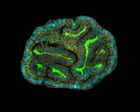
Do not picture a mad scientist’s jar bubbling with beating hearts or twitching brains pulled straight from science fiction. Picture something much smaller, stranger, and infinitely more profound. Picture a clump of cells no larger than a grain of sand, suspended in a drop of nutrient-rich gel inside a plastic dish.
These are organoids.
To create one, researchers take ordinary human cells—often harvested painlessly from a skin biopsy or a routine blood draw—and reset their developmental clock. These induced pluripotent stem cells are remarkably impressionable. Placed in the right chemical bath, guided by the invisible choreography of molecular signals, they begin to remember what they were always meant to be.
If you feed them the right proteins at precisely the right hour, they do not just multiply. They organize.
Liver cells find each other and form tiny, functioning hepatic lobules that metabolize drugs just like the organ buried beneath your ribs. Neural cells stretch out microscopic tendrils, firing spontaneous electrical bursts that mimic the baseline chatter of a human cerebral cortex. Intestinal cells fold themselves into microscopic ridges, complete with microvilli, absorbing nutrients from their liquid environment.
They are living, breathing, three-dimensional facsimiles of us.
When British laboratories scale up this technology—backed by a massive push from researchers and regulatory bodies eager to find an alternative to animal testing—they are not just replacing mice. They are shifting the fundamental philosophy of discovery.
Imagine testing a revolutionary cystic fibrosis drug not on an engineered rodent, but on an organoid grown directly from the lung cells of a child who inherited the disease. You can watch the microscopic airways open. You can measure the exact ionic flux across the cell membrane in real time. You do not have to guess whether the treatment will work for Arthur, or for Sarah, or for the thousands of patients whose specific genetic signatures get washed out in the broad averages of traditional clinical trials.
You can test it on them, without ever touching their skin.
Of course, biology resists easy automation. Organoids are notoriously finicky. They lack blood vessels, which means they rarely grow larger than a pinhead because nutrients cannot diffuse past a certain depth. They do not have an immune system shadowing them, or a nervous system whispering commands from afar. They are islands of tissue, brilliant in their isolation, but fundamentally detached from the chaotic symphony of a living body.
Researchers are racing to solve this. They are weaving microscopic channels of fluid through the tissue— organs-on-chips—forcing blood-like currents to wash over living liver and kidney cells, keeping them alive, stressed, and reactive for months at a time.
The stakes go far beyond the economics of drug development, though those numbers alone are staggering. Every failed animal trial represents years of human hope deferred, millions of dollars incinerated, and countless lives lost to diseases we still do not know how to corner.
When we rely on a mouse to tell us what works, we are asking a foreign guide to navigate a city they have never seen.
The future of medicine is growing quietly in drops of gel across laboratories in London, Cambridge, and Edinburgh. It looks like nothing at all. Just a cloudy speck under a microscope, pulsing with the faint, undeniable rhythm of human biology.
Arthur is still waiting for his treatment. But somewhere in a quiet room, a cluster of human cells just took its first breath.