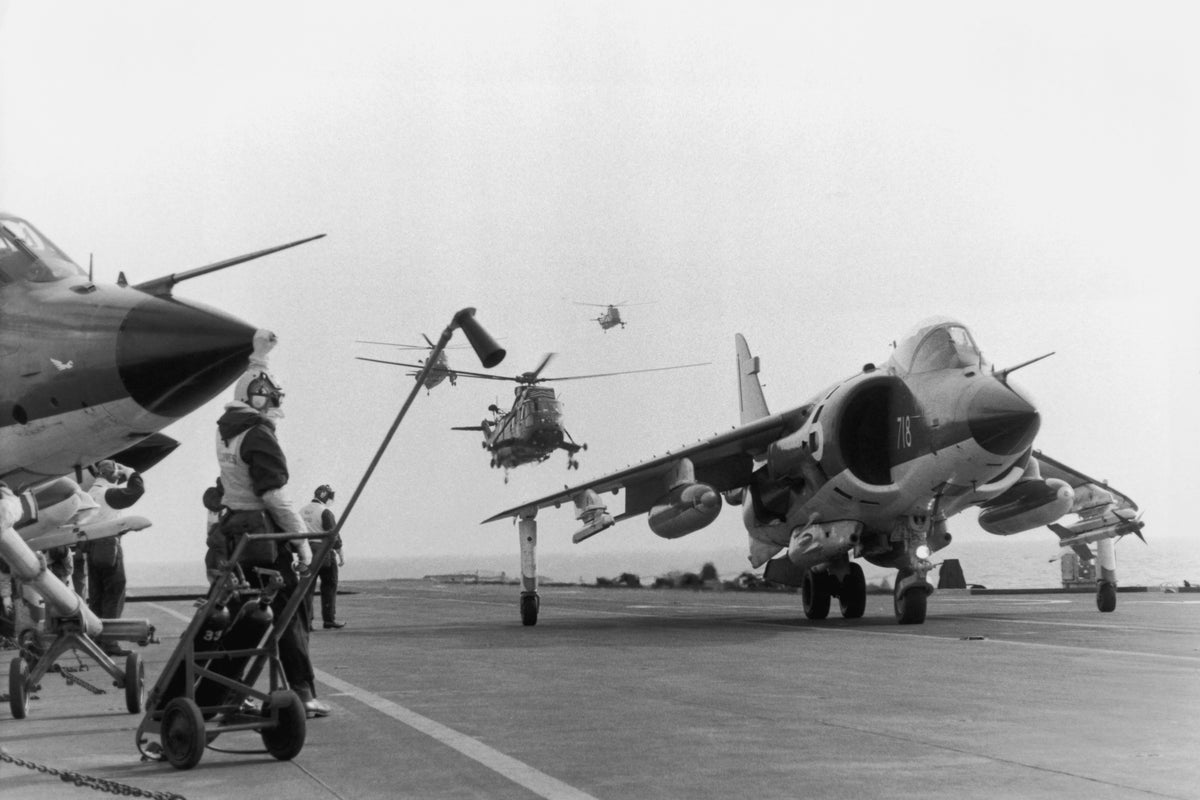
The wind does not simply blow across the Falkland Islands; it scours them. It rips across the barren peat bogs, whips the whitecaps into a frenzy against the jagged cliffs of East Stanley, and carries the salt-stung memory of an empire that once measured its heartbeat in nautical miles. Stand on the ridges above Port William on a grey afternoon, and the silence is absolute, save for the moan of the gale. It feels like the end of the earth. Because, in many ways, it is.
Yet, thousands of miles to the northwest, across the humid sprawl of Buenos Aires, a different kind of storm is brewing. It is a storm born of nostalgia, economic collapse, and the enduring ghosts of 1982. Meanwhile, you can read other stories here: How Two Men Survived Nine Days Buried in a Nepal Hydropower Tunnel.
Every few years, the map gets redrawn in political speeches. A podium is pounded. A flag is waved. The rhetoric swells with righteous indignation over the Malvinas, that ancient grievance drilled into the collective consciousness of generations of Argentines. To hear the speeches, you would think troop transports were warming their engines in Puerto Belgrano, ready to reclaim the windswept sheep farms and maritime shelves.
But history is a cruel auditor. And reality has a way of turning grand imperial ambitions into hollow pantomime. To understand the full picture, check out the detailed report by Associated Press.
Consider a hypothetical officer sitting in a cramped, damp office at the Ministry of Defense in Buenos Aires. Let us call him Commander Silva. Silva is a career naval strategist, a man who knows the exact tonnage of every rust-bucket floating in his country's fleet. He stares at a requisition form for spare parts that has been sitting on his desk for six months, denied by a treasury so bankrupt it makes the national currency look like Monopoly money.
Silva knows something the politicians shouting on television refuse to admit. He knows the math.
The math of modern military power is unforgiving. You cannot conquer a fortified archipelago defended by Typhoon fighters and modern surface-to-air missile batteries with patriotism and good intentions. You need logistics. You need fuel. You need iron that floats and wings that fly.
And right now, Argentina’s military is an army of shadows.
To understand why a new invasion is a phantom threat, you have to look at the machinery itself. Or rather, the lack of it. Following the disastrous conclusion of the 1982 conflict—where a hastily assembled conscript force was fed into a meatgrinder by a flailing junta—the British military fortified the Falklands into an unassailable hedgehog. Mount Pleasant Complex is not just an airstrip; it is an unsinkable aircraft carrier anchored in the South Atlantic, bristling with radar, rapid-reaction infantry, and modern air defense systems.
Against that, what does Buenos Aires bring to the table?
Let us walk the docks of Puerto Belgrano, the primary naval base. The air smells of heavy fuel oil, rotting kelp, and neglect. The pride of the fleet, aging destroyers purchased during the Cold War, sit moored to concrete piers with marine growth clinging to their hulls. Many are functionally non-operational, cannibalized for spare parts to keep a single sister ship moving at half-speed.
When the ARA San Juan submarine tragically imploded in 2017, taking forty-four souls with it, it did more than break the nation’s heart; it exposed the rotting underbelly of a force starved of maintenance budgets for decades. Today, the Argentine Navy—once a proud blue-water fleet capable of projecting power across the continent—struggles to patrol its own exclusive economic zone against illegal Chinese fishing trawlers. A navy that cannot chase away squid poachers is hardly in a position to contest British maritime supremacy in the stormy waters of the Southern Ocean.
The skies are no kinder. For years, the air force flew without a supersonic interceptor after their aging Mirage jets were retired. Pilots practiced their dogfighting skills on flight simulators that looked like relics from an arcade in 1995, waiting for a procurement deal that kept getting blocked, delayed, or priced out of existence by staggering inflation rates topping one hundred percent. While Argentina recently managed to acquire a handful of second-hand F-16s from Denmark, a dozen jets do not a regional superpower make, especially without the extensive logistics, AWACS support, and tanker infrastructure required to project air power eight hundred miles off the mainland.
So why do the threats persist? Why does Buenos Aires continually rattle a sword that has long since rusted into its scabbard?
Because flags are cheaper than bread.
When inflation is eating the monthly wages of working families before the ink on the banknotes has dried, when poverty rates climb and public services crumble, governments reach for the oldest trick in the geopolitical playbook. They point across the water. They conjure the Malvinas. They summon the ghosts of a patriotic past to distract from the dismal realities of the present. It is a cheap theatrical production, designed for domestic consumption, played out on news channels for an audience that is increasingly exhausted by the performance.
The people living in the Falklands know this. Down on the coast, past the wind-bent tussac grass, life goes on with the quiet stubbornness of frontier communities everywhere. Fishermen mend their nets. Farmers check their flocks. They have heard the threats before. They watched the diplomatic chess match play out through decades of UN resolutions, trade embargoes, and polite refusals from London.
They also know that deterrence works. Mount Pleasant is loud, visible, and absolute.
Yet, there is a tragedy in this endless cycle. It is a tragedy of wasted potential. Argentina is a magnificent country, blessed with breathtaking landscapes, extraordinary agricultural wealth, and a resilient, brilliant population capable of extraordinary innovation. To see its national discourse hijacked by the ghost of a lost war is like watching a brilliant artist spend their life sketching in the margins of a ruined book.
The Falklands are not going anywhere. The white cliffs of East Stanley will continue to meet the grey rollers of the Atlantic, indifferent to the speeches delivered three thousand miles to the north.
The military remains in tatters not because Argentines are unpatriotic, or because their soldiers lack courage, but because steel costs money, and a nation cannot build an armada on empty promises. Until the economy heals, until the systemic rot of political corruption and financial mismanagement is excised, the threat to the islands will remain what it has always been: a shadow play on a distant wall, cast by politicians who know the truth, but dare not speak it out loud.
The wind howls across the steppe. The ocean rolls on, cold and deep. And the ghost ships stay in port, rusting quietly in the dark.