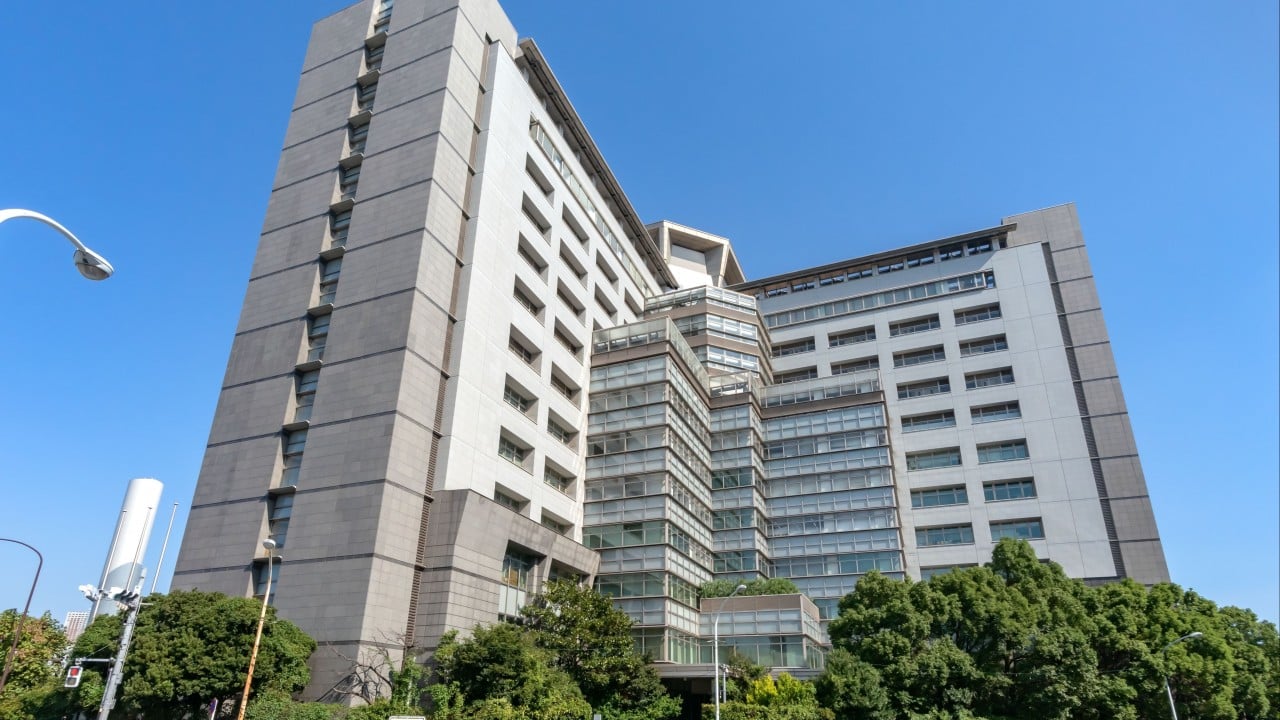
Arash sits on a plastic chair in a room that smells of industrial floor wax and stale coffee. He has lived in Japan for thirty years. He speaks the language with the melodic lilt of a local, bows at the precise angle required by social custom, and pays his taxes at the neighborhood convenience store. Yet, as he looks at the fluorescent lights reflecting off the linoleum, he knows that to the bureaucratic machine humming behind the frosted glass windows, he is not a neighbor. He is a data point slated for deletion.
Japan has long maintained a reputation for safety and order, a clockwork society where everything has its place. For decades, the "place" for many long-term foreign residents and asylum seekers was a gray zone of provisional release. They lived among the Japanese population but lacked the right to work, move freely between prefectures, or access basic healthcare. It was a life lived in italics—present, but slightly askew from the rest of the text. Meanwhile, you can explore related events here: The Brutal Truth Behind Australia’s Failed War on Mice.
Everything changed on a Tuesday.
The revision of the Immigration Control and Refugee Recognition Act recently stripped away the final layer of protection for people like Arash. Previously, the simple act of filing for refugee status acted as a legal shield. As long as your application was pending, the state could not put you on a plane. Now, that shield has shattered. Under the new rules, the government can deport individuals who have applied for asylum three or more times, unless they have "reasonable grounds" to stay. To understand the complete picture, we recommend the excellent analysis by USA Today.
To a casual observer, this might sound like a logical tightening of the belt. Efficiency. Rule of law. But logic feels very different when it’s applied to a man who fled a regime that still remembers his name.
The Mechanics of Fear
Imagine waking up every morning wondering if a knock on the door is a neighbor bringing over extra citrus from their tree or a team of officers with a one-way ticket to a country that no longer feels like home. This is the psychological weight of the "deportation drive." It isn't just about the physical act of removal; it is about the erosion of the future.
Japan's asylum approval rate has historically hovered near one percent. It is a needle-thin opening. In 2023, the country saw a record-high number of approvals, yet the total remained a drop in the bucket compared to the thousands seeking safety. When the law changed, it sent a clear signal through the immigrant communities in neighborhoods like Saitama’s "Warabi-stan," where a large Kurdish population resides. The signal was simple: the grace period is over.
The state argues that the previous system was being abused by those seeking to avoid deportation indefinitely. They point to the "long-term detainees"—people held for years in immigration centers because they refused to leave. These centers became flashpoints of human rights debates, especially after the 2021 death of Wishma Sandamali, a Sri Lankan woman who wasted away in a Nagoya facility while her requests for medical help went unheeded. Her face became a symbol of a system that had grown cold.
The new law was supposed to fix the "detention problem" by making it easier to send people back. But you cannot fix a human problem with a purely mechanical solution.
The Invisible Stakes
Consider Kenji, a fictionalized version of the many Japanese lawyers who spend their nights hunched over stacks of paperwork, fighting for clients the public rarely sees. Kenji doesn’t do this for the money; there isn't any. He does it because he believes that a country’s soul is measured by how it treats those who have nothing to offer but their vulnerability.
He tells the story of a child—let’s call her Hana. Hana was born in a Japanese hospital. She goes to a Japanese school. She dreams in Japanese. She cannot read or write the language of her parents' home country. To the immigration bureau, she is a foreign national with no valid visa. To herself, she is a girl from Chiba who likes matcha ice cream and wants to be a veterinarian.
Under the new drive, Hana’s family faces an impossible choice. They can "voluntarily" return to a country they fled in terror, taking a Japanese child to a land where she is an alien. Or they can wait for the knock.
The government has introduced a "quasi-refugee" status for those fleeing conflict zones like Ukraine, which is a step toward empathy. But this creates a hierarchy of suffering. Why is a person fleeing a bomb in Kyiv more deserving of a life in Tokyo than a person fleeing a cell in a Middle Eastern prison? The law tries to categorize human pain into neat boxes, but pain is fluid. It leaks through the cracks.
The Economics of Belonging
There is a strange irony at play here. Japan is facing a demographic crisis of historic proportions. The population is shrinking. The workforce is evaporating. Construction sites, elderly care homes, and convenience stores are increasingly staffed by foreign hands. The country needs people. It needs their energy, their labor, and their youth.
Yet, the legal framework remains deeply suspicious of the "other." The deportation drive is a manifestation of this tension—the need for workers versus the fear of neighbors.
Critics of the drive argue that the focus on removal ignores the potential for integration. When we talk about "foreign residents," we often forget the "resident" part. These are people who have built lives. They have joined local festivals, helped their elderly neighbors take out the trash, and contributed to the social fabric in ways that aren't captured in a census.
The financial cost of detention and deportation is astronomical. It involves chartering planes, staffing facilities, and years of legal battles. But the human cost is higher. It is the loss of trust. When a community sees a family they have known for a decade suddenly vanished, a piece of that community's safety dies too. They realize that "order" can be a very sharp blade.
A Walk Through the Gray
Walk through the backstreets of Tokyo at night. You see the neon glow of the skyscrapers, the rush of businessmen to the last train, the quiet precision of a city that never misses a beat. In the shadows of those skyscrapers are the people living on "provisional release."
They cannot work legally, so they rely on the charity of churches and support groups. They live in a state of permanent "not-yet." They are not yet deported, but they are not yet allowed to live. The new law aims to end this state of "not-yet," but it does so by pushing them toward a "never."
One man, a 40-year-old who has spent five years in and out of detention, describes the feeling as being buried alive in plain sight. "You see the world moving around you," he says through a translator. "You see people buying houses, getting married, complaining about their bosses. I just want a boss to complain about. I want to be tired from a day of work."
The "drive" for deportation is often framed as a matter of national security or administrative necessity. But the reality is a series of quiet tragedies unfolding in small apartments. It is the sound of a suitcase being packed in silence. It is the look on a father’s face when he has to explain to his daughter why they can't go to the park today—or perhaps ever again.
The Fracture in the Mirror
Japan is a country that prides itself on omotenashi—the spirit of selfless hospitality. You see it in the way a shopkeeper wraps a gift or the way a stranger goes out of their way to give you directions. But this hospitality has a boundary. It is a circle drawn in the sand, and the deportation drive is the act of stepping on the lines to make the circle smaller.
The debate isn't just about immigration policy; it’s about what kind of society Japan wants to be as it moves further into the 21st century. Can a nation remain a global leader while maintaining a closed-door policy toward those in the direst need? Can it thrive while its legal system treats long-term residents as temporary inconveniences?
The stakes are invisible because they are tucked away in detention cells and bureaucratic files. They are invisible until you look into the eyes of a man like Arash, who has no country left to go back to. He isn't a threat to the public order. He isn't a drain on resources. He is a man who found a home and is now being told that the home was an illusion.
The fluorescent lights in the waiting room hum. A number is called. Arash stands up, adjusts his coat, and walks toward the window. He doesn't know if he will be coming back to his apartment tonight. He doesn't know if he will see his friends again. He only knows that the machine is turning, and he is caught in the gears.
The city outside continues its rhythmic, beautiful dance, unaware that one of its dancers is being pulled off the stage. The sun sets over the Tokyo skyline, casting long, thin shadows that stretch toward the horizon, blurring the lines between who belongs and who is merely passing through.