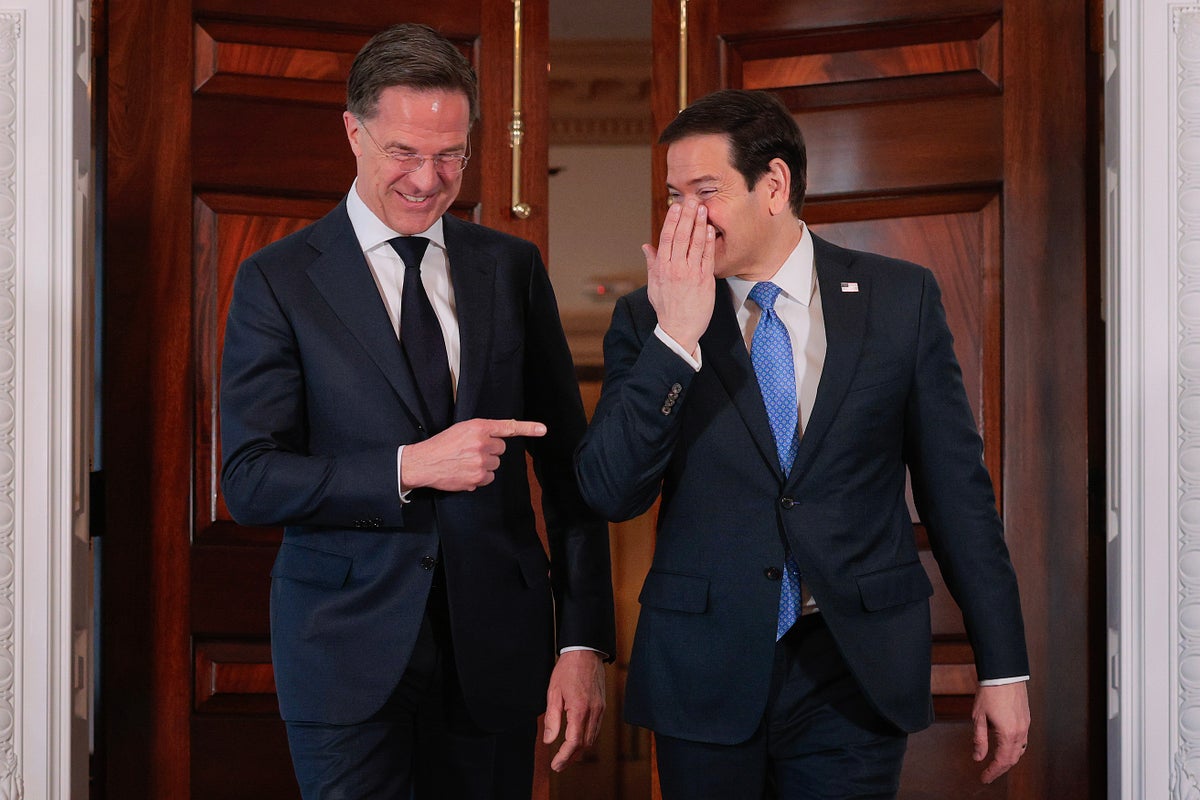
The air inside the North Atlantic Council chamber is usually thick with the scent of expensive wool and stale espresso. It is a room built for the slow, grinding machinery of consensus. Here, diplomats from thirty-two nations speak in the hushed, measured tones of people who know that a single misplaced syllable can move markets or mobilize battalions. But lately, the silence between the speeches has grown heavy. It is the kind of silence that precedes a storm.
Mark Rutte, the man currently holding the keys to the world’s most powerful military alliance, sits at the center of this tension. To his critics in the grand hallways of Paris and Berlin, he isn't just a Secretary General. He is a tightrope walker. And the rope is fraying.
The whispers in the corridors of Brussels have turned into a dull roar. The accusation? That Rutte has become too adept at speaking the language of "Daddy" Trump.
The Art of the Atlantic Whisperer
Imagine a dinner table where the host is desperately trying to keep a volatile relative from flipping the furniture. That is the reality for European leadership in 2026. For years, the security of the continent rested on a simple, unspoken promise: if the smoke rises over the Baltics, the Americans will come.
But promises are fragile things when they are viewed through the lens of a "transactional" presidency.
Rutte’s strategy is visible to anyone watching his public addresses. He praises the former—and perhaps future—American president for his "leadership" on defense spending. He credits the Mar-a-Lago resident with "shaking up" the alliance for the better. To a casual observer, it looks like common sense diplomacy. To many European leaders, it looks like a pre-emptive surrender.
Consider a mid-level diplomat in the French Foreign Ministry. Let’s call him Jean-Pierre. For Jean-Pierre, every time Rutte validates the Trumpian worldview, it feels like a crack in the foundation of European sovereignty. He watches the screen as Rutte smiles for the cameras, and he wonders if the alliance is being led by a man who has already decided that Europe cannot survive without catering to one man’s ego.
The Math of Fear
The tension isn't just about personality; it’s about the brutal arithmetic of hardware. Since the 1950s, Europe has outsourced its existential safety to the United States. It was a comfortable arrangement. While Washington spent trillions on stealth bombers and satellite arrays, Europe built high-speed rails and universal healthcare systems.
Then the bill came due.
The reality is that Donald Trump was right about the numbers, even if his delivery felt like a shakedown. European nations were, by and large, underfunding their own defense. But the way Rutte has leaned into this narrative is what grates on his neighbors. By framing the "fix" as a tribute to Trump’s foresight, Rutte is perceived as undermining the collective dignity of the European Union.
He is playing a high-stakes game of psychological management. If he alienates Trump, he risks an American withdrawal that would leave Europe defenseless. If he caters to him too much, he alienates the very European leaders he is supposed to represent.
It is a lonely place to be.
A Continental Identity Crisis
The friction isn't just between Brussels and Washington. It’s an internal war for the soul of Europe.
On one side, you have the "Autonomists." Led largely by France, this group believes that Europe must become a "third pole" in geopolitics. They want a European army, European jets, and a European nuclear deterrent that doesn't require a green light from the White House. To them, Rutte’s "Trump-whispering" is a pathetic display of vassalage.
On the other side are the "Atlanticists," mostly the Baltic states and Poland. They live in the shadow of a revanchist Russia. For them, a French promise of "strategic autonomy" is a paper shield. They know that only American Abrams tanks and F-35s can truly keep the wolves at bay. To Warsaw, Rutte isn't being a sycophant; he’s being a realist.
This is the invisible stake: the permanent fracturing of European unity. When Rutte tilts toward the Florida narrative, he isn't just managing an American politician. He is inadvertently picking a side in a civil war of European philosophy.
The Ghost in the Room
Every meeting at NATO now feels like an exercise in ghost-hunting. The ghost is the possibility of an America that simply stops caring.
Hypothetically, imagine a scenario where a border skirmish in Eastern Europe coincides with a political crisis in D.C. The phone rings at NATO headquarters. The Secretary General picks up. On the other end isn't a general, but a political operative asking what’s in it for the American taxpayer.
That is the nightmare that keeps European defense ministers awake.
Rutte’s supporters argue that his flattery is a small price to pay to keep that phone call from ever happening. They see him as the ultimate pragmatist—a man willing to swallow his pride to keep the nuclear umbrella open. His detractors, however, argue that by validating the idea that NATO is a protection racket, he is actually making that nightmare more likely. They fear he is teaching the Americans that the alliance is a business deal rather than a sacred bond.
The optics are undeniable. While European leaders discuss "European Sovereignty" in grand speeches, Rutte is often seen as the one person in the room who truly understands that sovereignty is a luxury bought with American munitions.
The Cost of the Smile
There is a human cost to this kind of diplomacy. It creates a vacuum of leadership. When the head of NATO spends his energy managing the temperament of a single foreign citizen, who is looking after the long-term vision of the thirty-one other members?
In the cafes of Brussels, the jokes have a bitter edge. They call Rutte the "Secretary General for the 51st State."
The real danger isn't just a policy shift; it's the erosion of trust. NATO operates on the principle that an attack on one is an attack on all. This is a leap of faith. It requires everyone to believe that a soldier from Ohio will die for a village in Estonia. Once you start treating that bond like a subscription service that can be cancelled if the "CEO" gets bored, the faith vanishes.
Rutte is trying to keep the subscription active. But in doing so, he might be convincing the rest of the world that the bond was never there to begin with.
The Long Road to November
As the American election cycle spins toward its conclusion, the pressure on Rutte will only intensify. Every tweet from Mar-a-Lago, every rally speech about "delinquent" allies, sends a tremor through the Glass House in Brussels.
Rutte’s colleagues watch him. They look for signs of a spine. They look for a moment where he will stand up and say that the value of the West cannot be measured in GDP percentages or trade deficits.
So far, they are still waiting.
Instead, they get more praise for "American leadership." They get more reminders that Europe needs to do more. They get the uncomfortable feeling that the man leading the world’s greatest alliance is more concerned with the mood in a gilded club in Florida than he is with the collective will of the continent he calls home.
The machinery of NATO continues to turn. The exercises are held. The jets fly. The budgets slowly, painfully rise. But the warmth is gone. The alliance is becoming a colder, harder place—a reflection of the transactional world Rutte is trying to navigate.
In the end, you can only play the role of the diplomat for so long before you become the mask you wear. Rutte is betting that he can charm the storm away. Europe is watching, holding its breath, and wondering if the man at the helm still remembers the way back to the shore, or if he has already drifted too far into the deep, dark waters of the Atlantic.