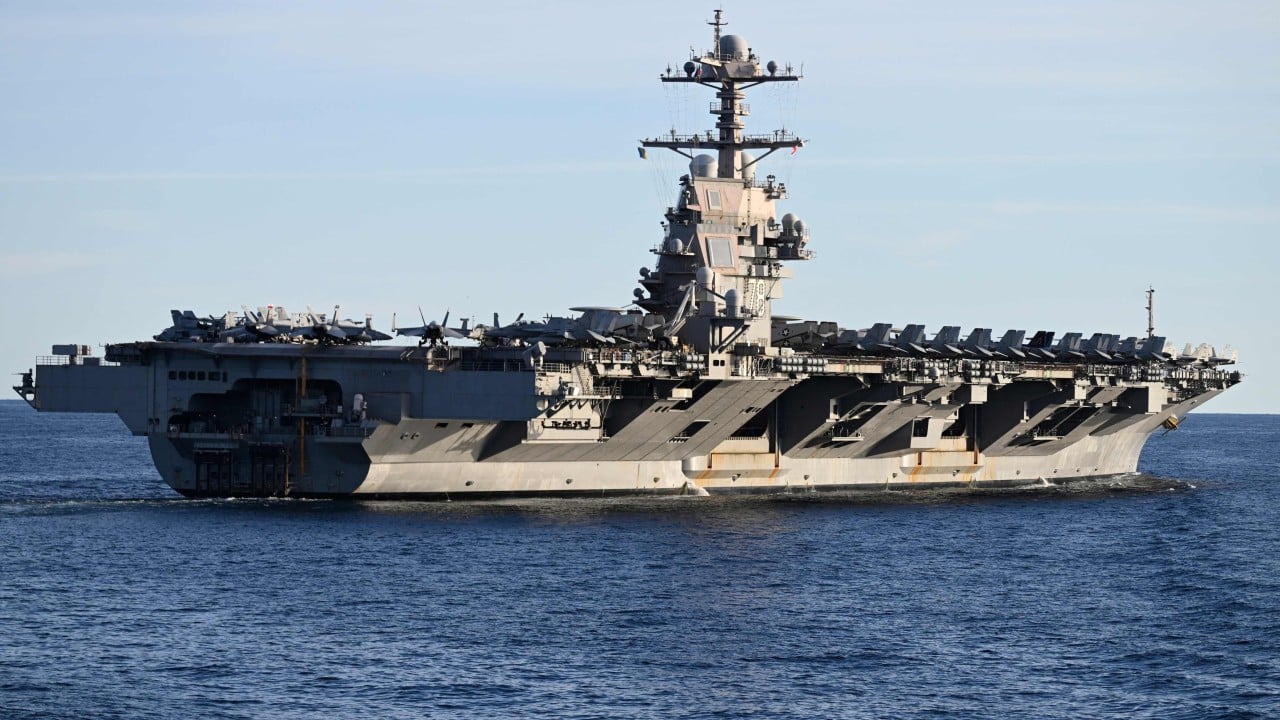
Everybody loves a good retro comeback. Vinyl records sound warm. Manual transmissions feel connected. Nostalgia sells tickets, revives fashion lines, and apparently, dictates naval engineering policy if you listen to the Sunday morning talking heads.
The lazy consensus floating around defense circles and pundit blogs is simple: electromagnetic catapults are over-engineered, break down too often, and return to the rugged, mechanically honest steam piston of yesteryear is just common sense. Read more on a related issue: this related article.
Except it is not. It is an operational disaster disguised as romantic pragmatism.
I have spent two decades watching procurement committees fall in love with the comfort of yesterday while the rest of the world builds the architecture of tomorrow. Reverting to steam on modern nuclear carriers is not a step toward reliability. It is a multi-billion-dollar retreat into a maintenance nightmare that the United States Navy retired for very violent, expensive reasons. Further reporting by CNET delves into comparable views on this issue.
Let us break down why this knee-jerk nostalgia will cripple force projection under the guise of fixing it.
The Myth Of Steam Simplicity
Ask any old salt about the C-13 steam catapult, and they will wax poetic about its brute force. It used high-pressure reactor steam, shot massive pistons down a track, and launched multi-million-dollar fighter jets off a floating city.
What they leave out of the sea stories is the chronic, grinding agony of keeping those systems alive.
Steam is thirsty. It demands massive amounts of fresh water, converted through energy-heavy distillation plants aboard the ship. It requires extensive piping networks that snake through the skin of the ship, creating massive thermal footprints, vulnerability zones, and rust vectors.
Every time a steam catapult fires, it bleeds thousands of gallons of high-pressure steam. The mechanical stress on the troughs, valves, and seals is absolute torture. The maintenance cycles required to repack seals, check for fatigue fractures, and prevent catastrophic line ruptures consume thousands of man-hours while the ship is underway.
When people call steam simple, they mean it is familiar. They do not mean it is low-maintenance.
The General Atomics Electromagnetic Aircraft Launch System, or EMALS, was not adopted because engineers wanted to play with high-tech toys. It was adopted because steam reached the absolute thermodynamic and mechanical wall of what a floating airfield can handle.
The Physics Problem Pundits Ignore
Why did the Navy spend billions developing linear induction motors for the Gerald R. Ford class? Because modern air wings are changing, and steam simply cannot keep up with the physics of a heterogeneous fleet.
Think about the weight disparity of modern carrier air wings. You are launching everything from heavy F-35C Lightning II stealth fighters down to lightweight unmanned aerial vehicles designed for reconnaissance or electronic warfare.
Steam catapults operate on a blunt-force trauma principle. You dial in a pressure curve based on gross weight, and you hope the valve timing matches the load. If you miscalculate or if the steam pressure fluctuates across the massive plumbing runs, you either under-accelerate the aircraft into the drink or over-stress the nose gear, snapping the launch bar clean off the jet.
EMALS changes the math entirely through closed-loop digital control.
Linear induction motors use electromagnetic fields to accelerate the launch carriage down the track. This allows for precise, micro-managed energy delivery across the entire stroke. You can program a gentle push at the beginning of the stroke to protect delicate nose gear structures, followed by a violent, smooth ramp-up of acceleration right at the end to ensure the aircraft achieves flying speed.
You cannot program steam to rewrite its pressure curve mid-stroke. Steam is an analog brute. Electromagnetics is a scalpel.
If you rip out EMALS to install steam, you permanently handicap the carrier's ability to integrate the next generation of uncrewed systems. You lock the ship into a weight-class window that is shrinking every single year.
The Reliability Red Herring
The core argument for returning to steam always boils down to uptime. Critics point to early teething problems with EMALS during the initial commissioning phases of the USS Gerald R. Ford, noting high Mean Time Between Failure rates.
This is where the bad faith arguments start.
Any complex, first-of-its-kind naval technology goes through a brutal bathtub curve of failures. When the Nimitz class introduced steam systems decades ago, sailors spent years troubleshooting chronic leaks, valve failures, and catastrophic blowouts.
When you introduce a completely new electrical architecture—drawing massive pulses of juice from the ship's integrated power system to charge flywheels and discharge stored energy in seconds—you are going to burn out solid-state switches and blow fuses.
That is not an indictment of the technology; it is the cost of engineering progress.
The fix for early-generation software bugs and power regulation glitches is not ripping out copper cables and welding massive steam pipes back into the hull. The fix is engineering better thermal management, upgrading solid-state components, and letting the crews master the diagnostic loops.
Throwing your hands up, abandoning the electric ship concept, and demanding steam is the equivalent of abandoning fuel injection because your first electronic ignition car had a bad spark plug in 1974.
The Downstream Cost Of Backwards Engineering
Let us talk about the logistical insanity of executing a rollback.
To redesign the interior compartments of an already commissioned nuclear-powered aircraft carrier to accommodate steam accumulators, massive high-pressure piping, and dedicated distillation infrastructure would require years in a dry dock.
Dry dock time for a supercarrier is measured in tens of millions of dollars per month, before you even factor in the procurement costs of building dead-stock steam hardware that the industrial base has largely stopped manufacturing at scale.
You are taking a premier capital asset out of rotation, spending billions of taxpayer dollars to install 1950s technology, and calling it an upgrade.
Meanwhile, near-peer competitors are pouring every ounce of their defense research into electromagnetic propulsion, railguns, and directed-energy weapons. Their entire electrical architecture is designed around high-voltage generation and distribution.
If the United States Navy voluntarily retreats to steam, we are essentially telling our adversaries that we are terrified of the maintenance curve of the 21st century. We are choosing comfortable mediocrity over the messy, uncomfortable work of mastering high-power electrical engineering at sea.
Stop romanticizing the mechanical past. The future of naval aviation runs on electrons, not boiling water.