The rain in Zurich always feels a little colder when you are standing outside the gates.
For the average football fan, the World Cup is a secular pilgrimage. It is a four-year cycle of hope, heartbreak, and shared humanity, culminating in a few weeks where the world shrinks down to the size of a stitched leather sphere. You save your money in a jar on the kitchen counter. You skip dinners out. You calculate flights, visas, and train schedules. You do everything right.
Then you log onto the portal, and the screen spins.
Sorry. No tickets available.
But if you walk around the glittering perimeter of FIFA’s headquarters, or step into the air-conditioned luxury of a corporate hospitality suite, the narrative changes. The seats are there. They have always been there. They are just caught in a complex, invisible web of global commerce, allocations, and backroom strategies that the ordinary fan was never meant to see.
Until now.
Two American attorneys general just pulled back the curtain, and the view behind it isn’t pretty.
The Paper Trail to Zurich
It started quietly, as these things usually do. A few envelopes arriving at a Swiss address, bearing the official seals of the states of New Jersey and New York.
These were not invitations to a gala. They were legally binding subpoenas.
The legal weight of the United States is officially leaning against FIFA’s ticketing apparatus for the upcoming World Cup. New Jersey Attorney General Matthew Platkin and New York Attorney General Letitia James are demanding answers. They want records, emails, Slack messages, and internal accounting sheets. They want to know exactly how tickets for the world’s biggest sporting event are being distributed, priced, and partitioned.
To understand why this matters, you have to look at the geography of the tournament. MetLife Stadium, sitting in East Rutherford, New Jersey, just across the Hudson River from New York City, is scheduled to host the final. It is the crown jewel of the tournament. The economic windfall for the region is projected to be astronomical.
But a stadium is only as good as the people inside it.
When a state invests millions in infrastructure, security, and public transport to host a global event, it does so under the assumption of a fair deal. The local economy thrives when real people buy tickets, stay in hotels, and eat at diners. The system breaks down when those tickets vanish into thin air, only to reappear on secondary markets at a 500% markup, or worse, sit empty because they were hoarded as corporate currency.
The attorneys general are invoking consumer protection laws. They are looking for signs of deceptive practices, artificial scarcity, and hidden fees. It is a massive shot across the bow of international sports governance.
The Anatomy of the Disappearing Seat
Let us demystify how a stadium actually fills up.
When FIFA announces that a stadium holds 80,000 people, the romantic mind assumes that 80,000 tickets go into a giant, fair lottery. Anyone with a credit card and a dream has an equal shot.
The reality is a stark mathematical equation.
First, slice off a massive chunk for commercial affiliates and global sponsors. These are the multinational beverage companies, credit card giants, and sportswear conglomerates that fund the tournament’s multi-billion-dollar budget. Next, carve out the hospitality packages—the luxury suites where champagne flows and business deals are brokered. Then, allocate a significant percentage to the member associations, the national football federations from around the globe.
What is left over? A fraction. A sliver. The crumbs from the table.
Consider what happens next: the crumbs enter a market system that feels rigged from the start.
The shift to digital-only ticketing was supposed to eliminate fraud. It was marketed as a victory for the common fan. No more shady guys standing on street corners hawking paper stubs. Instead, it created a centralized, proprietary ecosystem. If you control the app, you control the transfer rules. You control the price floors. You control who gets to sell, when they can sell, and how much profit can be squeezed from a single seat over and over again.
This is the core of the American investigation. The subpoenas are searching for evidence of whether FIFA restricted the transferability of tickets in a way that violates antitrust laws or consumer rights. By boxing out independent ticket exchanges and forcing everything through an internal pipeline, a monopoly is born.
The Ghost in the Turnstile
Imagine a hypothetical fan named Marco.
Marco lives in Newark. He has watched every World Cup match since 1994 on a flickering television in his basement. When he learned the final was coming to his backyard, he wept. He signed up for the official ticket lottery the minute it opened. He checked his email every day for months.
When the notification finally arrived, it was a rejection.
A week later, Marco looks online. The match is technically sold out. Yet, on various digital platforms, thousands of seats are available. The catch? A single ticket in the upper deck, where the players look like ants, costs more than his monthly mortgage payment.
Where did those tickets come from?
They came from the institutional allocations. They came from brokers who use sophisticated software to bypass lottery restrictions. They came from the very pools of inventory that the current legal investigation is trying to unearth.
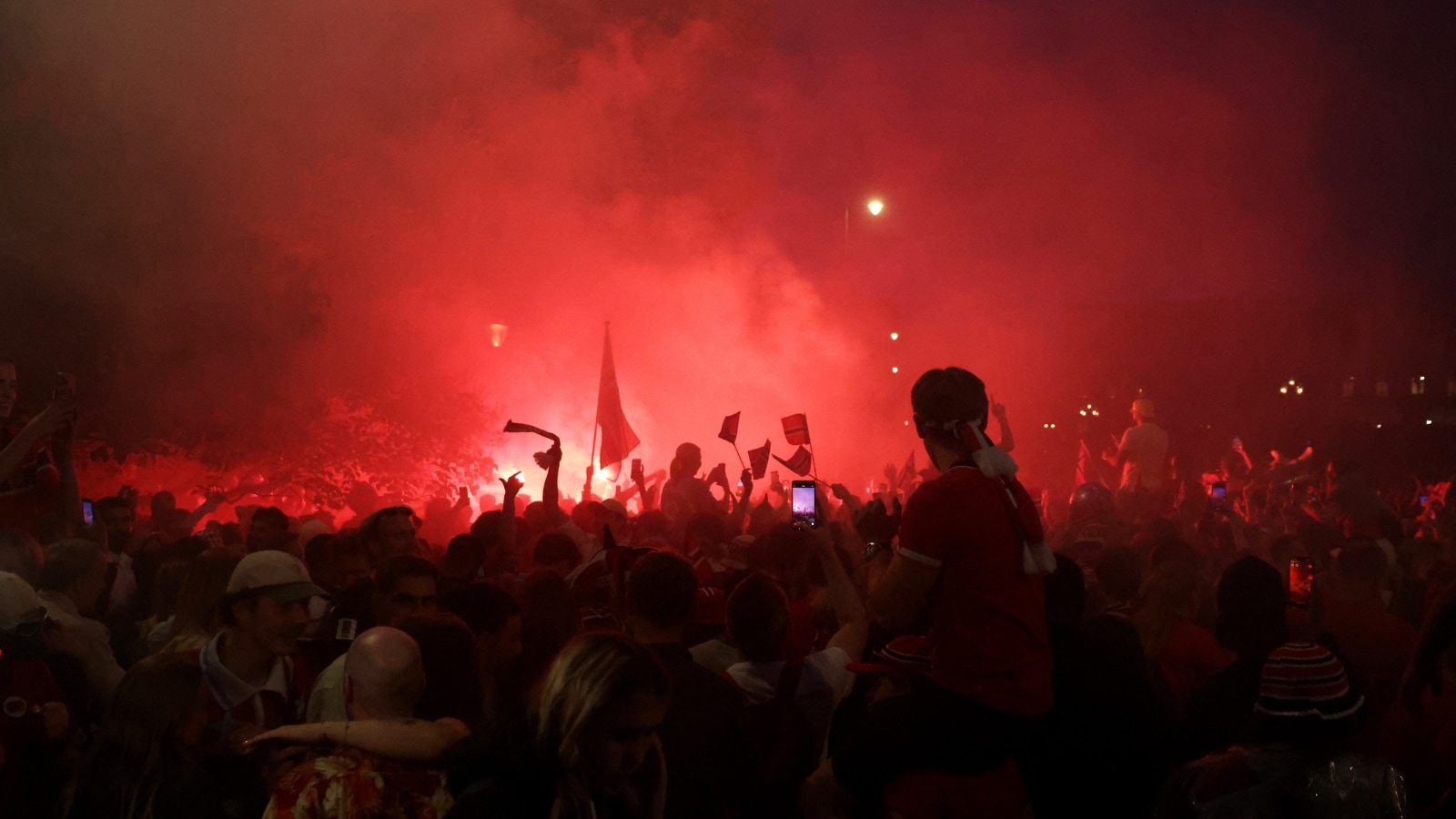
When tickets are treated as financial derivatives rather than passes to a sporting event, the soul of the game erodes. The stadium atmosphere changes. The roaring, chaotic, beautiful noise of lifelong supporters is replaced by the polite golf applause of corporate invitees who might not even know the offside rule.
The American legal system is uniquely equipped to handle this. Unlike Europe, where sports governing bodies often enjoy a degree of political deference, US regulators view sports through a cold, hard commercial lens. If you operate on American soil, you play by American market rules.
New York and New Jersey are not just protecting local fans; they are setting a precedent for how global sporting events must conduct business within their borders. They are demanding transparency in a system that has historically operated in the shadows of Swiss discretion.
The Invisible Stakes
This legal battle is about something much larger than sport. It is about the commodification of shared cultural experiences.
We live in an era where getting a ticket to see your favorite band, a hit Broadway show, or a championship game has become an exercise in frustration. The average consumer feels powerless against the algorithms, the hidden service fees, and the corporate allocations. It feels like a battle that was lost before it even began.
The subpoenas sent to FIFA represent a rare moment of institutional pushback. A state government using its power to say to a global entity: You cannot exploit our citizens just because you own the rights to a beautiful game.
The financial records demanded by James and Platkin will likely take months to untangle. FIFA’s legal team will undoubtedly argue jurisdictional boundaries and operational necessity. They will claim that their ticketing structures are required to ensure security and prevent illicit scalping.
But the friction has begun.
The beautiful game has always belonged to the streets, to the kids kicking a balled-up rag in an alley, to the communities that find identity in a club badge. The World Cup is supposed to be the celebration of that collective ownership.
If the American investigation succeeds, it might just force a fundamental re-evaluation of how these events are staged. It could mean a future where the lottery is truly a lottery, where pricing is transparent, and where the people in the stands actually reflect the world outside them.
The stadium lights will eventually turn on in East Rutherford. The world will watch. And as the players walk out onto the grass, the true measure of the event's success won't be found on the scoreboard, or in FIFA's quarterly revenue reports. It will be found in the faces of the people sitting in the seats, and whether they had to sell a piece of their future just to be there.