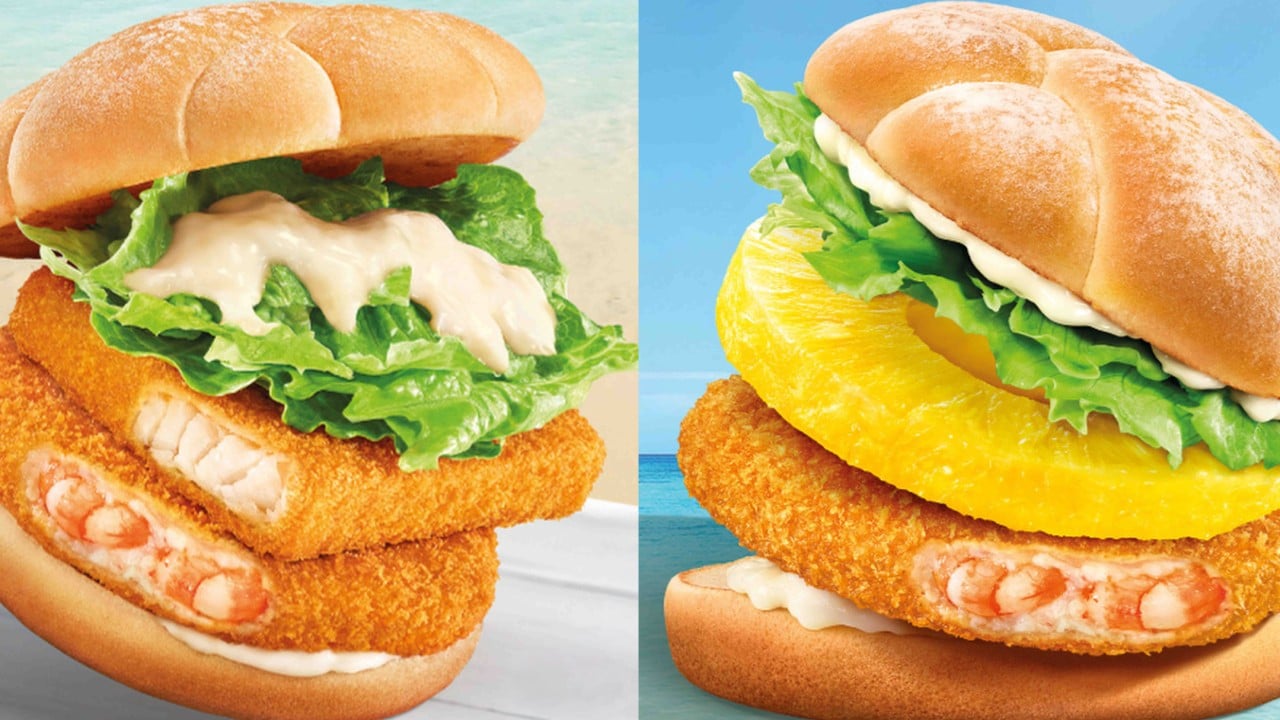
You smell it before you see it. That unmistakable, salty perfume drifting down a crowded Hong Kong sidewalk at midnight. Neon signs bleed red and green into the humid air, reflecting off the slick pavement. To millions, McDonald's is not just a fast-food chain; it is an anchor of urban certainty. A hot, predictable sanctuary in a city that never stops moving.
You walk in. You order the shrimp burger. For a deeper dive into similar topics, we suggest: this related article.
It is crispy on the outside, tender on the inside, and dipped in that sweet, tangy sauce you have loved since childhood. You take a bite. You do not think about chemical structures. You do not think about aquaculture farms thousands of miles away, glowing under artificial suns in the dark of night. You are simply eating dinner.
Then, miles away across the Taiwan Strait, a scientist in a white coat peers through the lens of a liquid chromatograph. A needle spikes on a monitor. To get more details on this development, extensive coverage can also be found on Al Jazeera.
Chloramphenicol.
The word sounds clinical. Sterile. Harmless, almost. But it is a ghost from a different era of medicine, a heavy-duty antibiotic banned from the food supply of human beings for a very good reason. And just like that, the midnight sanctuary shatters.
The Silent Invisible Guest
Let us step into a hypothetical kitchen in Kowloon to understand what happens next. Mei is a shift manager who has spent twelve years perfecting the rhythm of the fryers. She knows the exact second a hash brown turns golden brown by the sound of the oil. She takes pride in her work. Her store is clean. Her team is fast.
When the corporate email arrives at dawn, Mei does not understand the molecular terminology. She only understands the command.
Pull the stock. Lock the freezers. Do not sell another bite.
Her stomach drops. She looks at the stacks of pristine white boxes waiting on the shelves. Thousands of shrimp burgers. Millions of yen, or Hong Kong dollars, frozen in time. More importantly, she looks at the faces of her morning crew, young kids working their way through university, wondering if their restaurant is about to become a headline.
Why? Because of something microscopic. Something invisible.
Taiwanese health authorities had been running routine border checks. They sampled imported frozen shrimp products bound for consumption. The test results came back positive for chloramphenicol. Not in massive, dramatic quantities, but enough to trigger an international safety alarm.
To the average consumer, this sounds like an abstract bureaucratic squabble. A headline to scroll past while waiting for the subway. But food safety is never abstract. It is intensely personal. It is an act of absolute, blind trust. Every time you swallow a bite of processed food handed to you through a counter, you are making a staggering leap of faith. You are trusting that the corporation bought from a supplier who cared. You are trusting that the government tested the water. You are trusting that a technician five thousand miles away did not look the other way to shave two cents off a production cost.
When that trust breaks, it shatters quietly.
How Medicine Became Dinner
To grasp why chloramphenicol causes such a panic, we have to look backward.
Decades ago, this antibiotic was a miracle drug. It saved human lives from devastating bacterial infections when few other treatments existed. But doctors eventually discovered a terrifying side effect in a small percentage of patients: aplastic anemia. Bone marrow simply stops producing new blood cells. The body’s internal engine quietly grinds to a halt. It is unpredictable, catastrophic, and frequently fatal.
Because of this, global regulatory bodies drew a hard red line. Chloramphenicol must never enter the human food chain. Not in trace amounts. Not occasionally. Never.
Why would it end up in a shrimp burger, then?
Imagine a massive, sprawling shrimp farm in Southeast Asia. Millions of crustaceans packed tightly into artificial ponds. In conditions like that, disease spreads like wildfire. A single bacterial outbreak can wipe out an entire harvest overnight, ruining a farmer financially.
Faced with ruin, some producers turn to forbidden shortcuts. They mix powerful antibiotics into the feed to keep the creatures artificially alive in water that would otherwise kill them. The shrimp survive. They grow fat and pink. They get processed, frozen, packed into neat cardboard boxes, and shipped across international waters.
The antibiotic does not magically vanish. It embeds itself in the muscle tissue of the shrimp. It travels across oceans, past customs, through distribution networks, and straight into the oil vats of a gleaming restaurant in Hong Kong.
When McDonald’s Hong Kong suddenly pulled their shrimp burgers off the menu, they were not just reacting to a bureaucratic memo from Taiwan. They were pulling the emergency brake on a globalized supply chain that had momentarily spun out of control.
They issued statements about prioritizing food safety. They promised internal investigations. They traced the batches back to the source. Standard corporate crisis management. But PR statements cannot fix the lingering taste of unease in the mouth of the public.
The Cost of Convenience
We live in an age of miraculous convenience. We expect fresh seafood from the other side of the planet to sit on our plates on a Tuesday night for the price of pocket change. We demand perfection, speed, and endless variety.
But convenience has a shadow side.
When you outsource the production of your food to opaque, hyper-efficient global networks, you trade oversight for economy. Every link in the chain introduces a new layer of separation between the person eating the food and the person growing it. By the time a shrimp is battered and fried, its origin story has been completely erased.
Mei eventually reopened her restaurant doors. The shrimp burgers were replaced by chicken items and beef patties. Customers adapted. Life moved on. The news cycle churned forward, burying the story beneath a mountain of newer, louder crises.
Yet, the next time you stand at a counter and watch a bright digital menu board flash with delicious possibilities, take a second to look past the neon. Think about the invisible web of farms, labs, cargo ships, and testing kits stretching across the globe.
Trust is easy to give when everything goes right. It is only when the system fails that we realize how fragile the bridge really is.
The oil crackles in the background. The order number flashes on the screen. And the world keeps turning, one bite at a time.