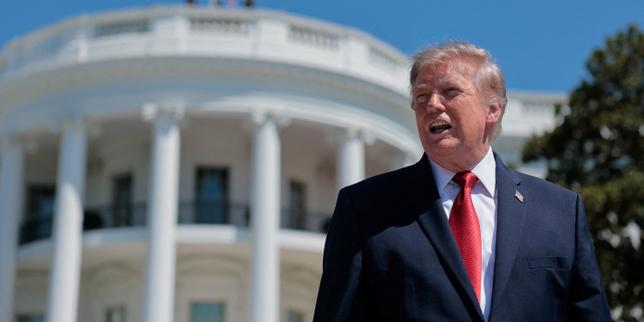
The recent back-and-forth between Washington and Seoul regarding the size of North Korea’s nuclear stockpile exposes a fractured reality. U.S. President Donald Trump’s assertion of 57 weapons stands in stark contrast to the South Korean defense establishment’s estimate of 80 to 120 units. This discrepancy is not merely a bureaucratic rounding error. It is a fundamental intelligence failure that complicates diplomatic outreach, security planning, and the very definition of a nuclear-armed state.
When state actors cite vastly different numbers for an adversary's arsenal, they signal that they are looking at the same closed door but seeing different things through the keyhole. For decades, the intelligence community has struggled to quantify Pyongyang’s progress because North Korea’s program is designed for invisibility. Centrifuges are notoriously easy to conceal, and underground testing facilities effectively mask the production of fissile materials like plutonium and highly enriched uranium.
The Arithmetic of Ambiguity
Why does the number matter so much, and why are we so bad at counting it? The answer lies in the distinction between "theoretical capacity" and "deployed capability." Experts often rely on indirect metrics: satellite imagery of reactor cooling water, the frequency and scale of underground seismic events during tests, and the assumed yield of centrifuges based on known global prototypes.
Consider a hypothetical scenario to understand the math. If an intelligence agency identifies a facility with a specific footprint of centrifuge cascades, they calculate potential output based on the number of machines. If they estimate 2,000 centrifuges are operational, they might guess a specific annual output of weapons-grade material. However, if those machines are running at 70 percent efficiency due to subpar local maintenance or power grid instability—factors common in a sanctioned economy—the output drops significantly. If the analyst assumes 90 percent efficiency, the estimate balloons. This is where the gap between 57 and 120 begins to form.
Washington and Seoul are not just disagreeing on a tally; they are debating the maturity of the North Korean industrial base. A lower number assumes that the regime is constrained by material shortages and technical hurdles that prevent rapid scaling. A higher number, such as the one favored by South Korean defense officials, suggests that Pyongyang has mastered a self-sustaining production cycle that defies international isolation.
The Diplomacy of Denial
The South Korean government finds itself in a precarious position. By acknowledging the existence of 80 to 120 weapons, they are technically admitting that the North is a nuclear-armed state, a reality they refuse to formally recognize. Seoul’s official policy remains the total denuclearization of the peninsula.
This creates a high-stakes irony. If the South Korean military prepares for a threat of 120 warheads, their defensive posture must reflect that magnitude. But to speak that number aloud in a political setting is to validate the legitimacy of the regime that built them. It forces officials to walk a thin line: treating the arsenal as a grave, tangible threat while maintaining the diplomatic fiction that the situation is temporary and reversible.
Trump’s citation of 57 weapons adds another layer of complexity to these negotiations. When a leader publicly assigns a specific, lower value to an adversary’s power, it can serve several functions. It might be an attempt to project confidence, minimize the perceived threat to ease public anxiety, or signal to Pyongyang that the U.S. is not yet treating their arsenal as an established, unchangeable fact. However, this lack of alignment between allies creates an opening for the North to exploit. If the U.S. and South Korea cannot agree on the inventory, they cannot agree on the starting point for disarmament talks.
Material Science and the Limits of Isolation
The struggle to count these weapons also reveals the hidden costs of the North Korean survival strategy. Because they are cut off from global markets, they have been forced to build an indigenous supply chain for everything from specialized steel to electronic triggers.
Industry analysts have long noted that this "do-it-yourself" approach usually results in lower-quality output. Impurities in fissile material often lead to unstable warheads, which in turn necessitates more testing to ensure reliability. While international sanctions have restricted the import of high-end components, they have also acted as an incubator for a crude, internal manufacturing culture that values quantity over precision. The higher estimates of 120 weapons likely account for a vast number of these potentially unreliable, smaller-yield devices that may not even be combat-ready.
Meanwhile, the delivery mechanism remains the most significant unknown. A nuclear warhead is merely a science experiment until it is coupled with a guidance system and a vehicle capable of surviving atmospheric reentry. Much of the discourse on "57 versus 120" ignores the fact that a hundred unreliable bombs are a different tactical threat than fifty highly sophisticated ones. The regime in Pyongyang understands this perfectly. They continue to test different delivery platforms—hypersonic, solid-fuel, and cruise missiles—to ensure that whatever number is in the inventory can actually be delivered to a target.
The Cost of Uncertainty
The danger of this numeric debate is not just that it is wrong, but that it dictates the flow of intelligence resources. If agencies assume the lower end of the spectrum, they may underfund the sensors and reconnaissance needed to track proliferation. If they assume the higher end, they might be over-calibrating their response, leading to costly and potentially provocative military deployments that keep the region on a knife-edge.
We are currently witnessing a period of strategic drift. Washington attempts to restart personal diplomacy with Kim Jong Un while its own intelligence estimates remain disconnected from those of its most vital regional ally. This creates a situation where the threat is not just the weapons themselves, but the lack of a shared reality in which to address them.
Any future attempt to freeze or roll back this program will run into the "accounting problem" immediately. When inspectors eventually enter the country—if that day ever arrives—they will need a baseline. If the Americans are looking for 57 and the South Koreans are looking for 120, the North can hide dozens of warheads in the delta between those two figures, effectively cheating an agreement before the ink is dry.
The obsession with the specific digit is a distraction. The reality is that the regime has transitioned from a theoretical nuclear power to a state that holds enough fissile material to threaten the survival of its neighbors. Whether the count is 50 or 120, the strategic calculus for the region has been rewritten permanently. We are no longer debating whether they have the bomb. We are debating how much of the world they can hold hostage at the same time. The numbers will continue to fluctuate based on political needs and intelligence methodologies, but the tactical objective of the regime remains constant: securing its own existence through the credible threat of mass destruction. Until a unified, verifiable methodology for counting this arsenal is established, both the diplomacy and the defense of the peninsula will remain built on sand.