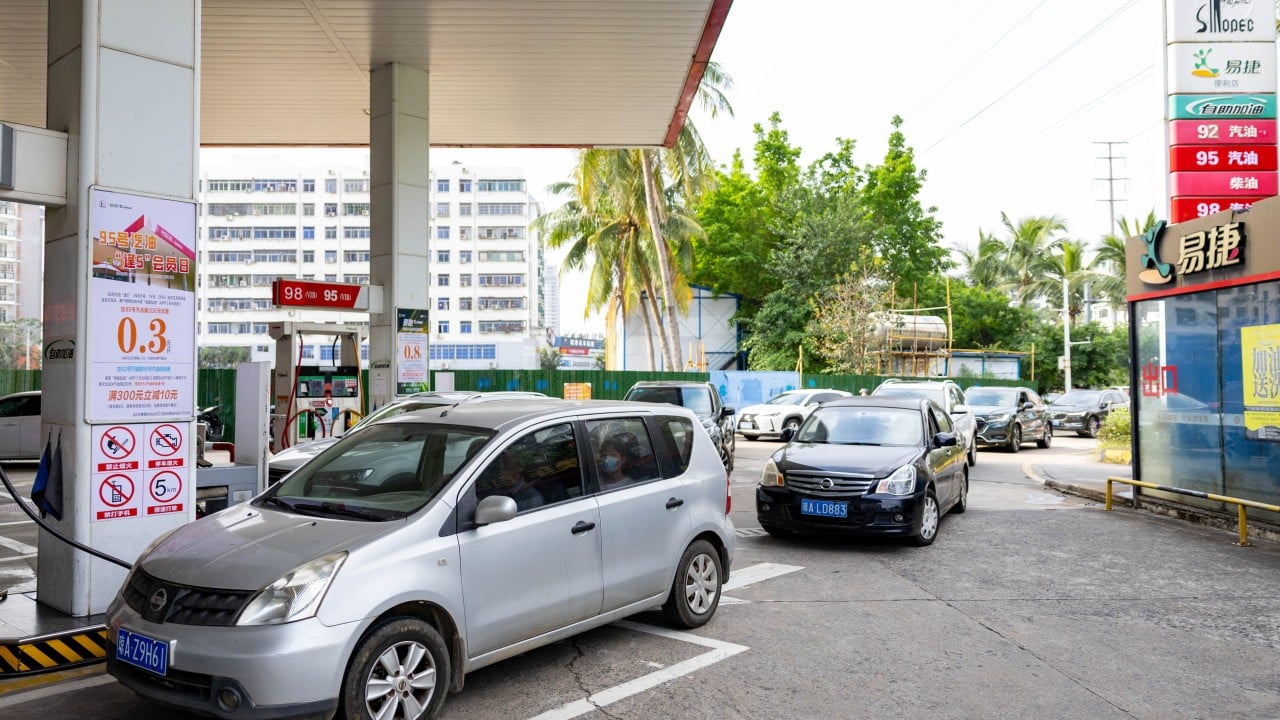
Western governments are backpedaling on green targets. The European Commission watered down its 2035 combustion-engine phase-out. Yet, China's tropical resort island of Hainan is doubling down.
Hainan just locked in its plan to entirely ban the sale of new gasoline and diesel cars by 2030. It is the first Chinese province to set a hard expiration date on the internal combustion engine (ICE).
If you think this is just another lofty government pledge, you're missing the bigger picture. Hainan is a closed island ecosystem with 10 million people. It is the perfect petridish. Beijing is using the island as a high-stakes testing ground to see if a 100% electric shift can actually work without crashing the power grid.
What is happening on the ground shows why this island experiment will shape the global auto industry.
The Math Behind the 2030 Target
Hainan's newly released "15th Five-Year Plan" contains aggressive targets. The province wants new energy vehicles (NEVs)—which in China include battery electrics, plug-in hybrids, and hydrogen fuel-cell cars—to make up 45% of its total rolling fleet by 2030. That is up from an estimated 23.75% in 2025.
To put that in perspective, Hainan's target is significantly higher than China’s national goal of a 30% NEV fleet share by 2030.
The transition will happen in phases:
- Public and Commercial Fleets: By 2030, every single new or replacement government vehicle, taxi, bus, and sanitation truck must run on clean energy.
- Private Cars: All new and replacement private passenger cars must be NEVs by 2030.
- The Only Exception: Specialized utility and emergency vehicles.
If you already own a gas guzzler in Hainan, you don't have to scrap it. The policy strictly bans the sale of new ICE vehicles, not the use of existing ones. But the local government is making life intentionally difficult for gas car holdouts. They are rolling out differentiated traffic management policies. This means EV drivers get preferential vehicle registration, priority road access, and parking privileges. Gas car owners will find themselves priced out and pushed out.
Why Hainan is the Ideal EV Sandbox
Geographically and logistically, Hainan was practically built for electric vehicles.
The island spans 35,400 square kilometers. The main G98 highway that loops around the entire island is only about 613 kilometers long.
For a modern EV with a range of 400 to 600 kilometers, range anxiety on this island is a non-issue. You can drive halfway across the province without even thinking about a charger.
The market is already responding. As of late 2025, Hainan's NEV penetration rate hit an astonishing 67.14%. That means two out of every three new cars registered on the island are already electric or hybrid. The province ranks first in China for EV market penetration and second in total EV ownership relative to its size.
The Grid Crisis Nobody Wants to Talk About
It isn't all palm trees and smooth driving. The real challenge of a 100% EV mandate isn't selling the cars—it is powering them.
Hainan sits at the absolute tail end of China's Southern Power Grid. Historically, the island has struggled with high electricity costs and a heavy reliance on power imported from the mainland. Plugging in millions of new EVs would easily collapse a fragile grid if left unchecked.
To prevent blackouts, Hainan is forced to completely overhaul its energy mix.
Hainan Energy Self-Sufficiency Projections:
2025: 24%
2030: 54% (Targeted)
By the end of June 2026, renewable energy—mainly solar and offshore wind—made up 50.1% of the island's total installed power capacity. The province is aggressively building out offshore wind farms and nuclear plants to ensure that the surge in electricity demand is met by green power, not coal.
The province is also mandating a highly dense charging network. The plan requires the vehicle-to-charger ratio to stay below 2.5:1. To achieve this, the government is building unified regional platforms that integrate charging stations, battery swap hubs, and localized solar microgrids.
They are also looking beyond batteries. For heavy-duty commercial trucks, shipping, and cold-chain logistics, Hainan is establishing hydrogen refueling networks. This includes exploring integrated deep-sea energy platforms that can supply electricity, hydrogen, and green methanol for maritime transport.
The Playbook for the Rest of China
A blanket nationwide ban on gasoline cars across China is highly unlikely anytime soon. The freezing winters of Heilongjiang and the vast, undeveloped distances of Xinjiang make a 100% EV mandate impractical for those regions right now.
Instead, Beijing is watching Hainan to build a regional rollout playbook. If Hainan can successfully manage the grid load and build a reliable charging infrastructure, expect wealthy coastal hubs like Shenzhen, Shanghai, and Guangzhou to quickly adopt similar localized bans.
If you are a global automaker still dragging your feet on electrification, Hainan's aggressive timeline is a clear warning. The transition in the world's largest auto market isn't slowing down. It is just getting started on a tropical island.
To see how local drivers are adapting to this rapid shift, check out this Hainan EV transition discussion, which breaks down the real-world impact of the 2030 ban on everyday car buyers.

:max_bytes(150000):strip_icc():focal(842x0:844x2)/twin-peaks-billy-zane-040425-70a37fe9a7cb4ffb9e7821106c80f296.jpg)

