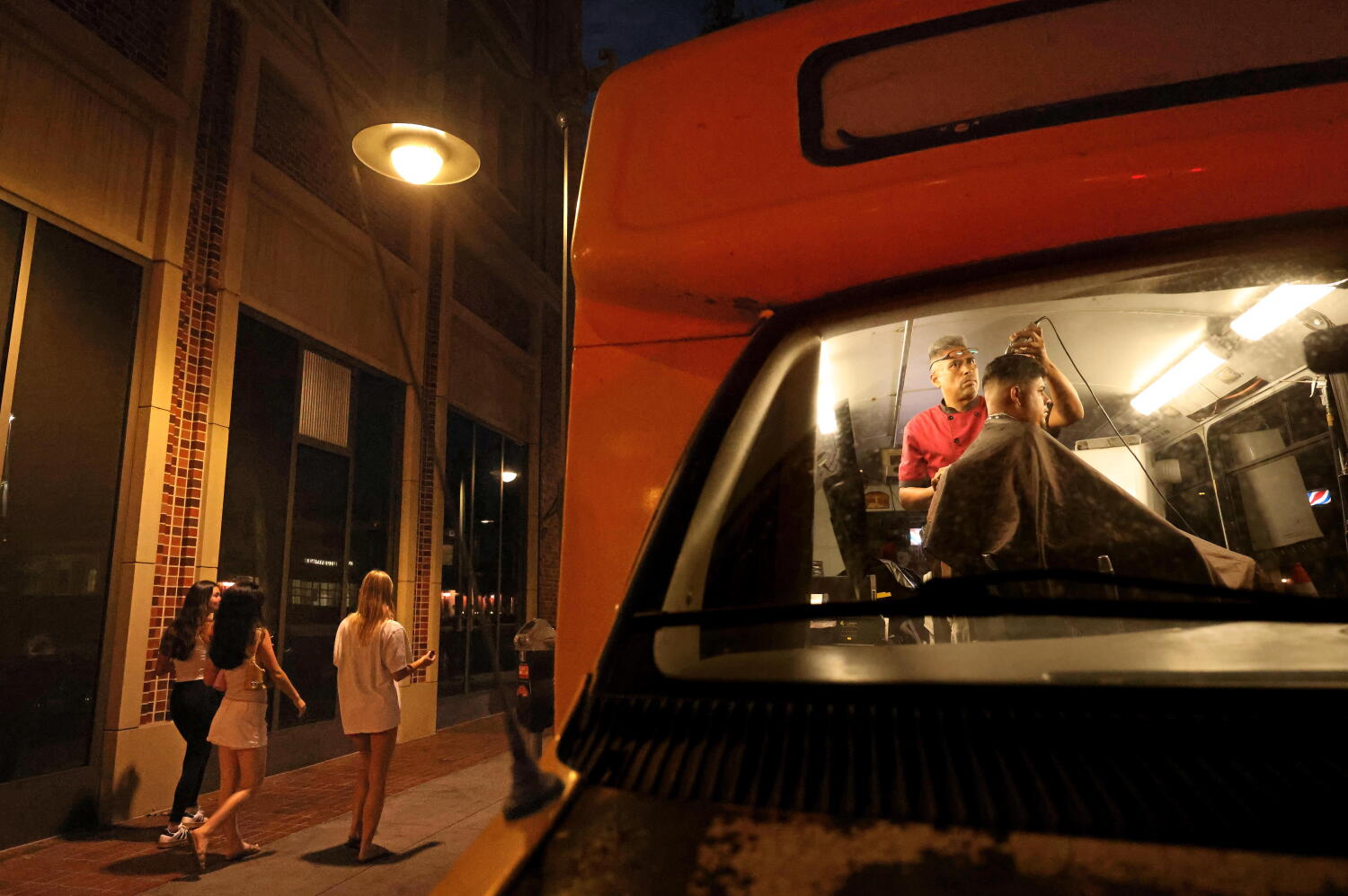
You step off campus, dodging electric scooters and the endless hum of traffic, only to find a bright yellow vehicle idling by the curb. It is not a campus shuttle. Inside, the sound of clippers buzzes against wood paneling and leather styling chairs.
Hector Trinidad—known across the neighborhood simply as Hector the Barber—did not follow a traditional business plan when the pandemic pulled the rug out from under his original storefront. Instead of closing up shop for good, he bought a retired school bus, gutted the interior, and parked his livelihood right where the customers live. Today, watching USC students board Hector the Barber's mobile setup has become a regular fixture of campus life near the USC Village.
Traditional brick-and-mortar barbershops face brutal overhead costs in Los Angeles. Rent spikes, permits drag on, and landlords care about profit margins rather than community culture. Hector took a different route. By putting wheels on his business, he bypassed commercial real estate insanity and brought the shop directly to his client base.
Inside the Converted Yellow Machine
Step past the folding accordion doors and the atmosphere changes completely. The classic bus layout is gone. Replacing the rows of cramped vinyl seats are professional barber stations, full-length mirrors, custom lighting, and storage built precisely for shears, guards, and styling products.
It is cozy, functional, and entirely unexpected. Students juggling midterms and group projects can walk out of a lecture hall, cross the street, and grab a fresh fade without burning an hour on transit. That convenience changes everything. College schedules operate on chaos, meaning flexibility always wins.
People love a clever pivot story, but execution matters more than novelty. Anyone can buy an old vehicle on the internet. Turning that metal box into a licensed, functioning salon that passes health codes and keeps appointments running on time requires serious grit. Hector spends long hours working into the evening inside the mobile unit, proving that craft beats location every single time.
Why Micro-Businesses Are Reshaping Urban Neighborhoods
Big chains and corporate storefronts dominate most college towns. They offer predictability, but they lack soul. Students respond to authenticity. They want to know the person holding the clippers, and they appreciate someone who hustled to build an independent business from scratch.
When traditional options fail, adaptation is the only way forward. The yellow bus parked near campus represents a broader shift in how local services operate in crowded cities. Traditional retail spaces are too expensive for independent tradespeople. Mobile setups lower the barrier to entry while meeting consumers exactly where they congregate.
If you need a cut around campus, you cannot just wander in blindly and expect an open chair. Booking in advance is mandatory because word of mouth keeps the schedule packed solid weeks ahead. That kind of loyalty cannot be bought with digital ads. It is earned one clean fade at a time on a repurposed school bus parked against the Los Angeles asphalt.
Skip the corporate salon chains next time you need a cleanup. Look for the yellow bus by the curb, respect the hustle, and remember to book your slot early.