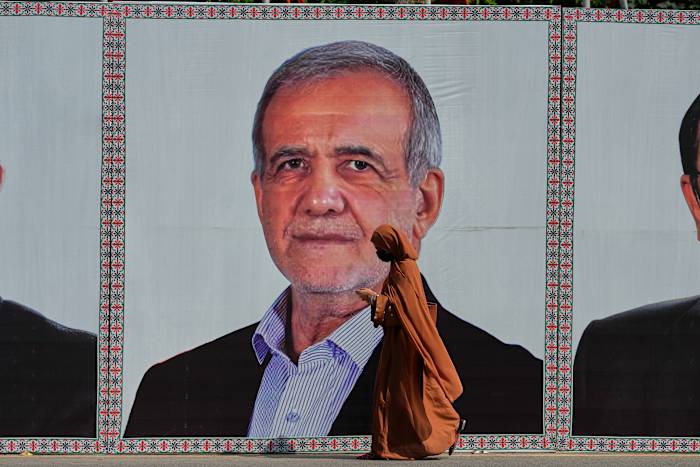
The Iranian presidency is moving diplomatic pieces across South Asia while negotiators in secure rooms try to finalize an agreement to end decades of hostility with the United States. Tehran is publicly projecting strength through regional visits, specifically a high-profile landing in Pakistan, but the real movement is happening in the quiet backchannels where American and Iranian teams are hammering out the technicalities of a sanctions-for-compliance trade. This is not a sudden burst of goodwill. It is a calculated, high-stakes gamble driven by economic desperation in Tehran and a desire for stability in Washington.
The public narrative focuses on regional alliances and state visits. The underlying reality is a complex web of economic survival, energy corridors, and covert security guarantees that could easily unravel before the ink dries.
The Triangulation of Islamabad
Geopolitics abhors a vacuum, and Pakistan finds itself acting as both a physical and political buffer. The arrival of the Iranian leadership in Islamabad is less about bilateral trade agreements and more about signaling. Tehran needs to demonstrate to the international community, and specifically to Washington, that it retains diplomatic options and regional leverage.
Pakistan occupies a precarious position in this diplomatic calculus. Islamabad relies heavily on financial backing from Gulf states, particularly Saudi Arabia, which views Iranian expansion with deep suspicion. At the same time, Pakistan faces chronic energy shortages that a proposed pipeline from Iran could alleviate. By hosting the Iranian delegation at the exact moment US-Iran teams are attempting to finalize a deal, Pakistan is attempting to balance its immediate energy needs against its long-term financial alliances.
The pipeline project itself serves as a perfect case study of this tension. Iran has completed its section of the infrastructure, while Pakistan has repeatedly delayed construction on its side, fearing triggered US sanctions. If the Washington negotiations yield a credible framework for sanctions relief, Islamabad can move forward on vital energy infrastructure without risking financial isolation. If the talks stall, the pipeline remains a multibillion-dollar trench in the desert.
The Mechanics of the Backchannel Deal
Behind the diplomatic theater lies a highly technical negotiation that relies on verification rather than trust. The core architecture of the proposed deal hinges on a phased implementation schedule.
Phase 1: Verification of Iranian Nuclear/Military De-escalation
       │
       ▼
Phase 2: Gradual Release of Frozen Iranian Assets (Escrow Accounts)
       │
       ▼
Phase 3: Sector-Specific Sanctions Relief (Energy & Shipping)
Washington requires verifiable caps on uranium enrichment and a cessation of regional proxy attacks. In return, Tehran demands the immediate release of tens of billions of dollars in frozen oil revenues currently held in international banks.
The primary mechanism under discussion involves third-party escrow accounts. Under this framework, restricted funds would be moved to banks in Qatar or Oman, earmarked strictly for humanitarian purchases like food and medicine. This structure allows the US administration to claim it is maintaining a hard line on terrorism financing, while providing the Iranian government with the fiscal breathing room necessary to stabilize its domestic economy.
The friction point remains the sequence of events. Tehran demands front-loaded sanctions relief as proof of American sincerity. Washington insists on verifiable compliance before a single dollar moves. Decades of broken agreements and mutual distrust mean that neither side is willing to take the first leap of faith.
Overlooked Domestic Pressures
While international analysts dissect the regional security implications, the driving forces behind these talks are intensely domestic for both primary actors.
The Iranian government faces an electorate deeply fatigued by hyperinflation, currency devaluation, and systemic economic mismanagement. The middle class has been effectively hollowed out by over a decade of severe financial isolation. For the leadership in Tehran, securing a deal is not an ideological shift. It is an act of regime preservation. The state needs capital to suppress domestic dissent and fund the basic social safety nets that keep the population quiet.
Conversely, the American administration is operating under a tight political clock. Foreign policy entanglements are liabilities during election cycles. A finalized agreement that defuses a long-standing flashpoint in the Middle East allows Washington to reallocate military and diplomatic resources to more pressing theaters, specifically the Indo-Pacific. The goal is management, not transformation. Washington wants to park the Iranian issue in a stable corner so it can focus on larger systemic competitors.
The Spoiler Network
No diplomatic breakthrough occurs in isolation, and several regional actors view a potential US-Iran normalization as an existential threat.
The Israeli Position
Israel remains the most vocal opponent of any accommodation with Tehran. The defense establishment in Tel Aviv views escrow accounts and phased sanctions relief as a smoke screen that will ultimately provide Iran with the liquidity needed to fund its regional network of militias. Israeli officials have dropped hints that they do not consider themselves bound by any agreement reached between Washington and Tehran, raising the distinct possibility of unilateral kinetic action that could derail the diplomatic process instantly.
Gulf State Skepticism
The maritime monarchies of the Persian Gulf view the proceedings with a mixture of anxiety and pragmatism. While Riyadh has engaged in its own diplomatic detente with Tehran, there is a lingering fear that a US-Iran deal will signal an American retreat from the region. If Washington removes its primary economic levers against Iran, Gulf states may feel compelled to accelerate their own defensive capabilities or seek alternative security guarantees from Beijing or Moscow.
The Enforcement Vulnerability
The fatal flaw of previous agreements was the lack of a robust dispute resolution mechanism that could survive domestic political shifts. If a deal is finalized, its longevity depends entirely on how violations are defined and punished.
The current framework discusses a snapback mechanism, where sanctions can be instantly reimposed if Iran violates the terms. This looks effective on paper, but the reality is far messier. Once global oil markets adjust to the return of Iranian crude, and international shipping companies re-establish trade routes, reinstating a total economic embargo becomes economically disruptive and politically difficult to coordinate. European and Asian buyers who rush back into the Iranian market will resist subsequent American pressure to sever those ties a second time.
Furthermore, the definition of a violation remains dangerously ambiguous. While nuclear enrichment levels are easily measurable by international inspectors, tracking compliance regarding regional proxy funding is notoriously difficult. A gray-zone cyberattack or a localized drone strike by an affiliated group can be plausibly denied by Tehran, leaving Washington with the difficult choice of either ignoring the provocation to save the deal or scuttling months of delicate diplomacy over an isolated incident.
The coming weeks will determine whether the current momentum represents a genuine structural shift or merely another temporary pause in a generational conflict. The meetings in Islamabad and the secret sessions in Gulf capitals are parts of the same geopolitical puzzle. The actors are moving into position, the terms are on the table, and the margin for error has never been smaller.


