When executive trade mandates collision-course with global equity markets, Wall Street does not panic in public. It quietly pulls the plug on the deal pipeline.
The abrupt escalation of sweeping import tariffs and public jawboning over equity valuations has chilled the primary capital markets, freezing a multi-billion-dollar backlog of initial public offerings. Late-stage tech unicorns and consumer giants that spent months preparing roadshows are suddenly backing away from public listings, forced to re-evaluate their balance sheets in an era where policy shifts arrive by executive decree rather than legislative debate.
This isn't merely temporary volatility. It represents a fundamental structural shift in how corporate valuations, international trade, and public markets intersect.
The Market Freeze and the Pipeline Fallacy
For two years, investment bankers promised that a tidal wave of massive initial public offerings would rescue a dormant deal market. Companies like StubHub, Klarna, Chime, and Circle stood at the threshold of public trading, buoyed by stabilizing interest rates and appetite for growth equity.
Then came the policy hammer.
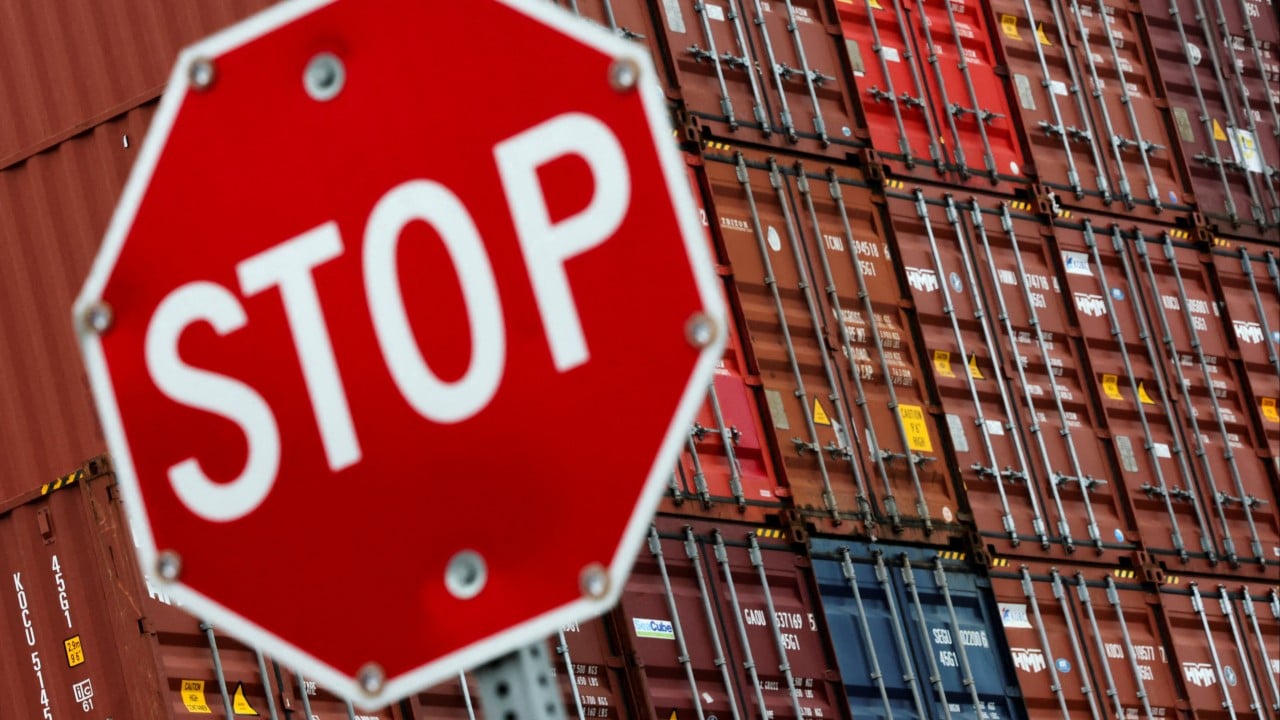
Sweepingly broad tariffs on foreign imports—accompanied by public warnings against offshore supply chains and threats of punitive levies—shattered the pricing assumptions underlying those listings. Initial public offerings require a stable environment to price risk accurately. When sudden policy shifts threaten a company's profit margins overnight, institution-level investors demand deep discounts that founders and venture backers refuse to accept.
Consider a hypothetical consumer tech business importing specialized hardware components from East Asia. Under stable tariff conditions, the company projects a 28 percent gross margin, supporting a ten-billion-dollar market valuation. Place a sudden 15 to 25 percent tax on those imported components, and that margin shrinks to single digits unless price increases get passed entirely to end consumers—a move that risks destroying sales volume. Investment bankers cannot underwrite an offering when the fundamental unit economics depend on policy decisions announced on social media over a weekend.
The result is a total stand-still. Companies that filed confidential registration statements with regulatory agencies are now quietly extending their private runway, choosing expensive venture debt or down-round private capital over public market scrutiny.
When Executive Jawboning Replaces Financial Fundamentals
Direct intervention in equity markets by political leaders is not new, but the current iteration operates with unprecedented speed and blunt force. Recent public statements targeting specific industries, generic pharmaceuticals, and international supply lines have turned market forecasting into an exercise in political risk management.
The Margin Compression Mechanism
Tariffs act as a direct tax on domestic corporations long before they ever register as a consumer price statistic. Companies face three immediate choices, none of which appeal to public market investors:
- Absorb the cost burden directly: Squeeze net income, lower forward earnings per share, and watch price-to-earnings multiples contract sharply.
- Pass costs to end users: Risk demand destruction in an environment where middle-class consumer budgets are already stretched by persistent inflation.
- Reshore supply chains rapidly: Spend hundreds of millions of dollars in capital expenditures to build domestic manufacturing facilities, a process that takes years to execute and yields zero short-term earnings growth.
When policymakers threaten additional tariffs on essential goods like generic medicines or tech hardware, equity markets react instantly by repricing entire industry groups downward. The underlying financial health of a business becomes secondary to its exposure to trade enforcement.
The VIX Paradox and the Real Cost to Private Capital
Wall Street traders track the CBOE Volatility Index, or VIX, to gauge market fear. Historically, a VIX reading above 30 indicates severe distress, while a reading near 15 signals calm. But the current environment has created a localized volatility loop where overall index levels may appear stable on paper while specific sectors experience severe turbulence.
This selective volatility is lethal for mega IPOs. Large-scale listings require broad institutional consensus across pension funds, sovereign wealth managers, and mutual funds. When policy directives create sudden binary outcomes for global supply chains, institutional risk managers simply refuse to participate.
The downstream effects on private equity and venture capital are profound.
Institutional capital that entered private companies at peak valuations between 2021 and 2023 is now trapped. Without a functional IPO window, private funds cannot return capital to limited partners, stalling the entire ecosystem of secondary fundraising and early-stage venture investment.
Private funds are forced to create secondary liquidity vehicles or accept preferred equity structures that guarantee returns for new investors while diluting existing employees and early backers. What was designed to be a temporary pause in public listings is hardening into a multi-year liquidity crunch across the private equity domain.
Beyond the Headline Volatility
To understand where this leaves institutional investors, one must look past daily stock ticker gyrations and examine capital flow dynamics.
Money does not simply sit on the sidelines during periods of state-driven market intervention; it migrates to areas of artificial shelter. Capital that once flowed toward innovative growth companies seeking public listings is shifting into short-duration Treasuries, large-cap defense contractors, and heavily subsidized domestic industrial plays that benefit directly from executive decrees.
This creates a systemic misallocation of capital. Businesses that should be expanding based on product innovation and operational efficiency are sidelined, while companies engineered to navigate regulatory loopholes and capture federal incentives gain market share.
The mega IPO market will eventually return, but the companies emerging on the other side will look drastically different. They will carry lower valuations, possess domestic-heavy supply chains regardless of economic inefficiency, and trade at permanent risk discounts reflecting an era where policy mandates routinely override corporate strategy.
Until institutional investors gain long-term clarity on global trade rules, the public market remains closed to any candidate unable to absorb sudden double-digit cost increases overnight.
.png)