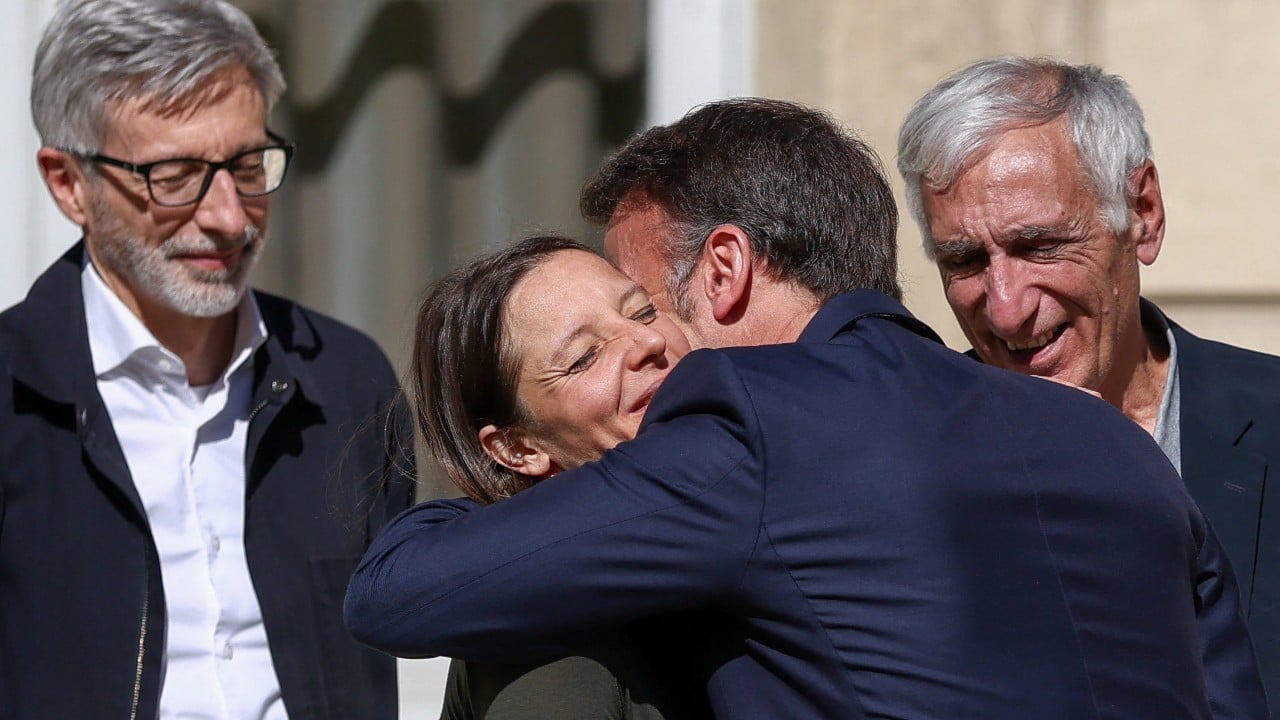
Cecile Kohler and Jacques Paris are finally back on French soil. They spent two years in an Iranian prison. President Emmanuel Macron met them at Villacoublay airport outside Paris. It was a moment of heavy relief. But it’s also a moment that forces us to look at the ugly reality of "hostage diplomacy." France keeps dealing with a regime that uses humans as bargaining chips. It's a cycle that doesn't seem to end.
You saw the images. Kohler and Paris looked thin. They looked tired. They've been through what Macron called a "terrible ordeal." That’s an understatement. They were arrested in May 2022. The charge? Espionage. Iran claimed they were meeting with protesting teachers to stir up trouble. France always maintained they were just tourists. Most people know how this works by now. Iran picks up foreigners, labels them spies, and waits for a deal.
The Reality of Hostage Diplomacy in 2026
Iran has turned detaining Westerners into a specialized craft. It isn't about law. It’s about leverage. When Kohler and Paris stepped off that plane, they weren't just returning citizens. They were the result of months of quiet, grueling negotiations.
The French government doesn't like to talk about what they gave up. They never do. Usually, it involves frozen assets or prisoner swaps. We know that Oman often acts as the middleman. They've done it for years. They bridge the gap between Paris and Tehran when direct talk hits a wall. But every time a deal happens, it sets a price. It tells Tehran that taking a French teacher or a researcher works.
People often ask if these travelers were just reckless. Some were. But many are just caught in the wrong place at the wrong time. Kohler and Paris were educators. They weren't intelligence officers. They were convenient targets.
Why Iran Targets French Citizens
France and Iran have a complicated history. It’s a mess of nuclear deals, sanctions, and regional power plays. When France takes a hard line on Iran’s nuclear program, someone usually gets arrested in Tehran. It's a direct response.
The conditions in Evin prison are notorious. We're talking about solitary confinement and psychological pressure. Kohler and Paris spent hundreds of days in those conditions. It breaks people. The "confessions" Iran broadcasts are scripted. They’re forced. Everyone knows they aren't real, but they serve a purpose for the Iranian domestic audience.
Macron’s presence at the airport was a political necessity. He needed to show that the state doesn't abandon its own. But behind the handshakes and the emotional reunions, there's a growing frustration in the Quai d'Orsay. They’re running out of things to trade.
The Three French Citizens Still Trapped
We shouldn't celebrate too long. Three more French nationals are still sitting in Iranian cells. This includes a man named Louis Arnaud. His situation is just as grim. He was sentenced to five years. Why? Because he was traveling.
The French foreign ministry has a very clear warning on its website. It says "do not go." It doesn't matter if you're a dual national or a researcher. If you have a French passport, you’re a target. If you ignore that warning, you’re gambling with years of your life.
Breaking the Cycle of State-Level Kidnapping
The international community is failing here. We treat these cases as individual consular issues. They aren't. This is state-sponsored kidnapping. Until there's a collective cost for Iran, they won't stop. If Paris pays a "ransom" in the form of a policy shift, it just puts a target on the next tourist.
France needs to lead a more aggressive European response. Sanctions aren't enough when they're applied piecemeal. There needs to be a total diplomatic freeze every time a civilian is snatched off the street for political gain.
If you're planning a trip to the region, check the latest travel advisories from the Ministry for Europe and Foreign Affairs. Don't assume your passport protects you. In Tehran, it’s a liability. Support organizations like Amnesty International that track these detainees. They keep the names of the "forgotten" ones in the public eye. Without public pressure, the government might move slower on the remaining three.
Stay informed. Don't travel to "red zone" countries. The price of a vacation shouldn't be two years in a concrete cell.