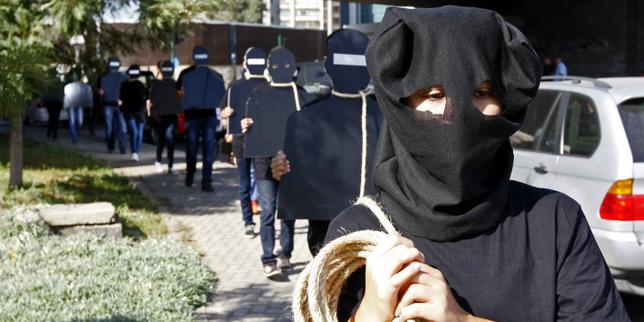
Ink dries on parchment. A gavel falls in a hushed courtroom in Beirut. Somewhere in the dark recesses of a bureaucratic archive, a box is checked, a policy shifts, and the state officially turns its back on the gallows.
Silence.
Outside, the Mediterranean breeze carries the scent of salt and exhaust. Traffic jams choke the Corniche. Generators hum their familiar, deafening chorus against the backdrop of another rolling blackout. A man stands at a bus stop, clutching a grocery bag with two tomatoes and half a loaf of stale bread. He does not know about the new legal milestone. He does not care. He is too busy calculating whether the devaluation of his currency will allow him to buy medicine for his mother tomorrow.
This is the great paradox of modern governance. Rulers love grand gestures. They wrap themselves in the velvet robes of progress while the floorboards beneath them rot.
To understand what just happened with the abolition of the death penalty in Lebanon, we must first strip away the applause. We must look at the machinery of justice not as it appears in glossy international reports, but as it is experienced by the people trapped inside its gears.
Consider a hypothetical citizen we will call Youssef. He is an auto mechanic in Tripoli. He works with grease-stained hands and a persistent cough from inhaling brake fluid. One evening, a dispute over a car part escalates. Tempers flare. A scuffle ensues, and a local notable's nephew ends up injured. Within hours, Youssef is pulled from his bed by armed men.
Does Youssef worry about the death penalty?
No. He worries about disappearing into the system entirely.
In a functioning republic, an arrest is the beginning of a transparent, predictable process. In Lebanon, an arrest is often an unmapped descent into an underground cavern. Years bleed together without a trial. Documents vanish from damp filing cabinets. Judges are shuffled like playing cards based on political patronage rather than legal merit. The death penalty was rarely carried out anyway—Lebanon has observed a de facto moratorium on executions since 2004. Removing the legal mechanism from the books is a victory for human rights, yes. It aligns the nation with international treaties. It stops the state from holding the ultimate lethal threat over its citizens.
Yet, for Youssef, sleeping on a concrete floor in an overcrowded prison where scabies spreads like wildfire and food is rationed to near starvation, the absence of the hangman's noose is cold comfort.
He is not facing the gallows. He is facing oblivion.
The rot in the Lebanese judicial system goes deeper than capital punishment. It is structural, systemic, and cultural. When the judiciary is tethered to sectarian quotas, justice ceases to be an independent pillar of society. It becomes a weapon for the powerful and a shield against accountability. If a politician's cousin steals millions from the public treasury, the courts stall. If a judge tries to investigate the catastrophic port explosion that shattered half the capital, political pressure mounts until the investigation is paralyzed.
When the foundation of a house is made of sand, painting the front door a brighter shade of blue does not keep the roof from collapsing.
We must acknowledge the symbolic weight of abolition. Symbols matter. They set a moral baseline. They declare that the state recognizes the sanctity of human life, even when that state fails miserably at protecting it in almost every other way. Human rights advocates who fought for decades to achieve this milestone deserve recognition. Their persistence kept a humanitarian flame burning in a dark room.
But symbols without institutional reform are dangerous. They create an illusion of reform. They allow international donors and local politicians to point to a legislative checkbox and declare victory. Look, they say, we are modern. We are civilized. We have joined the enlightened nations.
Meanwhile, pre-trial detention stretches far beyond legal limits. Confessions are routinely extracted through coercion. Access to legal counsel during initial interrogations remains a distant dream for the impoverished. The prisons are human warehouses where minor offenders share space with violent criminals, turning holding facilities into breeding grounds for radicalization and despair.
Let us return to Youssef. Imagine his case finally comes before a judge, three years after his arrest. The judge is exhausted, underpaid, and acutely aware that his appointment depends on pleasing a local sectarian boss. There is no jury. There is only a file filled with conflicting testimonies and missing evidence. The verdict is handed down not on the merits of the law, but on the shifting currents of political leverage.
Youssef is sentenced to five years of hard labor for a crime he did not commit. He will not hang. He will simply rot, slowly, away from the eyes of the world.
Is this justice?
Of course not. It is merely slow motion cruelty packaged in legal jargon.
The abolition of capital punishment in Lebanon is a historic step forward, but it floats like a balloon detached from its anchor. Until the courts are liberated from sectarian interference, until judges are appointed based on integrity rather than loyalty, until basic due process is guaranteed to every citizen regardless of their wealth or family name, the halls of justice will remain a theater.
The stage has been cleaned up a bit. The darkest prop has been removed from the set.
The play, however, remains a tragedy. And the audience is still waiting for an intermission that never comes.