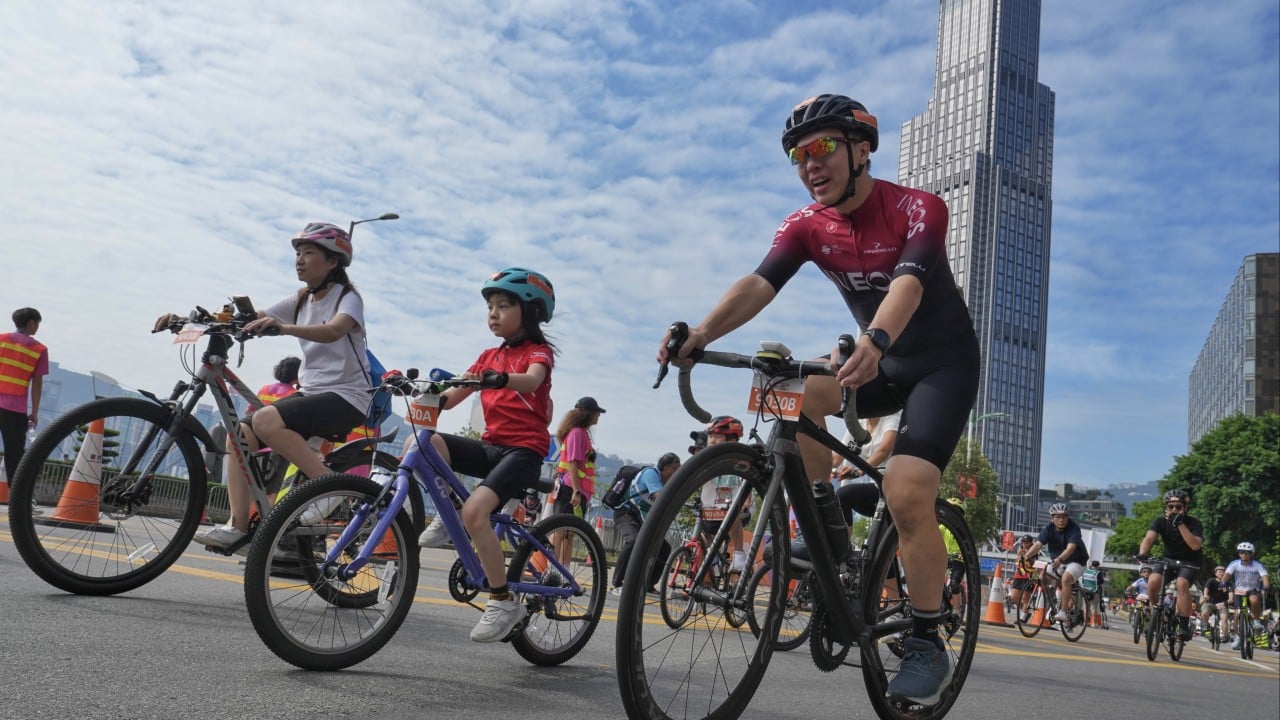
Every autumn, the sports marketing machine of the Hong Kong Tourism Board grinds into gear to celebrate the Hong Kong Cyclothon. The headline this year centers on an expanded "five tunnels, three bridges" route. City officials and cycling advocates high-five each other in press releases, treating asphalt access for a few hours as a breakthrough for two-wheeled transit.
It is a theatrical illusion. If you enjoyed this piece, you should look at: this related article.
Expanding a closed-course, tokenistic playground race for one morning does nothing to fix the systemic hostility of Hong Kong infrastructure toward actual commuters. In fact, it acts as a pressure valve, letting authorities pretend they care about cycling while maintaining a status quo that bans everyday utility cycling from the streets where it actually matters.
Let us look past the glossy promotional drone footage and dismantle why this route expansion is a superficial distraction from a deeper failure in urban planning. For another angle on this event, refer to the latest coverage from CBS Sports.
The Tourism Trap Versus Daily Reality
The lazy consensus in sports commentary frames any event expansion as an outright win. More tarmac equals more progress, right? Wrong.
When you extend a route across iconic infrastructure like the Tsing Ma Bridge or the Nam Wan Tunnel for a tightly controlled, heavily vetted morning race, you are not building a cycling culture. You are hosting a theme park ride.
I have spent years watching cities throw money at marquee sports tourism while ignoring the boring, unsexy mechanics of commuter mobility. Real cycling advocacy does not look like thousands of weekend warriors in carbon-fiber kit paying hundreds of dollars to sprint through a highway tunnel that is locked down by police escorts for three hours. Real cycling advocacy looks like protected grade-separated lanes connecting housing estates to MTR stations on a Tuesday rush hour.
Imagine a scenario where the energy, capital, and logistical nightmare of shutting down major arterial motorways for a single day of VIP recreation was instead redirected toward carving out permanent, protected commuter lanes across Kowloon and the New Territories. The narrative collapses under its own weight. The Cyclothon is not a step toward a bike-friendly Hong Kong; it is an annual distraction that proves the government knows how to manage bicycles on highways—only they choose to do it exclusively for ticket holders and media cameras.
The Engineering Fallacy Of Tunnels And Bridges
Let us talk about the infrastructure itself. The "five tunnels, three bridges" flex sounds impressive on paper. It evokes grand engineering feats, sweeping coastal vistas, and high-speed descents.
Physically hauling yourself through a highway tunnel on a bicycle is a masterclass in sensory deprivation and respiratory punishment. Tunnels like the Cheung Tsing or Nam Wan are engineered for internal combustion engines. They trap exhaust fumes, amplify noise to deafening decibels, and offer zero ventilation designed for human aerobic exertion. Pushing thousands of cyclists through subterranean motorways is not a triumph of route design; it is a claustrophobic novelty act masquerading as elite sport.
Bridges present a different physics problem entirely. Crosswinds on structures like the Stonecutters Bridge or Tsing Ma can turn a lightweight road bike into a literal kite. When authorities curate a route based entirely on what looks dramatic for television rather than what forms a coherent, safe, year-round urban grid, they prioritize aesthetics over utility.
The Real Question Nobody Is Asking
People often ask: How can Hong Kong position itself as a world-class cycling hub if it does not host mega-events on iconic infrastructure?
That is the wrong question. It accepts the premise that Hong Kong's primary benchmark for success is how many viral social media clips it can generate for overseas tourists.
The correct question is: Why is a city with some of the most advanced public transit networks on earth completely incapable of letting a delivery worker or office employee ride a bicycle to work without risking their life against a double-decker bus?
When you look at cycling integration in dense Asian urban centers, places like Taipei or select districts in Tokyo understand that bicycles are tools of mass transit, not props for annual postcards. They invest in micro-mobility networks that connect neighborhoods. Hong Kong, conversely, treats the bicycle as either an extreme sport or a weekend toy, rigidly segregated from the daily economic life of the city.
Dismantling The Safety Alibi
The primary excuse trotted out by transport bureaucrats for keeping everyday cyclists off main roads is safety. They point to the steep topography, narrow lanes, and aggressive driving culture of minibuses and taxis as immutable laws of nature.
This is a manufactured excuse. Safety is not a fixed attribute of a landscape; it is a design choice.
When you design roads exclusively for high-speed vehicular throughput, you get high-speed carnage. When you reallocate street space through physical separation, reduced speed limits, and intelligent signaling, you engineer safety into the concrete. The Cyclothon proves that authorities can shut down major arteries and manage heavy vehicle corridors safely when they want to. The moment the VIP medals are handed out, however, that operational competence vanishes, and the city reverts to telling everyday riders that safety is their personal problem.
What A True Cycling Revolution Looks Like
If Hong Kong actually wanted to transform its relationship with two wheels, it would scrap the elitist pageantry of the Cyclothon and redirect that exact operational budget into three concrete structural changes:
- Permanent Grade Separation: Retrofitting existing flyovers and highway shoulders with physical barriers to create interconnected commuter corridors that bypass pedestrian footbridges and hostile multi-lane junctions.
- Last-Mile Integration: Mandating secure, high-capacity bicycle parking hubs at every major MTR terminus in the New Territories, rather than treating bike racks as an afterthought or confiscating bikes left near stations.
- Commercial Street Redesign: Lowering speed limits in commercial districts like Mong Kok and Kwun Tong to 30 kilometers per hour, legally prioritizing vulnerable road users over commercial fleet operators.
These solutions are not glamorous. They do not feature in promotional tourist videos broadcast on international flights. They require political capital, fierce negotiations with transport unions, and a willingness to inconvenience motorists.
As long as the Hong Kong Tourism Board and transport officials can slap a flashy label on a temporary highway closure and call it progress, nothing will change.
Stop celebrating a parade that lasts a morning while the rest of the year remains hostile to everyone outside a steel cage.