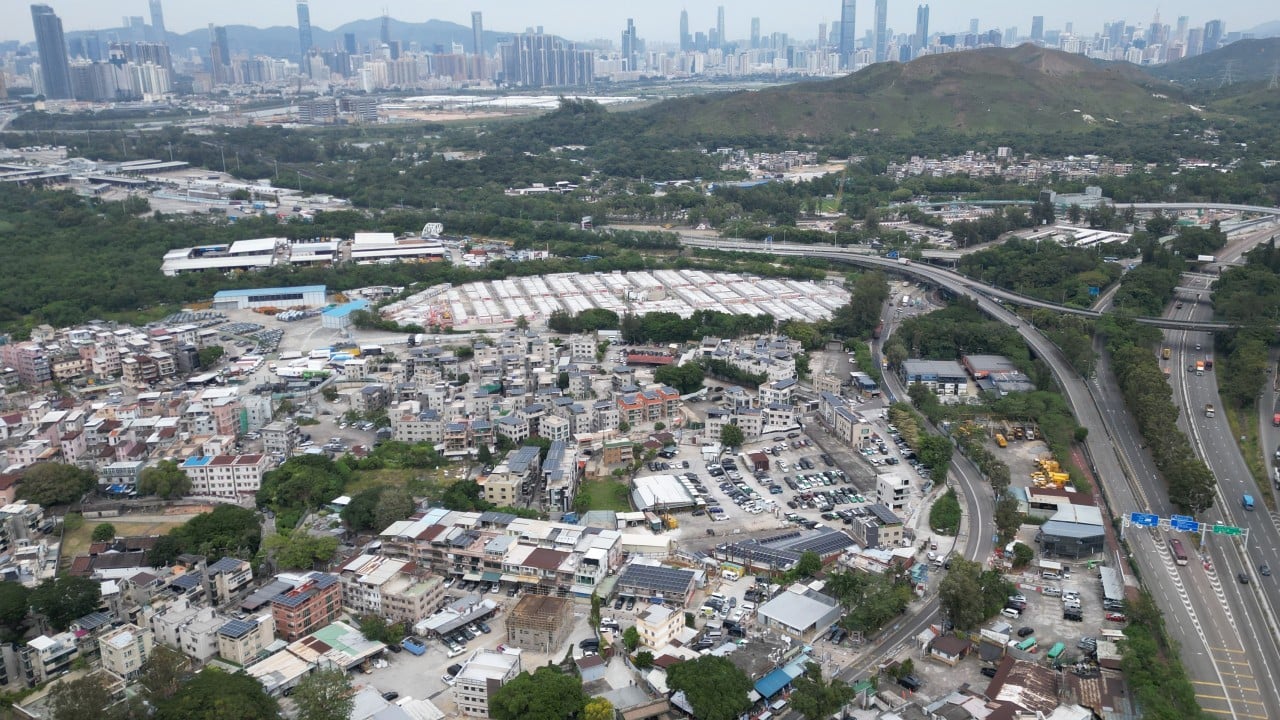
Governments love playing SimCity with real money. The latest obsession in Hong Kong is the San Tin Technopole, a massive 600-hectare project that officials claim will become the "Silicon Valley of the East." To speed things up, the government is forming a dedicated company this year to manage the rollout. They want you to believe that bureaucratic efficiency and "fast-tracking" are the secret ingredients to a tech renaissance.
They are wrong. Don't forget to check out our recent article on this related article.
Innovation cannot be manufactured by a committee of urban planners and civil servants. History is littered with the corpses of "tech hubs" that turned into ghost towns or, worse, overpriced office parks for companies that stopped innovating a decade ago. If you think a government-owned corporation is the spark needed to ignite a startup explosion, you don't understand how startups work. You understand how property development works.
The Special Purpose Vehicle Trap
Setting up a government-owned company to manage San Tin is a classic move to bypass the very friction that keeps public spending honest. By moving the project into a corporate entity, the government can shield its financial maneuvers from the same level of scrutiny applied to departmental budgets. It is an exercise in administrative agility, sure, but for whom? To read more about the background of this, Business Insider offers an excellent summary.
The "fast-track" is rarely about speed of discovery; it is about speed of construction. The goal is to get steel in the ground and glass on the facades. This creates a dangerous misalignment of incentives. A developer's success is measured by occupancy rates and square footage. A technologist's success is measured by intellectual property, market disruption, and scalability.
When the landlord is the one driving the strategy, you get a "hub" designed for big-ticket tenants—the kind who can sign ten-year leases and provide "stability." These are usually the exact legacy firms that genuine innovators are trying to put out of business.
Silicon Valley Was an Accident, Not a Blue Print
The biggest mistake planners make is trying to reverse-engineer the success of Palo Alto. They look at the current state of Northern California—the high-rises, the VC offices, the polished campuses—and assume that if they build the physical shell, the soul will follow.
They ignore the fact that Silicon Valley grew out of a specific, messy convergence of Cold War defense spending, a radical counter-culture, and a total lack of centralized planning. It was chaotic. It was unplanned. It was cheap.
San Tin, by contrast, is being curated. Every hectare is mapped; every "cluster" is designated. By the time the first engineer moves in, the rent will already be too high for a couple of kids in a garage to afford. Innovation thrives in the margins, in the "low-rent" districts where the cost of failure is manageable. San Tin is being built as a high-rent district from day one.
The Myth of "Firms Eyeing the Move"
Headlines are currently buzzing with reports of companies "eyeing" a move to the tech hub. Let’s be clear: a multi-national corporation "expressing interest" is not a victory. It’s a negotiation tactic.
Large firms love these hubs because they can extract massive subsidies, tax breaks, and infrastructure concessions from a government desperate for a PR win. They bring a thousand employees, but they don't bring the R&D core. They bring regional sales offices and support centers. They "anchor" the development, but they don't fertilize the ecosystem.
If the government’s metric for success is how many Fortune 500 logos they can slap on the side of a building, they will succeed. But don't call it a tech hub. Call it a subsidized business park.
The Talent Vacuum
Hong Kong has a talent problem that a new company in San Tin won't fix. You can build the most "robust" (one of the few times that word is even remotely applicable to physical concrete) laboratory in the world, but if the PhDs are moving to Singapore, London, or Shenzhen, the buildings are just empty shells.
Talent follows two things: capital and freedom. While Hong Kong still has the capital, the competitive landscape for tech talent has shifted. Engineers don't want to live in a "designated zone" an hour away from the city's pulse unless there is a compelling reason to be there.
The Northern Metropolis project assumes that proximity to Shenzhen will create a "synergy" (a term usually used by people who haven't actually integrated two supply chains). But Shenzhen is already winning because it is a manufacturing beast. Hong Kong's advantage was always its legal system, its capital flow, and its internationalism. Building a tech hub that mimics a mainland industrial zone plays to Hong Kong’s weaknesses, not its strengths.
Why "Fast-Tracking" Often Means "Cutting Corners"
When a government says it wants to "fast-track" a massive land project, it usually means two things:
- Environmental impact assessments will be "streamlined" (ignored).
- Public consultation will be "optimized" (silenced).
In the case of San Tin, we are looking at the destruction of ecologically sensitive wetlands. The trade-off presented is "environment vs. economy." But this is a false choice. A tech hub that begins its life by alienating the community and destroying the local environment starts with a massive deficit of social capital.
Top-tier global talent—the kind who can choose to work anywhere—increasingly cares about the ethics and sustainability of their environment. If San Tin becomes a symbol of ecological disregard, it will struggle to attract the very innovators it claims to want.
The Governance Problem: Who Is Accountable?
If this new company fails to deliver—if five years from now San Tin is a collection of half-empty towers and "innovation centers" that only host seminars on how to use LinkedIn—who pays the price?
In a private market, the developer goes bust. In the San Tin model, the taxpayer foots the bill while the executives of the "Fast-Track Company" move on to their next government appointment. There is no "skin in the game."
We should be asking for a different model:
- Land Grants for Results, Not Names: Stop giving land to big names. Auction it to the companies that show the highest ratio of R&D spend to headcount.
- Micro-Zoning: Instead of massive plots for giants, break the land into tiny, affordable parcels for actual startups.
- Deregulation Over Infrastructure: Instead of building a billion-dollar bridge, remove the red tape that makes it impossible for a biotech startup to get a license in under two years.
The Inconvenient Truth of the "Hub" Obsession
We have seen this movie before. Cyberport was supposed to be the "tech flagship." It ended up as a high-end residential project with some office space attached. Science Park has had successes, but it hasn't fundamentally shifted Hong Kong's GDP away from real estate and finance.
The definition of insanity is doing the same thing—land-based "innovation" policy—and expecting a different result.
The San Tin project is a real estate play dressed in a lab coat. By forming a company to "fast-track" it, the government is simply doubling down on the belief that physical assets are the primary driver of the digital economy. They aren't. Bits don't care about your 600 hectares.
The real innovation in Hong Kong isn't happening in the boardrooms of planning committees. It’s happening in the cramped co-working spaces of Sheung Wan and the industrial lofts of Kwun Tong, where founders are actually solving problems without waiting for a "hub" to be built for them.
If you want to help tech in Hong Kong, stop trying to build a city for it. Just get out of the way.
The San Tin company will likely hit its construction milestones. It will probably meet its "occupancy targets." But if you’re looking for the next Nvidia or the next Tencent, don't look in a "fast-tracked" government zone. Real fire starts in the wild, not in a controlled burn managed by a state-owned corporation.
Stop building monuments to the future and start fixing the present. Low taxes and a skyscraper do not make a genius. They just make a wealthy tenant.
Turn off the bulldozer. Open the books. Admit that this is about property prices, not programming.
The first step to a real tech revolution is honesty. And right now, the San Tin plan is the most expensive piece of fiction in the city.