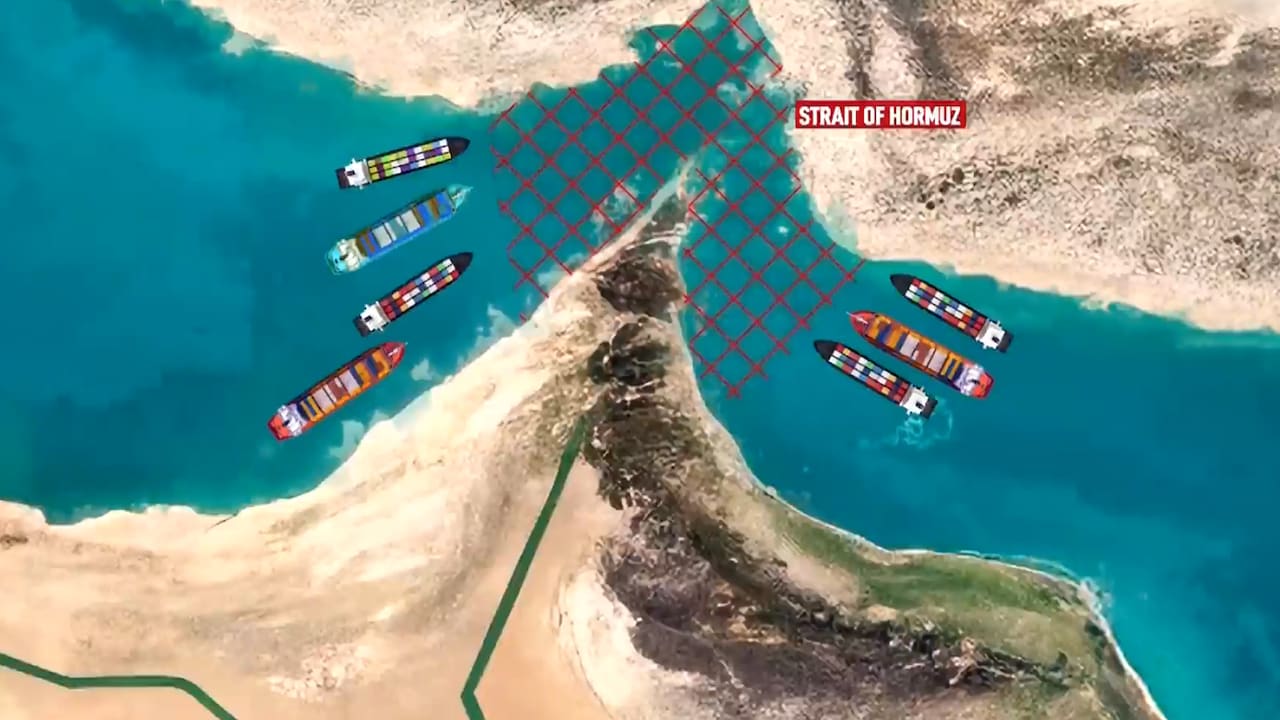
Geopolitics loves a ghost story, and the latest one out of Muscat and Tehran is a classic. The mainstream financial press is buzzing over reports that Iran and Oman are scheduling high-level talks to coordinate "control" and implement "service charges" on shipping passing through the Strait of Hormuz. The narrative is already hardening: a cartel is forming at the choke point, shipping costs are about to skyrocket, and the West is losing its grip on the world's primary oil artery.
It is a neat, terrifying story. It is also a legal and logistical impossibility.
The lazy consensus among regional analysts is that because Oman and Iran sit on either side of a 21-mile-wide strip of water, they can treat it like a private turnpike. They assume that physical proximity equals absolute regulatory power. Having spent years analyzing maritime trade flows and the cold realities of international law, I can tell you that this entire premise is flawed. Tehran and Muscat are playing a game of diplomatic theater, weaponizing the anxiety of global markets to project leverage they simply do not possess.
The reality? Any serious attempt to enforce a mandatory transit fee or arbitrary regulatory "control" over the Strait of Hormuz would violate the foundational treaties of modern shipping, trigger an immediate naval response from a multi-nation coalition, and ultimately bankrupt the very economies trying to enforce it.
Here is why the "Hormuz Toll Booth" is a fantasy, and what is actually driving this diplomatic posturing.
The Transit Passage Trap
The first mistake amateur commentators make is looking at a map and assuming national borders dictate maritime law. Yes, the shipping lanes inside the Strait of Hormuz fall entirely within the territorial waters of Iran and Oman. Under standard maritime rules, you might think that gives them the right to set the terms of entry.
It doesn't.
The Strait of Hormuz is governed by the regime of transit passage under the United Nations Convention on the Law of the Sea (UNCLOS). Even though Iran has not ratified UNCLOS, the rules of transit passage are recognized as customary international law.
Transit Passage: A legal mechanism ensuring that all ships, including warships and commercial tankers, enjoy the unimpeded right of continuous and expeditious navigation through straits used for international shipping.
Under this framework, coastal states cannot suspend transit, impose arbitrary taxes, or mandate "service fees" just for passing through. Oman, which has historically acted as the mature, neutral adult in the Gulf, knows this. Muscat’s legal team understands that trying to monetize the strait would instantly turn Oman into an international pariah, destroying its carefully cultivated reputation as the "Switzerland of the Middle East."
If a coastal state provides an actual, physical service—like technical pilotage through a treacherous, narrow reef—they can charge a fee for that specific service. But you cannot charge a flat "breathing fee" to a container ship that is simply minding its own business in an international shipping lane. The moment Oman or Iran tries to demand a mandatory fee for basic transit, they are no longer regulating a strait; they are committing state-sponsored piracy under international law.
The Delusion of Unified Control
The second flaw in the mainstream narrative is the assumption that Iran and Oman are aligned partners ready to lock arms and shut the gate. This ignores the vast chasm in their strategic objectives.
Iran views the Strait of Hormuz as a geopolitical asymmetric weapon. When Western sanctions tighten, Tehran rattles the saber in the strait to spike Brent crude prices and force concessions. They want volatility because volatility is their only leverage.
Oman wants the exact opposite. Muscat’s entire economic survival strategy depends on stability, neutrality, and the unhindered flow of goods to its ports outside the strait, like Salalah and Duqm. The Omanis are not suicidal. They are acutely aware that their economy would be the first casualty of an escalated conflict in the Gulf.
When you hear about "talks on Hormuz control," do not picture two conspirators plotting a heist. Picture a tense diplomatic chess match. Oman enters these talks not to assist Iran in choking the strait, but to monitor Tehran, manage the temperature, and ensure that Iranian provocations do not inadvertently drag the regional waters into a shooting war. It is containment disguised as collaboration.
The Mathematical Reality of Escalation
Let us engage in a brutal thought experiment. Imagine a scenario where Iran ignores international law entirely, bullies Oman into compliance, and deploys Islamic Revolutionary Guard Corps (IRGC) fast boats to demand a $50,000 "environmental service fee" from every liquid natural gas (LNG) tanker passing through.
What happens on day two?
The global shipping industry does not just roll over and pay. The economics of maritime transport are governed by insurance syndicates, primarily the shipping clubs in London. The moment a mandatory, contested fee is backed by the threat of state coercion, the entire Persian Gulf is designated a "Listed Area" by the Joint War Committee.
- Insurance Premiums: Hull and machinery war risk premiums would instantly multiply by a factor of ten, adding hundreds of thousands of dollars to a single voyage.
- Freight Rates: Shipowners would demand massive premiums to send their hulls into the Gulf, or they would refuse the charters altogether.
- The Cost of Defiance: The added cost of the "service charge" would be completely eclipsed by the catastrophic rise in operating costs.
The ultimate irony is that the biggest loser in this scenario would be Iran’s remaining economic lifelines. China, which imports a massive chunk of its crude from the region, would not tolerate its state-owned shipping giants being shaken down at the mouth of the Gulf. Tehran would effectively be taxing its own primary patron, a move that is less "strategic mastery" and more economic harakiri.
Dismantling the Panic
Whenever the media covers the Strait of Hormuz, the public starts asking the wrong questions. The classic line of inquiry usually sounds something like this: "How long can the global economy survive if Iran closes the strait?"
This is a fundamentally broken question because it assumes closure is a binary switch. The strait cannot be "closed" in the way you close a garage door. It can only be disrupted.
Let us answer the actual, hard questions honestly:
Can Iran and Oman legally bar specific nations from entering the strait?
No. Under the rules of transit passage, even enemy warships have the right to pass through as long as their transit is continuous and expeditious. They cannot engage in military exercises or intelligence gathering while in transit, but their presence cannot be blocked.
Why are they announcing these talks now?
It is pure theater designed for leverage. Iran is facing intense economic isolation and shifting regional dynamics. By scheduling highly publicized talks about "controlling" the world's most vital energy bottleneck, Tehran forces Washington, London, and Beijing to pay attention. It is the diplomatic equivalent of waving a match near a powder keg just to remind everyone you have matches.
What is the actionable reality for energy markets?
Stop trading the headlines. Every time an article drops mentioning "Hormuz" and "Control" in the same sentence, algorithms trigger automated buying, and oil prices jump a dollar or two. Smart operators analyze the underlying shipping data. As long as the physical volume of tankers clearing the Musandam Peninsula remains steady, the noise out of Tehran is irrelevant.
The Operational Blindspot
If you are running a logistics firm, an energy hedge fund, or a supply chain operation, the real threat to your bottom line is not a coordinated Oman-Iran tax cartel. The real threat is the creeping cost of compliance and bureaucratic friction.
Even if a mandatory transit fee never materializes, the mere discussion of increased regulatory oversight can lead to a surge in unilateral inspections, mandatory reporting structures, and minor maritime delays. A two-day delay for a Supertanker (VLCC) waiting for "documentation clearance" off the coast of Bandar Abbas can cost a charterer upwards of $100,000 in demurrage fees alone.
This is the real tax. It is a tax of time, uncertainty, and administrative bloat.
Do not fall for the sensationalist narrative of a new maritime empire seizing control of the global oil tap. Oman lacks the desire to break international law, and Iran lacks the capability to do so without destroying what remains of its own economy. The Strait of Hormuz remains what it has always been: a highly sensitive, deeply complex international highway that belongs to no one, precisely because everyone needs it to survive.
The next time a competitor headline tells you that Iran and Oman are about to redraw the rules of the Gulf, ignore the panic. Look at the insurance rates in London, check the naval deployments of United Kingdom Maritime Trade Operations (UKMTO), and remember that the law of the sea is written by the nations with the biggest navies, not the ones with the loudest press releases.


