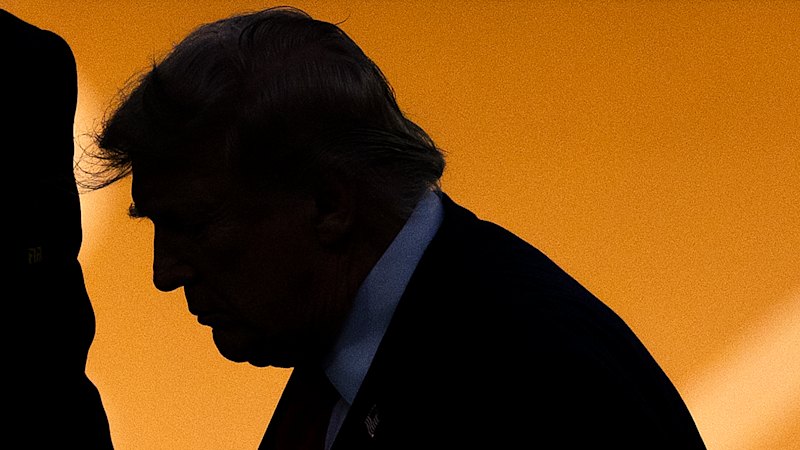
The View From the Summit
Power at its apex feels weightless.
When a political figure reaches the absolute summit of their influence, the room grows quiet. The noise of opposition dims into background hum. Decisive control over institutions, party ranks, and the public news cycle creates a sense of total invulnerability.
Yet history teaches a persistent, uneasy truth: the moment of peak influence is precisely when the ground begins to shift underneath.
Standing at the top of a political empire provides a commanding view, but it leaves zero room to climb higher. Every move from that height is a descent, and every choice carries a heightened risk of falling.
The Mechanics of Vulnerability
Consider how a fortress actually operates.
When an entity controls the floor, the walls, and the gates, the obvious threats vanish. Outside agitators struggle to find a foothold. But total dominance breeds a distinct category of internal strain.
First comes the weight of expectations. When one individual holds near-total authority over a movement, every problem becomes their direct responsibility. High interest rates, global instability, local economic friction—none of these can be blamed on opposition paralysis when control is absolute. The narrative of strength requires constant wins. The moment friction appears, the narrative cracks.
Second is the inevitability of overreach. Unchecked momentum often leads to decisions that alienate the subtle, quiet center of an electorate. The enthusiastic core demands aggressive moves, while the broader public craves stability. Balancing those two forces becomes exponentially harder when power feels unrestrained.
Finally, there is the silent clock of opposition adaptation. Political movements that face total defeat do not simply go away. They study the terrain. They identify stress points in the governing coalition. They wait for fatigue to set in among voters who grow tired of perpetual drama and high-pressure rhetoric.
The Friction Inside the Machine
Imagine a driver pushing a high-performance engine to its absolute limit. The speed is exhilarating, and the distance between the car and its competitors wide. But mechanics know that prolonged operation at redline creates subtle micro-tears in the machinery.
In political ecosystems, those micro-tears manifest as party fatigue, legal vulnerabilities, and shifting demographics.
A dominant leader relies heavily on loyalty and discipline. Yet discipline under pressure is exhausting to maintain over long stretches. Allies begin quietly eyeing their own long-term survival. Policy battles that once unified the movement start revealing internal fractures.
The real danger to absolute authority rarely comes from a massive, single blow delivered by opponents. It arrives as a slow trickle of small friction points:
- An economic shift that reduces consumer confidence.
- A legal ruling that restricts strategic options.
- A quiet disengagement among moderate supporters who simply want less tension in daily life.
These invisible variables build momentum out of sight.
The Psychology of the Crest
There is a psychological trap that accompanies total political dominance. It is the belief that past methods will guarantee future outcomes indefinitely.
When strategies yield repeated victories, leaders double down on those exact behaviors. But political environments are dynamic, not static. The tactics that work brilliantly while mounting a challenge often backfire when tasked with maintaining stable governance.
A challenger thrives on chaos, disruption, and aggressive rhetoric. A custodian of power requires order, predictable allies, and steady economic signals. Transitioning between those two modes is notoriously difficult for any leader, let alone one whose entire political identity is built on confrontation.
When the political cycle turns—as it inevitably does—the tools used to reach the top become heavy burdens. The rhetoric that once energized supporters begins to exhaust the broader public. The legal maneuvers that offered short-term shields create long-term exposure.
The Quiet Turning of the Tide
Power does not usually shatter in a dramatic instant. It erodes.
It starts with subtle shifts in public sentiment that standard polling struggles to catch. A slight drop in enthusiasm here. A minor uptick in opposition turnout there. A quiet consensus among swing voters that it might be time for a lower-octane environment.
The summit offers a breathtaking view, but the weather at high altitudes is unpredictably severe. The very peak that represents ultimate triumph is also the most exposed place on the map.
The throne room remains silent, but outside, the wind is beginning to change.