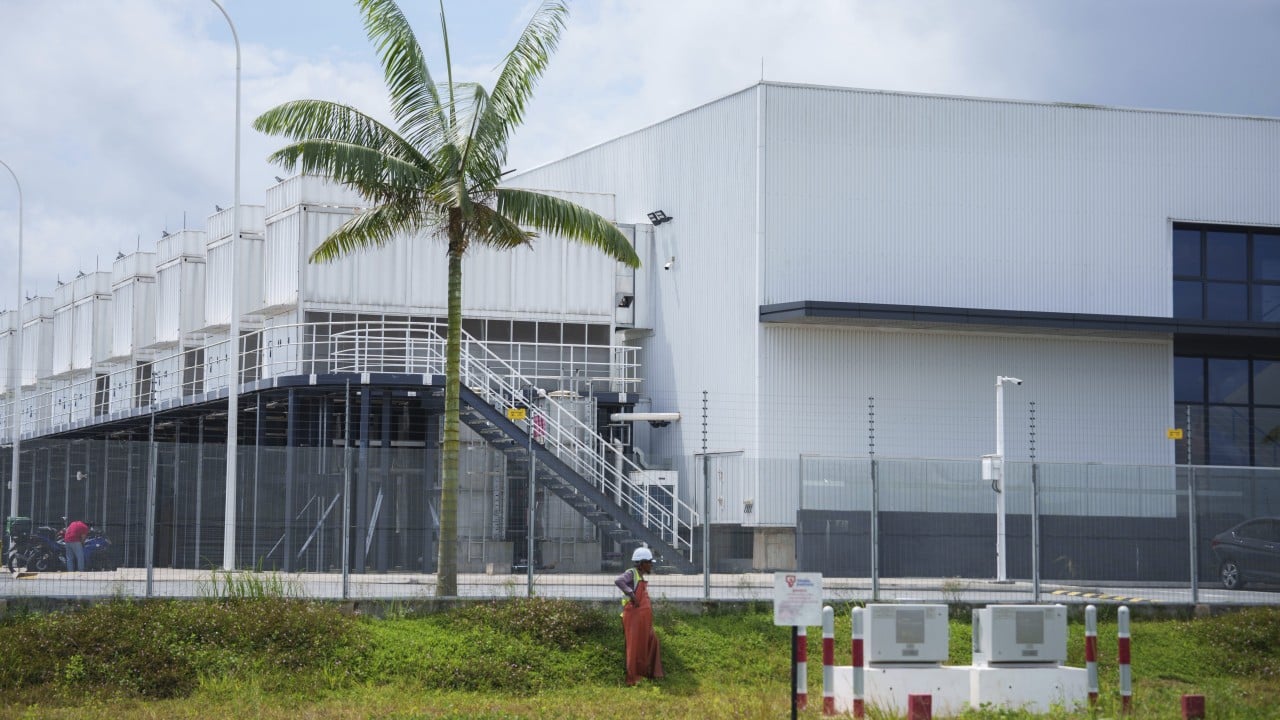
The artificial intelligence boom has triggered an apparent torrent of capital into regional infrastructure, with private equity and real estate trusts directing US$11.6 billion into Asia-Pacific data centres. On the surface, the narrative is one of unbridled expansion. Beneath this headline figure, however, lies an entirely different reality marked by extreme landlord caution, severe power bottlenecks, and deep institutional skepticism over tenant credit profiles. While markets like Tokyo, Sydney, and Singapore scramble to secure the immense electrical capacity required by high-density hyperscale deployments, Hong Kong is attempting to position itself for a highly specific, specialized role. Yet this ambition faces a brutal reckoning with the physical and geopolitical constraints of modern infrastructure development.
The headline investment figure suggests a universal land grab, but institutional money is moving with surprising hesitation. Regional fund managers are not handing out blank checks to every speculative developer claiming to build an AI-ready facility. Instead, the deployment of this US$11.6 billion is highly selective. Landlords and institutional backers are increasingly alarmed by the financial volatility of speculative AI startups and secondary cloud providers. Building a data centre tailored for ultra-dense liquid cooling requires massive upfront capital expenditure. If a tenant burns through its venture funding or suffers a drop in demand for its large language models within three years, the landlord is left holding an expensive, highly customized, and potentially empty shell.
This credit anxiety has fundamentally altered the leasing dynamic across major Asian hubs. Landlords now routinely demand aggressive corporate guarantees, significant security deposits, or outright structural commitments from proven tech giants before breaking ground. The result is a widening divergence in the market. Established hyperscalers with triple-A credit ratings can command favorable terms and secure capacity, while newer, AI-focused firms face intense scrutiny and rejection from risk-averse property developers.
The Physical Blockades of Power and Space
The fundamental metric of the data centre industry has shifted from square meters to megawatts. Artificial intelligence workloads, particularly the training phase of advanced models, consume vastly more power than traditional cloud storage or enterprise applications. A standard rack in a traditional corporate data centre typically draws between 5 and 10 kilowatts. An AI-optimized rack utilizing the latest graphics processing units frequently demands 40 to 100 kilowatts.
This exponential surge in energy demand has brought regional infrastructure to a breaking point.
- Singapore: The city-state maintains a strict, highly regulated moratorium framework that allows only incremental capacity increases tied to stringent green energy efficiency targets.
- Tokyo and Sydney: While land is available on the peripheries, local electrical grids are struggling to upgrade substations quickly enough to match the multi-megawatt requests of developers.
- Secondary Markets: Johor in Malaysia and Batam in Indonesia are absorbing the spillover demand, yet these locations face their own structural hurdles in terms of stable grid connectivity and fiber latency.
Hong Kong's Fractured Micro-Hub Strategy
Against this backdrop of regional grid congestion, Hong Kong is attempting to carve out a niche market. The city cannot compete on raw scale. It possesses neither the expansive, cheap land plots of western Johor nor the massive, state-subsidized power networks found in northern mainland China. Instead, local operators are pivoting toward high-density, low-latency edge deployments and financial sector inference nodes.
The strategy relies on the city's historical strengths. Hong Kong remains the primary landing station for a dense concentration of international submarine fiber-optic cables, providing unparalleled connectivity to both mainland China and global financial markets. For high-frequency trading firms, localized wealth management platforms, and regional corporate headquarters, hosting AI inference applications in Hong Kong offers a distinct geographical advantage. Inference—the process of running live data through a pre-trained model to get real-time answers—demands minimal latency but significantly less raw power than model training.
Yet this niche strategy faces an existential conflict between global technology standards and regional realities. The highly restrictive export controls imposed on high-end semiconductors mean that local operators face immense friction when attempting to secure the latest hardware required for cutting-edge AI computation. A facility cannot easily market itself as a premier AI hub if its clients are structurally barred from deploying the industry-standard silicon required to run modern workloads efficiently.
The Subsea Cable Geopolitics
The challenges extend far beyond domestic real estate zoning or municipal power allocations. Data centres do not exist in isolation; their economic value is directly tied to their ability to move massive amounts of data across borders. The geopolitical friction between Washington and Beijing has fundamentally redrawn the underwater map of global communications.
Historically, major trans-Pacific subsea cables connected the United States directly to Hong Kong. Today, regulatory approvals for new international cable systems systematically bypass the territory, redirecting trunk lines to land in Taiwan, the Philippines, or Singapore instead. This architectural isolation threatens to gradually degrade the city's long-term connectivity edge, transforming what was once the central switching station of Asian internet traffic into a regional terminus.
The Mirage of the Infrastructure Bubble
The rush to invest billions into data centre real estate overlooks a structural mismatch in the technology investment cycle. Real estate assets are built on twenty- to thirty-year lifecycles, financed by long-term debt that requires stable, predictable cash flows. Conversely, the artificial intelligence sector is moving at a chaotic, unpredictable pace. Hardware architectures become obsolete within three to five years, requiring frequent, disruptive overhauls of cooling systems and power distribution units within the facility.
Many institutional investors pouring money into these funds assume that data centres are simply a more lucrative variant of commercial real estate. They are discovering that these assets behave far more like complex, capital-intensive industrial plants. If an infrastructure fund finances a facility that cannot adapt to the next generation of direct-to-chip liquid cooling or alternative power inputs, that asset faces rapid economic obsolescence long before the underlying real estate loan is amortized. The US$11.6 billion flowing into the region is not a guarantee of a smooth technological transition, but rather a high-stakes gamble on which markets can successfully re-engineer their physical infrastructure before the current capital cycle runs dry.
