The teacup sat on the mahogany table, entirely still.
Outside the window of the San Francisco estate, the November fog crept over the bay. Inside, two men sat across from each other, their posture deliberate, their smiles rehearsed. It was late 2023. Presidents Joe Biden and Xi Jinping were meeting at the Filoli estate to steady a relationship that had spent years in a terrifying tailspin. For a moment, the world held its breath. The rhetoric softened. The hotlines were restored. The military channels reopened.
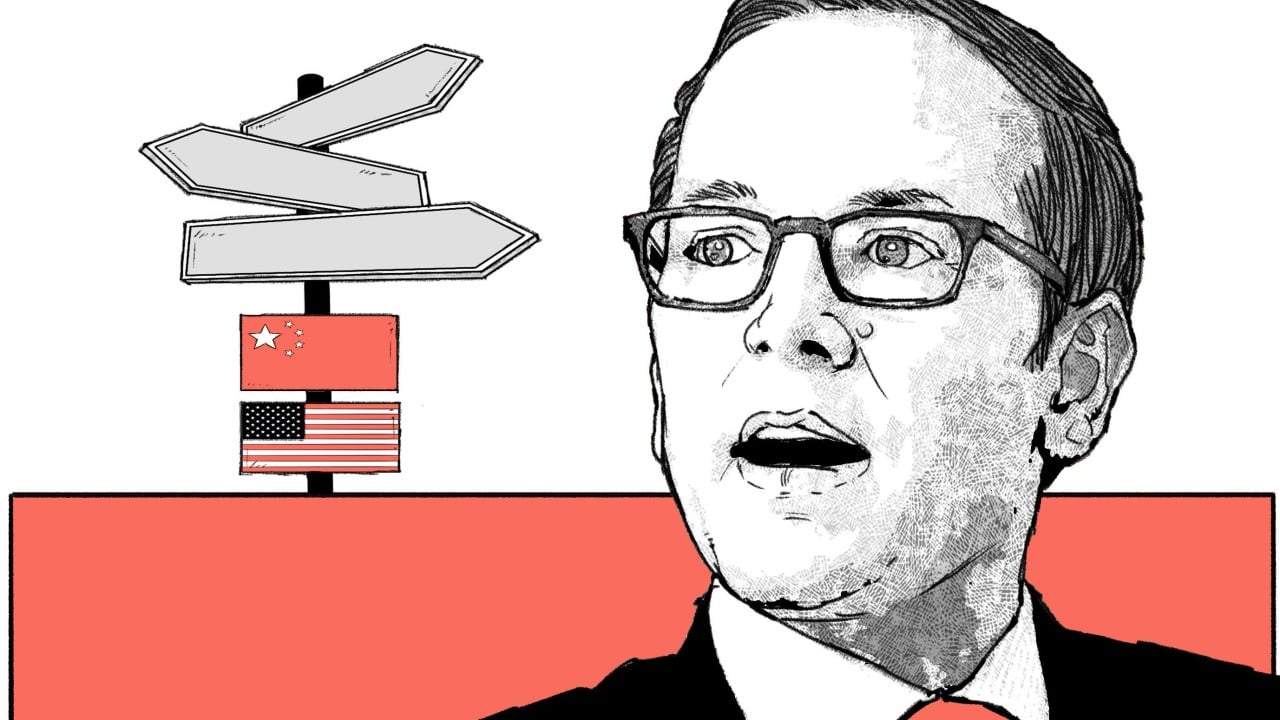
To the casual observer, it looked like peace. To Evan Medeiros, it looked like a pause button.
Medeiros, a man who spent years watching these gears turn from inside the White House as a top Asia adviser, knows that in geopolitics, a pause is not a cure. The quiet we are experiencing right now between Washington and Beijing is an illusion. It is a fragile, temporary truce bought with political convenience, and the structural faults beneath the surface are already beginning to crack.
We want to believe in stability. It makes the world feel safer. But the hard reality is that the United States and China are locked in a structural competition that cannot be managed by a few polite summits or carefully worded press releases. The calm is fading.
The Mirage of the San Francisco Reset
To understand why this peace cannot last, you have to look at why it happened in the first place. Neither side suddenly had a change of heart. They simply ran out of breath.
Step into the shoes of a policymaker in Beijing in late 2023. Your economy is sputtering. The real estate market, once the engine of Chinese wealth, is fracturing. Youth unemployment is high enough that the government temporarily stopped publishing the data. You need a breather. You need to signal to global investors that China is still a safe place to put their money. Confrontation with Washington is a luxury you cannot afford at this exact moment.
Now, look at Washington. The White House is staring down a brutal election cycle. The Middle East is erupting. Ukraine is locked in a war of attrition. The last thing an American president needs is another active crisis in the Taiwan Strait.
So, both sides agreed to a tactical timeout. They built what Medeiros calls "floors" under the relationship. They agreed to talk about artificial intelligence, to cooperate on cutting off the flow of fentanyl precursors, and to answer the phone when the military calls.
It felt good. It sounded like progress. But notice what didn't happen.
Neither country changed its destination. They just slowed down on the highway. China did not abandon its ambition to dominate East Asia or its claim over Taiwan. The United States did not repeal its sweeping restrictions on advanced semiconductors or its strategy of encircling China with tech alliances. The fundamental disagreements were not resolved; they were merely filed away in a cabinet for later.
When the Floor Starts to Rot
The problem with building a floor is that it requires constant maintenance, and the environment it exists in is highly corrosive.
Consider the sheer volume of friction points that occur on any given Tuesday. An American surveillance plane flies over the South China Sea. A Chinese fighter jet buzzes within twenty feet of its wing. In the past, this might have triggered an immediate diplomatic crisis. Today, the communication lines established in San Francisco might allow a general in Hawaii to call a counterpart in Beijing to cool things down.
But what happens when the incident isn't an accident?
The structural forces driving the two nations apart are shifting from abstract political rhetoric into tangible, everyday economic realities. This isn't just about politicians giving speeches in front of flags. This is about factory floors in Ohio and tech hubs in Shenzhen.
Take the issue of green technology. Right now, China is pouring massive state subsidies into solar panels, lithium-ion batteries, and electric vehicles. They are building factories at a scale that far exceeds what their domestic market can consume. That surplus has to go somewhere. It is flooding the global market, driving down prices to a point where no Western company can compete.
To Beijing, this is smart economic planning—shifting toward high-value, clean-tech manufacturing. To Washington, it is an existential threat to American workers and the next generation of US industry. You cannot fix that kind of disagreement with a handshake at a summit. It is a zero-sum math problem. If American factories win, Chinese factories lose. If Chinese factories win, American manufacturing dies.
This economic collision is why the United States is moving from targeted tech restrictions to broad, defensive walls. The tariffs are going up, not down. The export controls are tightening, not loosening. The floor is already rotting beneath our feet.
The Blind Spots in the Boardroom
For the average person, or even the average corporate executive, this geopolitical drifting can feel distant. It is easy to look at the stock market, see a stable quarter, and assume the danger has passed.
That is the trap.
Corporate boardrooms across the globe are currently operating under a false sense of security. They saw the pictures from Filoli, heard the reassuring statements from the Department of Commerce, and assumed they could go back to business as usual. They are treating this period of managed competition as a permanent state of affairs rather than a temporary window.
Imagine running a global logistics firm or a tech company that relies on components from both American designers and Chinese manufacturers. For the last two years, you have enjoyed a reprieve. The supply chains haven't been severed by a sudden embargo. The shipping lanes are open. It is comfortable.
But dependency is a vulnerability. The true cost of the current US-China dynamic isn't paid in sudden, catastrophic explosions; it is paid in the slow, grinding erosion of certainty. Every investment decision made today is a bet on the political stability of tomorrow. And right now, the smart money is betting that the wind is about to change.
Medeiros points out that we are entering a phase where the political calendar itself becomes a hazard. Washington is hyper-focused on political transitions, and toughness on China is one of the few truly bipartisan positions left in American public life. There are no rewards for appearing soft on Beijing. Every policy debate, every trade negotiation, and every congressional hearing will be viewed through the lens of who can strike the most defensive posture.
Beijing knows this. They are watching the American political theater with a mix of anxiety and preparation. They are not waiting around to see what happens next. They are actively de-dollarizing their trade, building domestic alternatives to Western software, and securing their own supply chains for raw materials. They are preparing for a storm while we are enjoying the clearing in the clouds.
The Geography of Friction
If you want to know where the illusion breaks first, you don't look at Washington or Beijing. You look at the map.
The South China Sea is a vast expanse of blue water dotted with tiny reefs and atolls. To the rest of the world, it is a shipping lane through which trillions of dollars in trade pass every year. To China, it is a defensive shield and a historic right. To America's allies, like the Philippines, it is their front yard.
Lately, the confrontations there have grown ugly. Chinese coast guard vessels are using high-powered water cannons to blast Philippine resupply boats. They are ramming wooden hulls with steel prows. It is a gray-zone strategy—actions designed to push the envelope as far as possible without triggering a shooting war.
But the margin for error is razor-thin.
The United States has a mutual defense treaty with the Philippines. If a Philippine sailor is killed in one of these encounters, the pressure on Washington to intervene will be immense. Suddenly, the communication channels established in San Francisco won't just be used to schedule meetings; they will be the only things preventing two nuclear-armed superpowers from sliding into a direct military conflict.
Then there is Taiwan.
The island sits twenty miles off the Chinese coast, a democratic hub that produces the vast majority of the world's most advanced microchips. It is the ultimate red line for Beijing. Every military exercise, every deployment of fighter jets across the median line of the Taiwan Strait, is a reminder that the status quo is maintained by force, not consensus.
We tend to think of peace as the natural state of things, and conflict as the aberration. History tells a different story. Stability requires an equilibrium of power and a mutual agreement on the rules of the road. Right now, neither exists between the US and China. They are two massive objects moving toward each other in a narrow corridor. They have slowed down their speed, but neither has changed direction.
The Weight of the Unspoken
It is easy to get lost in the jargon of international relations—terms like "strategic decoupling," "de-risking," and "multilateral deterrence." They are cold terms designed to sanitize a messy, emotional reality.
The real story is found in the uncertainty felt by the people caught in the middle. It is the Chinese student who dreams of studying at MIT but wonders if their visa will be revoked at the border. It is the American scientist who wants to collaborate on a cancer research project with a colleague in Shanghai but fears being investigated for intellectual property theft. It is the factory worker in North Carolina who wonders if their job will survive the next wave of industrial overcapacity.
This is the human toll of the structural drift. It breeds suspicion. It narrows our view of what is possible. It turns a relationship that once brought hundreds of millions of people out of poverty into a dark calculus of survival and dominance.
The teacup on the mahogany table is still there. The water inside is quiet for now. But the ground beneath the house is shifting, the plates are grinding, and the tremor is coming. We can enjoy the stillness while it lasts, but we must not mistake the quiet for peace.