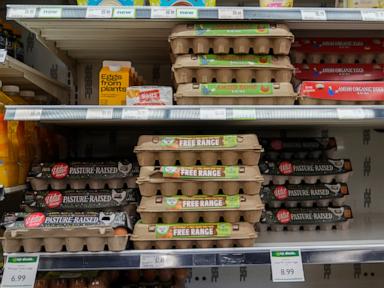
The headlines want you to celebrate a victory for the little guy. They tell a neat story: a coalition of massive egg producers got caught fixing prices, and now they are paying the price. A $3.3 million cash penalty. A massive corporate penance of 53 million real eggs donated to food banks across America. The public nods, satisfied that justice has been served to the grocery cartel.
It is a comforting narrative. It is also entirely wrong.
If you understand the brutal mechanics of agricultural economics, you know this settlement is not a punishment. It is a masterclass in supply chain management disguised as corporate accountability. The regulators get a press release. The lawyers get their billable hours. The egg producers get a massive tax write-off and a government-sanctioned mechanism to clear excess inventory without crashing the retail market.
Stop looking at the headline numbers and start looking at the structural reality of the market.
The Absolute Joke of a Three Million Dollar Fine
Let's look at the math that the mainstream business press refused to calculate. A $3.3 million cash settlement split across major industrial agricultural players is not a deterrent. It is a rounding error.
For context, the largest egg producers in the United States measure their quarterly revenues in hundreds of millions, sometimes billions, of dollars. Cal-Maine Foods, the dominant player in the domestic egg landscape—though not the sole target here, a prime example of industry scale—frequently posts net incomes that make a single-digit million-dollar fine look like a parking ticket.
When a corporation faces a penalty that amounts to a fraction of a percent of its operating budget, that penalty ceases to be a punishment. It becomes an operational cost. It is the price of doing business. If a strategy nets an industry tens or hundreds of millions of dollars in artificially inflated margins over a period of years, paying a tiny fraction of that profit back to settle a class-action lawsuit is an incredibly high-yield investment.
The legal system operates under the assumption that cash settlements bleed corporations into compliance. In reality, it just structures a predictable payment plan for anti-competitive behavior.
The Donation Weapon: Dumping Supply Outside the Market
The most insidious part of this settlement is the headline-grabbing clause: the donation of 53 million eggs to food banks. The public views this as a heartwarming act of forced charity. In reality, it is a highly strategic supply-containment maneuver.
Basic economic theory dictates that price is determined by the intersection of supply and demand. If you have an oversupply of commodity goods, prices drop. If the defendants in this case were forced to dump those 53 million eggs directly into the commercial wholesale market, what would happen? Wholesale prices would plummet. The profit margins on their current, non-settlement inventory would erode.
By legally mandating that these millions of eggs be funneled directly to food banks and charities, the settlement achieves something brilliant for the producers: it completely removes that massive volume of supply from the commercial grocery ecosystem.
[Commercial Market: Controlled Supply] ---> Sustains High Retail Prices

[Settlement Mandate: 53M Eggs] ---------> Funneled to Non-Commercial Channels (Food Banks)
The consumers who rely on food banks are generally not the primary demographic driving high-margin premium grocery purchases. By shifting 53 million eggs into the non-profit sector, the producers successfully prevent those eggs from competing with their retail products. They preserve the artificial scarcity that keeps grocery store prices high, all while earning glowing public relations marks for "feeding the hungry."
The Tax Write-Off Loophole Nobody is Talking About
Corporate donations, even those mandated by legal settlements, frequently find their way into the complex machinery of corporate tax mitigation. While direct punitive fines paid to governments are generally non-deductible under the Internal Revenue Code, the structural cost of producing and distributing charitable goods often opens up massive avenues for deduction.
When an industrial egg producer "donates" 53 million eggs, they are not buying those eggs at retail prices from a grocery store shelf. They are calculating the internal cost of production—feed, housing, processing, and transportation.
- They write off the operational costs associated with producing the settlement volume.
- They reduce their net taxable corporate income for the fiscal year.
- They offset the actual cash impact of the $3.3 million fine.
The taxpayer ends up subsidizing the very punishment leveled against the corporations that inflated prices at the grocery register in the first place. It is a closed-loop system where the house always wins.
The Flawed Premise of "People Also Ask"
Look at the standard questions people ask whenever these agricultural antitrust cases hit the courts:
Does an antitrust settlement mean egg prices will finally go down at my local store?
The short answer is absolutely not. The premise assumes that prices were high solely because of a single, isolated conspiracy. It ignores the broader structural realities of modern agriculture. Producers do not need a smoke-filled room to keep prices high anymore. They have highly sophisticated algorithmic logistics, constant consolidated market power, and recurring external justifications like avian influenza outbreaks to naturally suppress supply and elevate margins. A historical settlement does nothing to change tomorrow's shelf pricing.
Why can't the government just cap the price of basic groceries like eggs?
This is the ultimate economic fallacy. Price caps do not solve supply manipulation; they exacerbate it. If the state mandates an artificial ceiling on the price of eggs, producers will simply stop producing them at scale, redirecting their capital to unregulated or highly profitable alternative goods. You do not get cheaper eggs; you get empty shelves and a thriving black market. The solution is not price controls; it is the aggressive, structural breakup of agricultural monopolies.
The Illusion of Choice in the Dairy and Poultry Aisle
We like to think we have choices when we walk down the grocery aisle. You see a dozen different brands of eggs: cage-free, organic, pasture-raised, store brand, premium grade.
It is an illusion. The consolidation of the American food supply chain means that a handful of massive conglomerates own, control, or distribute nearly everything you see. The local-sounding farm name on the carton is almost always a shell brand owned by a massive corporate entity.
When these few entities control the feed mills, the hatcheries, the processing plants, and the distribution networks, they control the market entirely. They do not need to explicitly pick up the phone to fix prices; they simply watch each other's public pricing moves and match them in lockstep. Economists call this tacit collusion. It is completely legal, highly effective, and entirely immune to $3.3 million class-action settlements.
If the regulatory state actually wanted to protect consumers, they would not accept egg donations. They would deploy the Sherman Antitrust Act to smash these consolidated networks into pieces. They would force competition by breaking integrated giants back down into localized, independent operational units.
But structural reform is difficult. It requires political courage and prolonged legal warfare against well-funded lobbying arms. A cash fine and a mountain of free breakfast food for charity is the easy way out. It gives the regulators a quick win to parade before the media, while allowing the corporate targets to return to business as usual by next Tuesday.
Stop celebrating corporate settlements that treat systemic market manipulation as a charitable marketing opportunity. The producers didn't lose this lawsuit. They successfully bought their way out of a real structural threat, used their excess inventory to pay the bill, and left the consumer holding the bag.