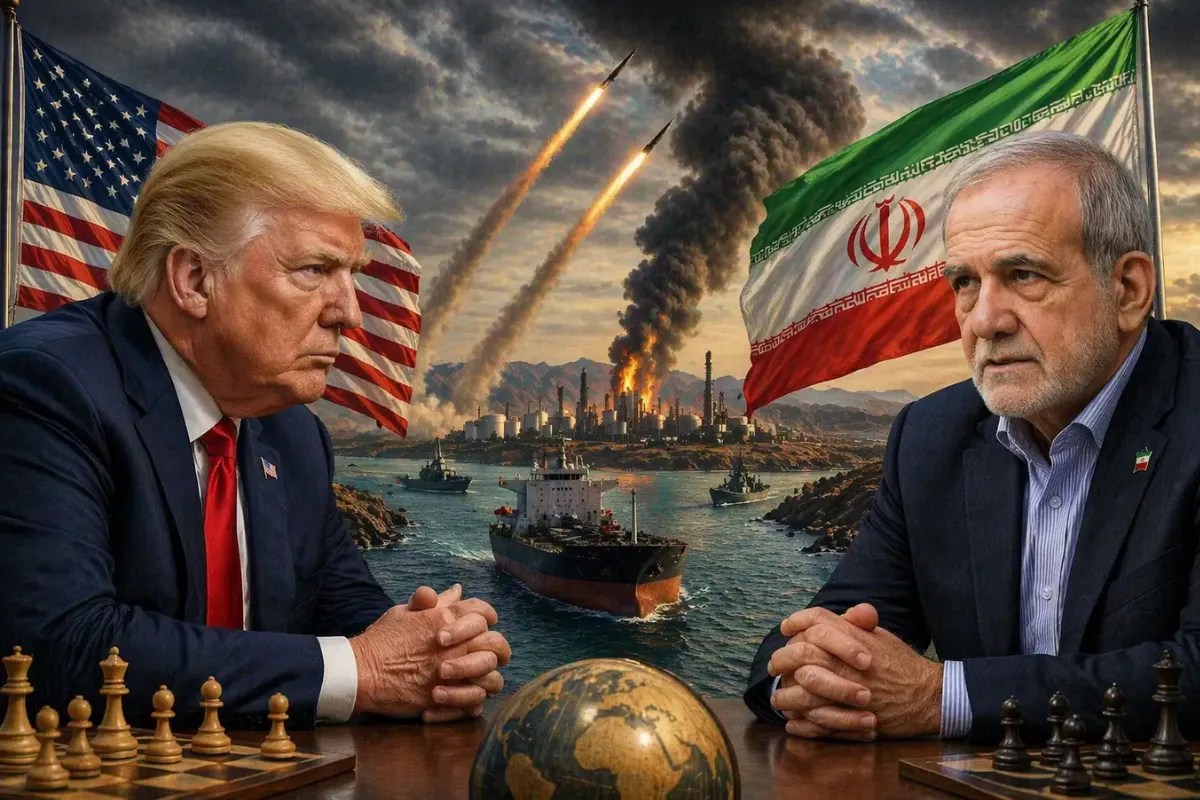
Donald Trump’s public assertions that a sweeping diplomatic breakthrough with Iran is imminent collapse under the weight of hard geopolitical realities. Despite high-profile political declarations suggesting a deal is just around the corner, the actual framework for a renewed nuclear agreement remains profoundly stuck on unyielding technical and structural obstacles. Tehran is demanding ironclad economic guarantees and the immediate lifting of broad sanctions, while Washington insists on intrusive verification protocols and a permanent halt to uranium enrichment. These core demands are fundamentally incompatible in the current political climate. This deadlock is not a temporary logistical delay but a reflection of deep-seated structural friction that cannot be resolved by executive decree or political theater.
The disconnect between political rhetoric and backroom diplomacy is vast. Public statements often serve as leverage or domestic theater, whereas the actual negotiations require painful, granular concessions that neither side is currently prepared to make.
The Fiction of Immediate Sanctions Relief
A primary illusion surrounding these negotiations is that sanctions can be turned off like a light switch. This assumption ignores the labyrinthine nature of the American sanctions apparatus. Over successive administrations, Washington has built a complex web of economic restrictions on Iran. These are not merely tied to nuclear proliferation; they are legally intertwined with human rights violations, ballistic missile development, and regional proxy warfare.
For Tehran, any deal that does not offer immediate, verifiable economic relief is a non-starter. The Iranian economy has suffered under years of maximum pressure, driving inflation high and crippling its currency. Iranian negotiators are acutely aware of American political volatility. They remember vividly the 2018 US withdrawal from the Joint Comprehensive Plan of Action (JCPOA). Consequently, they are demanding legal guarantees that a future administration cannot simply tear up the agreement.
The problem is that the US executive branch cannot bind a future president or a hostile Congress to a political commitment.
Under the Iran Nuclear Agreement Review Act (INARA), Congress retains the right to review and potentially reject any substantial deal. This domestic legal reality creates a fundamental impasse:
- Iran demands permanent, legislated relief before rolling back its nuclear infrastructure.
- The US administration can only offer temporary, easily reversible waivers.
- Congress remains deeply skeptical of any deal that fails to address Iran's regional influence.
This mismatch creates an unstable foundation where neither side trusts the other to fulfill their end of the bargain over the long term.
The Technical Reality of Advanced Enrichment
While politicians debate the broad strokes of a deal, the physical reality on the ground in Iran has shifted dramatically since the original 2015 accord. This is a critical factor that casual analysis often overlooks. Iran is no longer just operating first-generation IR-1 centrifuges. They have deployed hundreds of advanced IR-4 and IR-6 machines at deeply buried facilities like Fordow and Natanz.
These advanced centrifuges enrich uranium at a vastly accelerated pace.
[Historical Baseline: IR-1 Centrifuges]
       │ (Slow, predictable enrichment rates)
       ▼
[Current Reality: IR-4 & IR-6 Cascades]
       │ (Rapid enrichment, smaller physical footprint)
       ▼
[The Diplomatic Dilemma]
       └─► How to verify destruction vs. temporary deactivation
This technological leap changes the entire math of "breakout time"—the period required to produce enough weapons-grade fissile material for a nuclear device. Even if Iran agrees to blend down its current stockpiles of 60% enriched uranium, the technical knowledge gained by its scientists cannot be unlearned.
The International Atomic Energy Agency (IAEA) faces an unprecedented verification challenge. Deactivating a centrifuge cascade is entirely different from dismantling it. Washington insists that these advanced machines must be destroyed or shipped out of the country. Tehran views them as hard-won leverage that will only be surrendered in exchange for total economic normalization. This technical standoff requires meticulous, month-long expert consultations, rendering the notion of a swift, sudden handshake deal logistically impossible.
Regional Spoilers and Domestic Constraints
Negotiations do not occur in a vacuum. Both leadership teams operate under intense domestic pressure and the watchful eyes of regional allies who view any concession as an existential threat.
In Tehran, the hardline factions within the Islamic Revolutionary Guard Corps (IRGC) and the parliament view western diplomatic overtures with deep suspicion. They argue that the country’s resistance economy can withstand sanctions, pointing to growing economic and military ties with Beijing and Moscow as a viable alternative to Western integration. For these factions, surrendering the nuclear program means giving up their primary deterrent against foreign regime change.
In Washington, the political cost of a compromised deal is exceptionally high. Any agreement perceived as weak will face immediate, ferocious pushback from both sides of the aisle. Furthermore, regional powers—most notably Israel and Gulf Arab states—wield significant influence over the American foreign policy debate. Israel has repeatedly stated that it will not be bound by Washington’s diplomatic arrangements if it feels its security is compromised, maintaining a credible threat of unilateral military action against Iranian nuclear sites.
This regional dynamic introduces a dangerous wild card. A single miscalculation, a drone strike in the region, or a covert sabotage operation can instantly derail months of delicate diplomatic signaling.
The Weaponization of Verification Protocols
The final, and perhaps most stubborn, sticking point centers on the mechanics of international oversight. A deal is only as good as its enforcement mechanism. The United States and its European allies are insisting on an "anytime, anywhere" inspection regime managed by the IAEA. This includes access to non-nuclear military sites where past explosive testing may have occurred.
Tehran draws a strict line at military installations, classifying them as sovereign red lines. They argue that opening these bases to international inspectors is tantamount to allowing Western intelligence agencies to map out their national defense infrastructure.
"Historical precedent shows that verification protocols are the frequent graveyard of complex arms control agreements."
Without comprehensive access, no US administration can sell a deal to a skeptical domestic audience or international allies. The unresolved questions regarding trace uranium particles found at undeclared Iranian sites continue to stall formal progress, serving as a constant reminder that technical disputes cannot be glossed over by political messaging.
The structural divide between Washington and Tehran is defined by deep institutional mistrust, conflicting domestic pressures, and irreversible technological advancements. A durable agreement cannot be conjured through rhetorical confidence or superficial political alignments. It requires a fundamental shift in core national security doctrines on both sides, an outcome that remains far beyond the horizon of current diplomatic efforts.