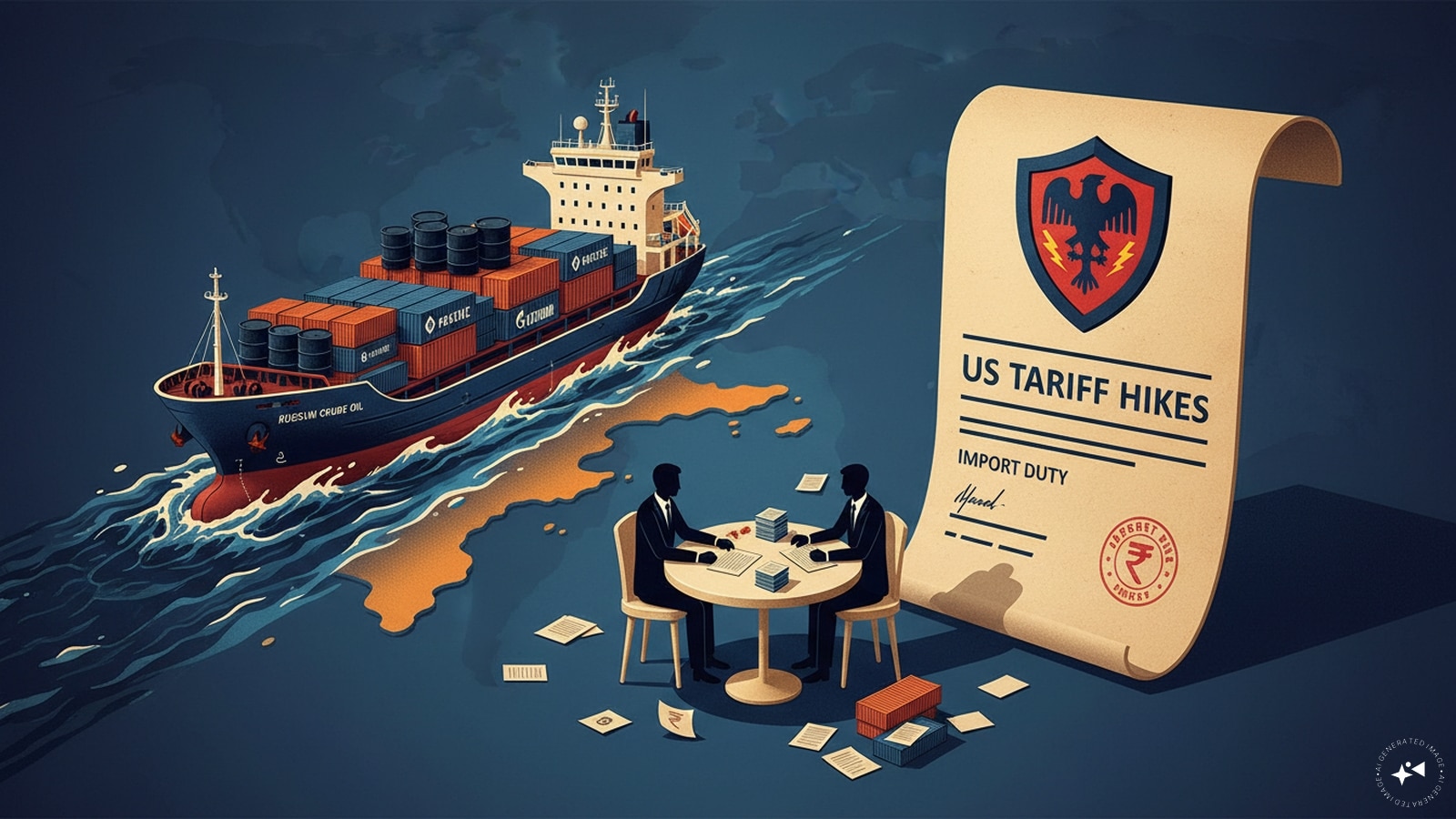
New Delhi finds itself walking a precarious diplomatic tightrope as Washington tightens legislative screws on Moscow through expanding secondary sanctions. Behind closed doors, Indian government officials and trade ministries are monitoring US legislative proposals targeting nations maintaining commercial ties with Russia, trying to insulate domestic energy security and military supply chains from sudden financial shocks.
The Anatomy of Secondary Pressure
Economic statecraft rarely operates with a scalpel. It is a broadsword. When Washington drafts legislation aimed at penalizing third-party nations for trading with sanctioned economies, capitals from New Delhi to Tokyo take immediate notice.
India's primary objective remains straightforward on paper yet fiendishly complex in practice. Keep the domestic economy supplied with discounted crude oil while avoiding the tripwires of the Office of Foreign Assets Control. Energy imports from Moscow surged dramatically following the conflict in Ukraine, saving the South Asian economy billions in import bills.
Yet, banking channels bear the brunt of the friction. Major Indian state lenders and private financial institutions face intense scrutiny over correspondent banking relationships. Secondary sanctions do not always require an explicit executive order to change behavior. Financial institutions practice preemptive risk aversion. Compliance departments choke off legitimate trade transactions long before any penalty letter arrives from New York.
Military Hardware and the Legacy Dilemma
Decades of defense procurement tie the Indian armed forces to Soviet and Russian hardware. Tanks, fighter jets, air defense batteries, and naval platforms require a steady stream of spare parts, maintenance overhauls, and software updates.
Finding alternate suppliers takes generations, not fiscal quarters.
- The S-400 Dilemma: Advanced air defense systems remain operational along contested borders, creating an irreplaceable capability gap if maintenance halts.
- Component Bottlenecks: Upgrades for existing platforms depend entirely on proprietary components manufactured inside the Russian Federation.
- The Domestic Indigenization Push: Local manufacturing programs aim to reduce dependence, but absolute self-reliance in aerospace engineering remains a distant target.
Washington understands this dependency, offering quiet waivers or diplomatic breathing room in the past. However, legislative momentum in Congress often ignores nuanced strategic realities in favor of absolute compliance metrics. Every new sanctions bill introduces a fresh layer of legal ambiguity.
Diplomatic Agility in a Fragmented Order
Strategic autonomy is a cherished doctrine in South Block. It means refusing to join binary geopolitical blocs.
Instead of reactive panic, Indian diplomats engage in continuous, unvarnished communication with their American counterparts. The messaging emphasizes mutual economic stability and the shared objective of containing broader security threats in the Indo-Pacific. A destabilized Indian economy helps neither Washington nor New Delhi.
Bilateral trade frameworks continue to evolve despite the turbulence. Technology transfer initiatives and defense co-production agreements offer alternative pillars of cooperation, attempting to outweigh the friction caused by divergent policies toward Moscow.
The arithmetic of modern statecraft is unforgiving. As long as energy markets remain volatile and military legacy systems demand sustenance, New Delhi will keep one eye on Washington drafts and the other on oil tanker routes across the Arabian Sea.