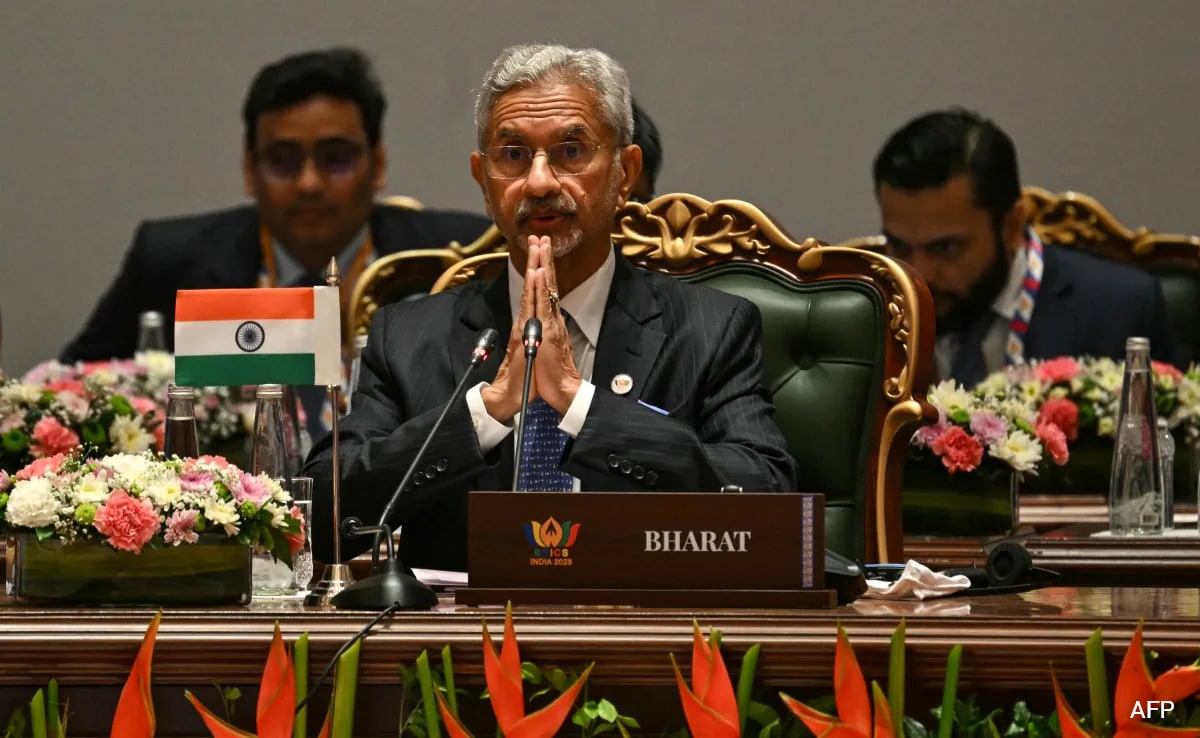
The world isn't just changing; it's fracturing. If you think the current global order is holding steady, you're not paying attention. At the latest BRICS Foreign Ministers' Meeting in New Delhi, India didn't just show up to take a family photo. External Affairs Minister S. Jaishankar basically told the room—and the world—that the old ways of doing business are broken.
The message was blunt. India is tired of a United Nations that acts like a museum of 1945. It's tired of seeing the humanitarian crisis in Gaza treated like a secondary issue. When Jaishankar stood at the Bharat Mandapam, he wasn't just speaking for India; he was channeling the frustration of the entire Global South.
The UN Security Council is stuck in a time warp
Let's be real. The United Nations Security Council (UNSC) is an anachronism. It’s a club designed by the winners of a war that ended over 80 years ago. Jaishankar’s call for "sweeping reforms" isn't a new request, but the urgency has shifted. He warned that "continued delay comes at a high cost."
What does that actually mean? It means when the world's most powerful body doesn't reflect the world's actual power dynamics, it loses legitimacy. India is pushing for a seat at the permanent table, not as a favor, but as a necessity for the system's survival. You can't have a "global" council that ignores the most populous nation on Earth and an entire continent like Africa.
The current setup leads to paralysis. We see it every time a major conflict breaks out. One permanent member vetoes, the other side fumes, and nothing happens. India's stance is clear: reform both permanent and non-permanent categories or watch the UN fade into irrelevance.
Why Gaza is the breaking point for BRICS
The rhetoric around Gaza at this meeting wasn't just about regional politics. It was about a "convergence of crises." India, usually careful with its balancing act, called for a sustained ceasefire and unhindered humanitarian access.
This isn't just about taking sides. It's about the fact that the conflict is bleeding into everything else.
- Shipping routes: Tensions in the Red Sea and the Strait of Hormuz are making everything more expensive.
- Energy security: When the Middle East shakes, oil prices spike.
- Humanitarian standards: If international law doesn't apply in Gaza, where does it apply?
Jaishankar pointed out that "stability cannot be selective." You don't get to choose which civilians deserve protection based on geography or politics. This is a direct challenge to the Western "rules-based order" that often feels like it has a lot of fine print depending on who is breaking the rules.
The BRICS expansion is a shift in gravity
BRICS isn't the five-member club it used to be. With the addition of Egypt, Iran, UAE, Ethiopia, and others, this group now represents more than 40% of the world's population. When these countries agree on something, the G7 has to listen.
A big part of the discussion focused on "financial resilience." Translation? Moving away from the US dollar. They're looking at local currency trade and independent payment systems. If you've ever wondered why your gas or grocery prices are swinging wildly, it's because the global supply chain is being used as a weapon. India and its partners are done being the collateral damage of someone else's sanctions.
Fighting terrorism without the double standards
One of the sharpest parts of India’s address was the "zero tolerance" for terrorism. Jaishankar didn't mince words: there's no justification for cross-border terrorism. Ever.
This is a recurring theme for India, especially given its neighborhood. But at BRICS, the argument is that terrorism shouldn't be linked to any specific religion or nationality. It’s a security threat that requires a collective response, not a political tool to be used when convenient.
Digital equity and the new divide
While the headlines focus on wars and UN seats, India is also looking at the digital gap. Technology shouldn't be a luxury for the rich. Jaishankar argued that bridging the digital divide must be a global priority.
We’re seeing a world where AI and data are the new oil. If the Global South doesn't get equitable access to these tools, the gap between the "haves" and "have-nots" won't just stay—it’ll widen into a canyon. India's success with digital public infrastructure (like UPI) is the blueprint they're offering to the rest of the bloc.
What happens next
Don't expect the UN to change overnight. The current permanent members aren't going to hand over their power because of a speech. However, the pressure is mounting.
- Watch the G20: India, Brazil, and South Africa are holding consecutive presidencies. They’re using this "triple threat" to force Global South issues onto the agenda of the world's biggest economies.
- Monitor the "BRICS Pay" development: Any move toward non-dollar settlements will change how international trade works.
- Keep an eye on the Red Sea: If the maritime instability continues, India will likely take a more active naval role to protect its economic interests.
The era of being a passive observer is over. India is positioning itself as the bridge between the old world order and whatever comes next. It’s a risky play, but staying quiet in a crumbling system is even riskier.
Start paying attention to the "multipolar" talk—it’s not just academic jargon anymore. It’s the new reality of how power is actually moving.