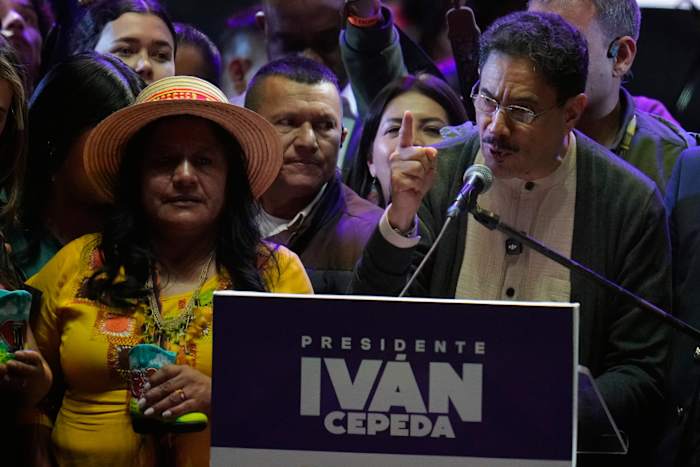
Colombia is voting today in a presidential election that is systematically fracturing the oldest democracy in South America. While casual international observers frame this as a standard regional pendulum swing between the legacy of leftist President Gustavo Petro and a resurgent right wing, the reality on the ground in Bogotá and the rural provinces is far more volatile. This election is not merely a choice between competing economic manifestos. It is an existential referendum on state authority, completely upended by a devastating wave of pre-election violence and the rise of a political class that has abandoned traditional consensus for hardline radicalism.
The primary driver of this crisis is the utter collapse of domestic security, paired with deep structural polarization that has left nearly a third of the electorate politically adrift.
The Mirage of Total Peace and the Bullet
To understand why Colombia is on a knife-edge, one must look at the wreckage of the outgoing administration's security strategy. Gustavo Petro entered office four years ago promising an ambitious framework known as Total Peace. The objective was to negotiate simultaneous ceasefires with various dissident guerrilla factions, paramilitary successors, and drug cartels.
It failed. Instead of stabilizing the countryside, the vacuum of state authority allowed criminal syndicates to expand territory, extort local businesses, and consolidate control over lucrative cocaine supply chains.
The cost of this policy failure has been paid in blood during the 2026 campaign cycle. Over 60 political and community leaders have been assassinated in the months leading up to today's vote. The violence reached a sickening climax with the assassination of presidential candidate Miguel Uribe Turbay, marking the first targeted killing of a Colombian presidential contender in more than three decades.
Rather than standard campaign rallies, the final weeks of this race featured candidates heavily scaling back public appearances. Over 400,000 soldiers and police officers are currently deployed across the country just to ensure that citizens can safely reach polling stations.
The Succession and the Firebrands
With Gustavo Petro constitutionally barred from seeking a consecutive term, the political spectrum has broken into three distinct, irreconcilable factions.
The Leftist Continuous Line
Senator Iván Cepeda, representing the ruling Historic Pact, enters the first round leading most traditional opinion polls. Cepeda is a historical heavyweight of the Colombian left. His father, a communist senator, was assassinated by state-linked paramilitaries in 1994, forcing Cepeda into years of exile. He is running on a platform that promises to salvage Petro’s social reforms, push through aggressive agrarian redistribution, and maintain the framework of negotiated peace. However, his proximity to the current administration's economic mismanagement and failed security policies makes him a deeply polarizing figure for the urban middle class.
The Institutional Right
Paloma Valencia, a senator from the Democratic Center, represents the established conservative order. Her political mentor is former President Álvaro Uribe, the architect of the scorched-earth military strategy against leftist guerrillas in the 2000s. Valencia secured her position by dominating the center-right primary consultations in March. Her platform relies on traditional conservative tenets: restoring full military primacy in rural areas, cutting corporate taxes, and protecting the independence of state institutions from executive overreach.
The Populist Disruptor
The wild card tearing up the conventional political playbook is Abelardo de la Espriella, running under his newly minted Defenders of the Homeland movement. De la Espriella is a flamboyant, high-profile defense attorney who previously represented controversial figures, including Álvaro Uribe and the sanctioned businessman Alex Saab. Modeling his rhetoric directly on El Salvador’s Nayib Bukele, de la Espriella has bypassed traditional party structures entirely. He has promised to scrap peace negotiations, build ten massive "mega-prisons," and deploy the military to systematically purge urban centers of crime.
The Arithmetic of an Impasse
The legislative elections held on March 8 revealed a deeply fragmented Congress that will hamper whoever takes the presidency. The Historic Pact secured the largest single bloc in both the Senate and the House of Representatives, but they are miles away from a functional majority.
The center-right and right-wing parties, split across different factions, hold a collective blocking minority. This guarantees that whether Cepeda or a conservative alternative takes the executive mansion in the Casa de Nariño, governing will require agonizing horse-trading.
| Presidential Candidate | Political Party / Coalition | Core Security Stance |
|---|---|---|
| Iván Cepeda | Historic Pact (Left) | Maintain "Total Peace" dialogues and agrarian reform |
| Paloma Valencia | Democratic Center (Center-Right) | Restore traditional military operations and institutional order |
| Abelardo de la Espriella | Defenders of the Homeland (Right-Wing) | Build mega-prisons and execute Bukele-style mass incarcerations |
Because Colombia requires an absolute majority of more than 50 percent to win the presidency in the first round, a June 21 runoff is virtually guaranteed. The real battle today is to see who will face Cepeda in that second round.
The Silenced Third
The critical factor that most corporate media outlets have overlooked is the massive volume of undecided and disillusioned voters. Data analyzed in the final week of the campaign indicates that roughly 28 to 33 percent of the electorate remains uncommitted.
These are not moderate voters looking for a compromise. They are a deeply cynical segment of the population that feels utterly abandoned by both the utopian promises of the left and the iron-fist rhetoric of the right. They are watching a campaign where candidates cannot even hold open rallies without military escorts.
The danger for Colombia is that this high level of alienation typically translates into massive abstention or a surge in blank ballots (voto en blanco). A president elected in a second round with low turnout and a hostile Congress will possess a weak democratic mandate. This structural weakness is exactly what rural insurgent groups and urban criminal networks exploit to undermine state legitimacy.
The immediate challenge for the next administration is not balancing the national budget or tweaking tax codes. It is re-establishing the basic monopoly on violence that defines a functioning state. If the next president cannot protect local councilors, journalists, and rural citizens from being gunned down in broad daylight, the grand political debates happening in Bogotá will mean absolutely nothing. Colombia is voting under the watch of hundreds of thousands of rifles today, and the ballot box may not be enough to quiet the gunfire.