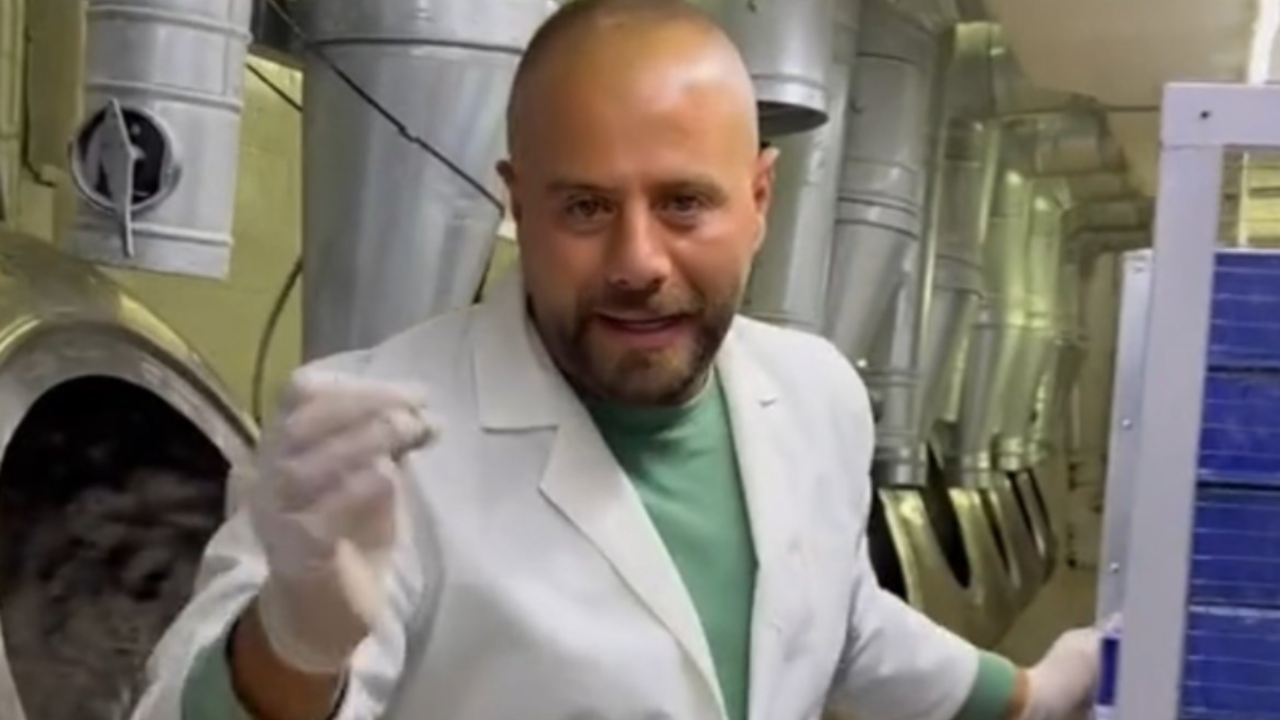
The digital ecosystem has long rewarded excess, but few content creators pushed the envelope quite as far as Georges Dib. Better known to millions of scrolling followers as "Doctor Food," this Lebanese TikTok fixture built an empire out of high-energy confectionery reviews, massive food portions, and domestic pageantry. That virtual castle collapsed under the weight of state security raids. Law enforcement officials tracked Dib down in a northern village in Akkar, bringing an abrupt end to an online career that had long outrun serious criminal indictments.
The core narrative extends far beyond standard influencer disgrace. When Lebanese authorities raided his network, they did not find minor regulatory infractions or standard promotional fraud. They uncovered an industrial-scale narcotics operation designed to mask illicit shipments inside branded confectionery packaging. Hundreds of kilograms of hashish, packed securely within commercial biscuit boxes destined for export markets, turned a mainstream sweet brand into a sophisticated cartel front.
The Mechanics of Digital Smoke and Mirrors
How does a high-profile internet personality maintain an active daily presence while facing active felony warrants and an in absentia life sentence? The answer lies in the unique vulnerability of modern digital logistics. Dib understood the algorithmic hunger for fresh content. Even as investigators built a tight circumstantial and forensic net around his production facilities in the Bekaa Valley, the influencer kept filming.
He practiced a transient lifestyle of rapid digital deployment. Investigators noted that Dib routinely rotated vehicles, switched personal phone numbers, and recorded segments before immediately abandoning his physical location. By weaponizing the very tools meant to track modern citizens, he stayed one step ahead of local authorities for months. He used short-form video bursts as a psychological shield, convincing millions of casual observers that a man posting lighthearted clips from domestic settings could not possibly be the target of an international drug smuggling investigation.
This strategy exposed a massive blind spot in contemporary law enforcement monitoring. Digital fame creates an illusion of omnipresence. Followers assume that constant online updates equate to absolute transparency, ignoring the reality that a three-minute video can be pre-recorded, stockpiled, and released by third parties to simulate a normal routine while the creator hides from the law.
The Anatomy of an Industrial Front
The transition from legitimate food marketing to transnational trafficking requires more than casual ambition. It demands a supply chain capable of subverting international customs. According to judicial files from Mount Lebanon, the operation utilized commercial packaging lines originally intended for standard consumer goods.
By embedding narcotics within mass-produced baked goods, the network exploited the sheer volume of global cargo traffic. Food products traveling across regional borders often receive expedited or randomized screening compared to raw industrial materials, provided the commercial paperwork appears legitimate. Confectionery items possess dense packaging, distinct aromatic profiles, and heavy sealing mechanisms that naturally complicate routine physical inspections.
The choice of export destinations, notably pointing toward lucrative markets in the Gulf region, highlights the financial motivations driving the enterprise. Domestic economic collapse in Lebanon has forced small business owners into desperate liquidity measures, but the scale of an 820-kilogram narcotics seizure points to an established criminal syndicate rather than a simple cash-flow workaround. Dib’s confectionery brand served as both a practical distribution vehicle and a brilliant psychological distraction, wrapping illegal contraband in the bright, harmless aesthetic of internet entertainment.
The Mirage of Content Creator Accountability
The fall of Doctor Food forces a harsh reckoning regarding platform responsibility and audience parasocial bonds. Social media platforms treat creators as independent contractors of attention, offering minimal oversight regarding their offline commercial activities. When offline criminality intersects with online celebrity, followers are often the last to know, frequently defending accused public figures out of a misplaced sense of personal loyalty.
The timing of the final apprehension coincided with a broader public spectacle involving his high-profile domestic separation and public disputes, illustrating how deeply personal drama and commercial branding had merged into a single marketable commodity. Attention economies thrive on chaos. Every public controversy, every courtroom rumor, and every dramatic denial only served to boost engagement metrics, proving that negative attention can be successfully monetized right up until the moment handcuffs click into place.
The legal proceedings ahead will determine the final disposition of his corporate assets and personal freedom, but the broader cultural damage is already complete. The veneer has worn off the digital creator economy, revealing that behind the ring lights and smiling thumbnails, the algorithms do not care whether the product being pushed is chocolate or contraband.


