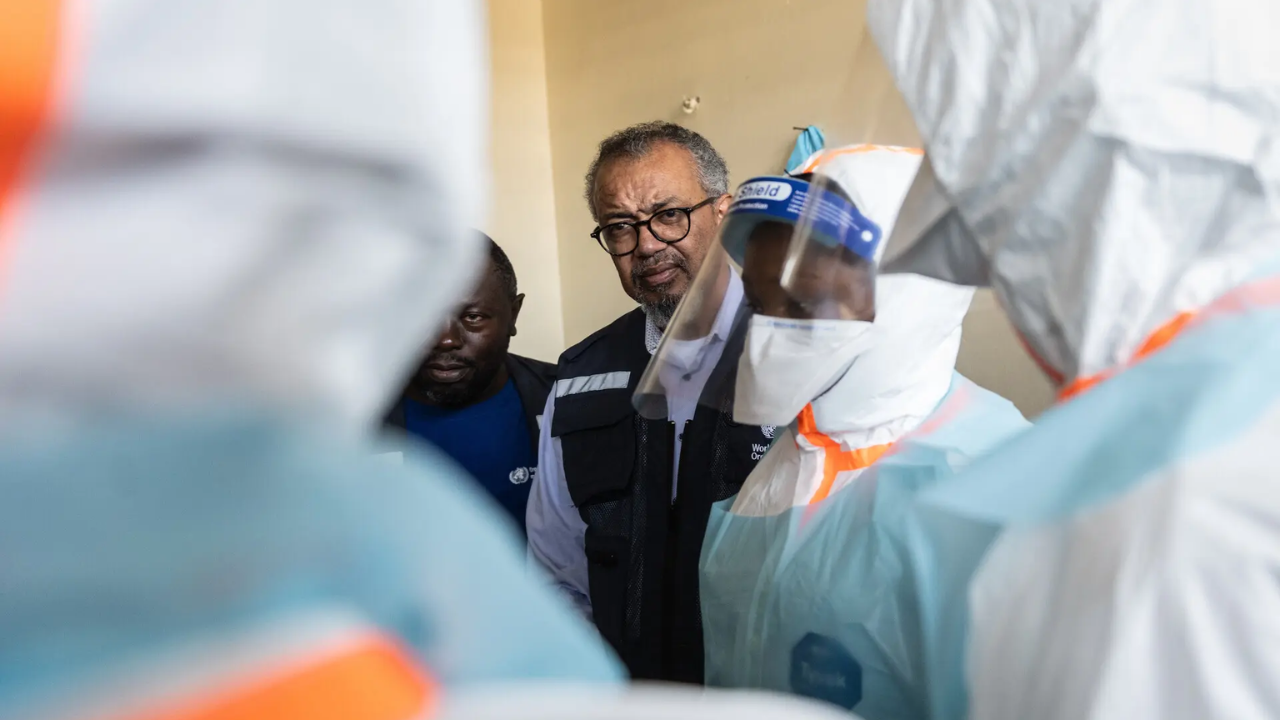
Five patients walking out of a newly built treatment center in Bunia should be a moment of unalloyed triumph. Instead, the small gathering in the capital of the Democratic Republic of Congo’s Ituri province feels more like a fragile holding action against a gathering storm. World Health Organization Director-General Tedros Adhanom Ghebreyesus arrived on the ground to personally inaugurate the facility, publicizing these five recoveries as proof that the current outbreak can be beaten. Yet beneath the diplomatic optimism lies a far grimmer reality: international agencies are losing the race against a rare, vaccine-resistant strain of the virus operating in a war zone.
The five individuals who survived did so without the aid of modern pharmaceutical breakthroughs. They fought off the Bundibugyo strain, a variant of Ebola that currently possesses zero approved vaccines and zero targeted antiviral therapies. Unlike the more common Zaire strain, which was successfully combated in recent years using highly effective tools like the Ervebo vaccine and mAb114 antibody treatments, the Bundibugyo variant renders the current global medical arsenal entirely useless. If you enjoyed this piece, you should look at: this related article.
[Image of Ebola virus structure]
This means every survival recorded in Bunia is a testament to basic, grueling symptomatic care: intravenous fluids to halt dehydration, paracetamol for splitting headaches, and anti-emetics to control violent vomiting. It is primitive medicine keeping people alive by the skin of their teeth. For another perspective on this event, refer to the recent coverage from WebMD.
The scope of the threat extends far beyond the walls of the new clinic. Officially, the health ministry and international bodies cite 134 confirmed cases, but the suspected numbers tell the true story of this epidemic. More than 900 suspected cases and over 220 suspected deaths are scattered across the region. Hundreds of laboratory samples remain backlogged, waiting for confirmation while the disease stealthily hitches rides along the informal trade routes running through the eastern Congo.
The Illusion of Containment
To understand why the response is faltering, one must look at the geography of the outbreak. The virus is moving through an area long defined by violent conflict and massive human displacement. Over 245,000 people have fled eastern Congo since last year, creating a highly mobile, deeply traumatized population. When people flee militia violence, they do not stop at checkpoints. They do not wait for health screenings. They carry what they can, and sometimes, they carry the virus with them.
The geopolitical response has followed a predictable, flawed playbook. Neighboring Uganda, having detected nine cases and one death, immediately closed its official border crossings with Congo. While a border closure looks decisive on a map, local health workers know it achieves the exact opposite of its intended goal. Closing official gates simply forces desperate people into the forest, using informal paths where no one is tracking temperatures, taking blood samples, or monitoring for early symptoms.
The panic has already crossed the Atlantic. In Brazil, authorities just isolated a Congolese national in Sao Paulo who presented with a high fever, triggering a massive public health scare before initial tests came back negative. Meanwhile, a legal battle erupted in Kenya, where the high court blocked a bilateral deal with the United States to set up an Ebola quarantine facility for American citizens, with local groups arguing the arrangement would break an already fracturing domestic healthcare system. The international community is preparing to build walls rather than confronting the fire at its source.
A War on Two Fronts
The medical workers inside the Bunia facility are not just fighting a deadly pathogen; they are fighting deep-rooted community distrust that has occasionally boiled over into outright warfare. At least three health facilities in the region have been attacked this month. Angry crowds, infuriated by the imposition of strict, culturally alien safe-burial protocols that prevent families from touching the bodies of their deceased loved ones, burned a treatment tent to the ground twice.
For a local population that has endured decades of neglect and militia massacres, the sudden arrival of well-funded international workers wrapped in white biohazard suits can look less like a rescue mission and more like an occupation. When rumors spread that health workers are poisoning patients for profit—a common piece of misinformation fueled by the high mortality rates inside clinics—people stop coming forward. They hide their sick relatives in their homes. They treat the initial onset of vomiting and dizziness as domestic poisonings, seeking out traditional healers while the virus multiplies and spreads to caregivers.
Doctors Without Borders has openly broken with the optimistic tone of the United Nations, warning that the epidemic is outstripping the current logistics on the ground. The aid group is demanding an immediate, massive expansion of localized testing and a faster deployment of field personnel.
The Clinical Gamble
Treating Ebola without a vaccine or a targeted therapy is a game of clinical endurance. Consider the experience of Ezo Étienne, a local nurse who contracted the virus during routine hospital ward rounds. His descent was typical: sudden dizziness followed rapidly by intense itching, relentless diarrhea, and weakness so profound he could barely lift his head. It took seven consecutive diagnostic tests before his Ebola infection was formally confirmed.
His survival did not rely on a miracle drug. It relied on a nurse hanging plastic bags of saline solution at the right moment to replace the fluids his body was losing at a catastrophic rate. If a patient can be kept stable long enough for their own immune system to generate antibodies against the Bundibugyo strain, they can survive. But that requires an uninterrupted supply of clean needles, IV lines, and basic pain medication—supplies that are currently struggling to reach the frontlines due to rebel activity along the main supply roads.
The Rwanda-backed M23 rebel group now controls significant portions of North and South Kivu provinces just south of the main outbreak zone. While the rebel leadership has reported two cases within their territory, their presence creates a massive logistical dead zone where international health organizations cannot safely travel or track contacts. Tedros made a direct appeal from Bunia for a humanitarian ceasefire, but on the ground, such pleas carry little weight against entrenched political and territorial ambitions.
Public health officials in Kinshasa are trying to project confidence. They point to the fact that laboratory backlogs within certain sectors have been temporarily cleared and emphasize that response teams are working around the clock. The Africa Centres for Disease Control and Prevention notes that vaccine trials for the Bundibugyo strain are being fast-tracked, with hopes that a candidate might be ready for deployment by the end of the year.
A vaccine that arrives in seven months is entirely useless for the hundreds of people currently sitting in isolated villages with elevated temperatures today. Relying on future scientific breakthroughs masks the immediate need for a massive scale-up of basic public health infrastructure. The five patients who walked out of the Bunia clinic alive did not survive because of global health diplomacy or future pipelines; they survived because a handful of local doctors and nurses had enough clean water and IV fluids to fight the virus hour by hour. Winning this battle requires flooded supply lines and earned community trust, not just new ribbons to cut.