Egypt didn't just build a new military headquarters; they built a structural titan that completely changes how defense architecture is measured.
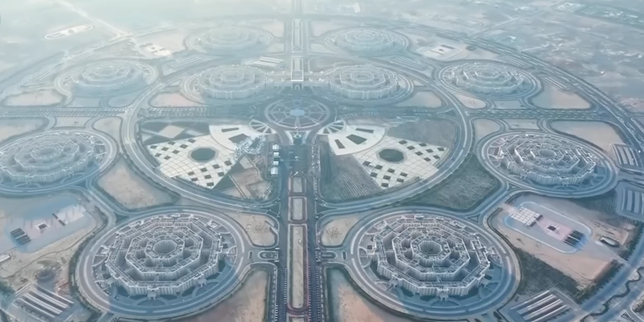
If you think the US Pentagon is massive, wait until you look at what's rising out of the sand east of Cairo. Officially known as the State Strategic Command Center and widely called the Octagon, this sprawling complex spans a jaw-dropping 22,000 acres. It sits in the country's New Administrative Capital, acting as the ultimate nerve center for the Egyptian Armed Forces. In other news, we also covered: The Economics of Attritable Airpower Why The Reaper Replacement Imperative Changes Global Defense Procurement.
Let's look at why this facility matters, how it's structured, and the controversies swirling around its multi-billion-dollar price tag.
The Architectural Breakdown of the Octagon
You don't name a building after a geometric shape lightly. The complex gets its name from its distinctive layout featuring eight outer octagon-shaped buildings. These external structures represent the various branches of the Egyptian military. BBC News has provided coverage on this important issue in great detail.
Two central ministerial buildings sit right in the middle. They connect to the outer rings via long, secure corridors. Altogether, the floor area covers roughly 4.7 million square meters.
To put that scale into perspective, the Pentagon occupies about 29 acres of land footprint. Egypt's new defense hub dwarfs it completely by total area, functioning less like a traditional office building and more like an independent fortified city. It houses crisis management units, operational command rooms, smart communication grids, and intelligence analysis departments under one heavily secured roof.
Why Egypt Built It Now
Military modernization doesn't happen in a vacuum. President Abdel Fattah El-Sisi formally inaugurated the facility to centralize the country's defense apparatus. For decades, ministry operations were scattered across congested parts of Cairo. Moving everything to a tech-heavy, centralized smart hub streamlines communication.
The timing also speaks volumes. The Middle East faces constant volatility, from maritime security threats in the Red Sea to ongoing instability in neighboring Sudan and Libya. Egyptian leadership wants a command center built for modern digital warfare, cyber threats, and rapid decision-making.
Communication networks inside the complex link directly with sovereign state institutions. It functions as a digital brain designed to drop response times down to absolute minimums during national emergencies.
The Financial Reality Behind the Megaproject
Mega-projects come with heavy political and economic baggage. While state media frames the Octagon as a symbol of technological progress and national strength, critics point to Egypt's broader financial pressures.
With foreign debt sitting well above $160 billion, many citizens question the timing of lavish construction projects. Building a futuristic military city requires immense capital resources. Observers often debate whether those funds could have found better use addressing local economic strains or public services.
Even so, the government remains committed to shifting state administration into the New Administrative Capital. The Octagon stands as the crown jewel of that massive urban relocation effort.
Whether viewed as a tactical masterstroke or an expensive display of state power, the Octagon is now fully operational. It sets a brand new benchmark for military infrastructure worldwide, proving that scale and digital integration will dictate the future of defense planning.
Egypt's New Military Command Hub 'Octagon' Draws Comparison To Pentagon
This video provides an overview of the newly inaugurated Octagon complex and its comparison to global military headquarters.
http://googleusercontent.com/youtube_content/1