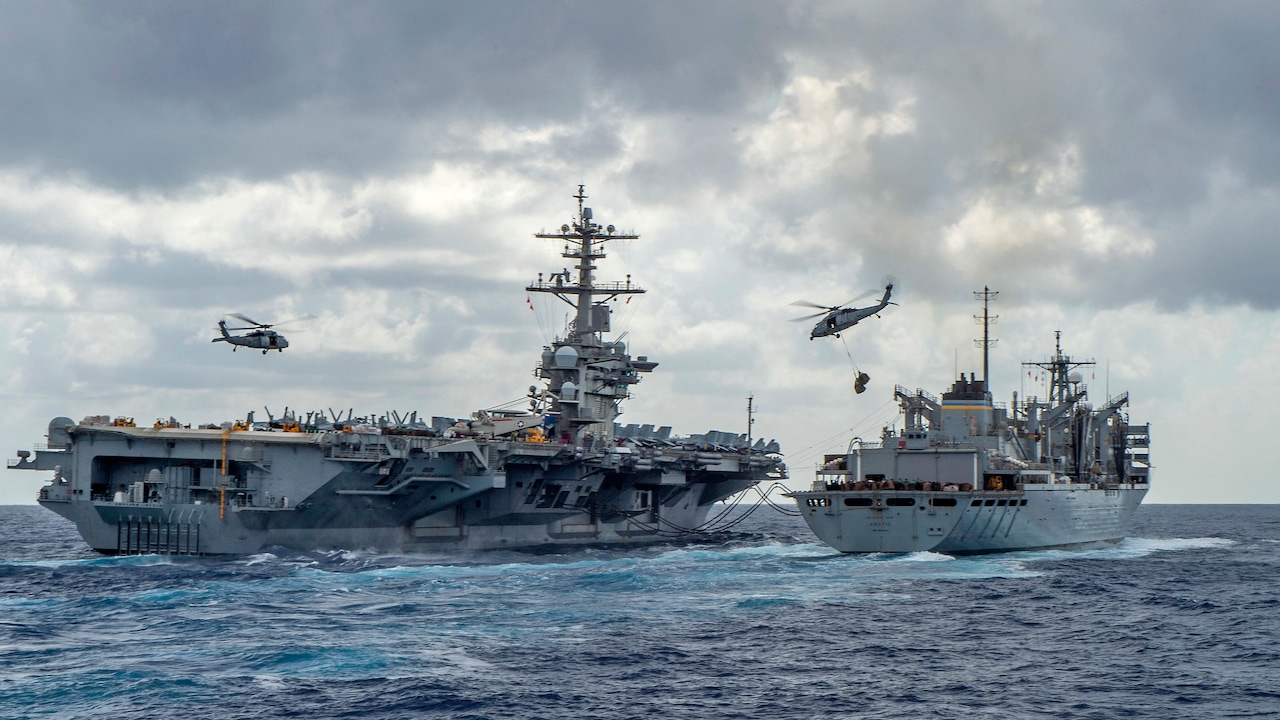
The United States military has executed its eleventh consecutive night of targeted strikes against Iranian-backed targets across the region, signaling a massive operational expansion that shows no signs of slowing down. What began as a series of proportional retaliations has now mutated into an open-ended campaign designed to systematically dismantle hostile proxy infrastructure, air defense installations, and command networks. The immediate operational goal centers on neutralizing persistent threats against commercial shipping lanes and American forward bases. However, the rapidly expanding target list reveals a far broader strategic objective: forcing a total recalibration of deterrence dynamics across the Middle East.
Operational Objectives and the Limits of Air Power
Precision munitions can destroy fixed structures and radar installations. They cannot, by themselves, dismantle a deeply entrenched ideology or sever decentralized supply lines built over decades.
Night after night, heavy bombers and sea-launched cruise missiles strike warehouses, weapons caches, and underground staging facilities. Intelligence assessments indicate that these strikes have degraded short-term operational capabilities for several militia groups. Yet, logistics networks in regional conflicts remain notoriously fluid. Weapons manufacturing and assembly are frequently broken down into small, dispersed workshops embedded within dense civilian infrastructure, making total elimination via air power an impossible standard to meet.
Consider a hypothetical scenario where an air strike destroys a primary munitions depot holding dozens of short-range ballistic missiles. While that specific stockpile is eliminated, the regional supply apparatus quickly adapts by diverting smaller shipments along alternative land routes, shifting from large-scale regional storage to hyper-localized, concealed caches. The tactical victory disrupts operations for days or weeks, but it leaves the underlying strategic logistics network intact.
Military planners face an inherent contradiction. Escalating the frequency and intensity of bombardment increases the likelihood of collateral damage and civilian casualties, which in turn fuels local recruitment drives and reinforces political opposition to the foreign presence. Conversely, scaling back the strikes creates an operational vacuum that hostile forces immediately fill to reconstitute their strike capabilities.
Strategic Calculations Behind Continuous Strikes
The decision to maintain an unbroken, multi-night bombardment reflects a calculated shift in military doctrine from reactive defense to active pressure.
- Sustained Operational Tempo: Consecutive strikes prevent adversary engineering units from repairing damaged runways, radar arrays, and launch platforms. By maintaining constant pressure, defense officials seek to keep hostile forces perpetually off-balance.
- Degradation of Command and Control: Targeting specialized communications equipment and tactical leadership elements aims to break the chain of command, forcing local units to operate in isolation without high-level strategic coordination.
- Deterrence Signaling: Beyond immediate tactical destruction, the sheer volume of ordinance delivered serves as a direct message to regional actors regarding political willpower and sustained logistical capability.
This strategy relies heavily on continuous intelligence, surveillance, and reconnaissance. Re-striking the same geographical zones night after night indicates either that targets are being continuously replenished or that initial battle damage assessments required follow-up strikes to guarantee total destruction.
The Economic and Geopolitical Friction Points
Sustained air campaigns carry astronomical financial and strategic costs that extend far beyond the immediate theater of operations.
Advanced precision-guided weapons—such as Tomahawk cruise missiles and Joint Direct Attack Munitions—are expensive and limited in production capacity. Expending hundreds of these high-tier munitions against relatively low-cost asymmetrical assets creates a severe cost-imbalance ratio. Defense industrial supply chains are already strained by global demand, and firing high-end stockpiles at a rapid pace risks depleting inventories required for major power contingencies elsewhere in the world.
Economically, the campaign aims to stabilize critical maritime trade routes that handle a massive percentage of global commerce. Insurance rates for commercial vessels navigating nearby waterways soared following initial attacks on international shipping. While military operations aim to reassure global markets, prolonged combat activity keeps risk premiums high and forces shipping lines to route vessels around entire continents, driving up global transportation costs and fueling broader inflationary pressures.
Diplomatically, the sustained operations strain relationships with regional allies who must balance their security partnerships with domestic political pressures. Every night of strikes risks destabilizing sensitive political balances, forcing neighboring governments to publicly condemn military actions while privately relying on the security umbrella those actions provide.
The Operational Horizon
Without a clearly defined political mechanism to convert military dominance into long-term stability, continuous strikes risk becoming a self-perpetuating operational loop. Air strikes can deny enemy movement, break hardware, and suppress fire for a given duration. They cannot draft treaties, build stable governance, or alter the long-term regional alignment of power. Washington remains locked in an escalation cycle where stopping the strikes invites immediate renewed attacks, but continuing them indefinitely offers diminishing strategic returns.