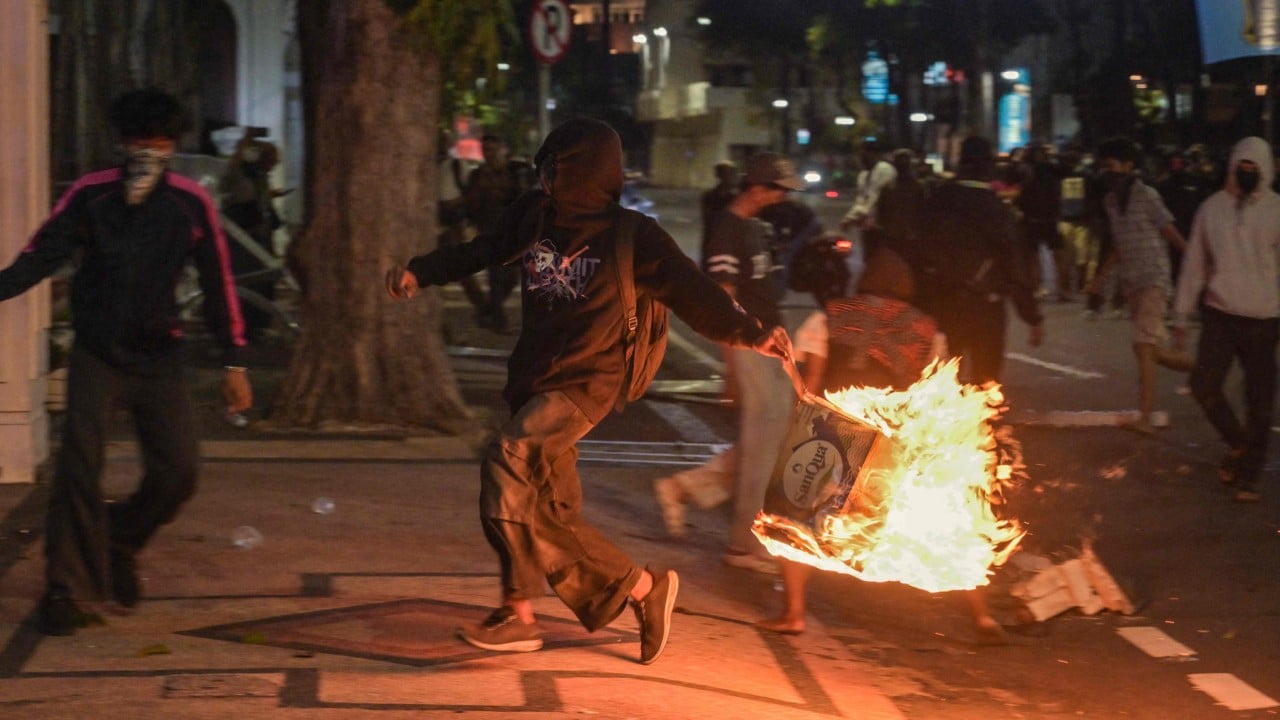
Dozens of young demonstrators fill overcrowded holding cells across East Java after a rally against President Prabowo Subianto turned violent in Surabaya. The immediate catalyst was a fresh fuel price hike and mounting anger over budget diversions, but the unrest signifies a much deeper fissure. What mainstream dispatches frame as routine civil friction is actually an explosive generational breakdown. Elite excess has collided directly with an underclass squeezed by tax hikes and mass layoffs, making the streets of Indonesia’s second-largest city the latest battleground in a prolonged cycle of dissent.
Decades of reporting on Southeast Asian political transitions teach you to look past the smoke of tear gas canisters. The true narrative is rarely found in the official police press briefings or the sterile tallies of broken store windows. To understand why a hundred students and workers gathered outside a Surabaya government building on a Friday afternoon, ready to trade stones for rubber bullets, you have to look at the systemic pressure cooker built over the past eighteen months.
The Anatomy of an Explosion
When Prabowo Subianto took office in late 2024, his administration promised a smooth transition and immediate relief through a signature free nutritious meals initiative for school children. Instead, the reality of execution has fractured state finances. Presidential Instruction Number 1 of 2025 mandated sweeping budget cuts across various civil ministries to fund the multi-billion-dollar meal scheme, triggering administrative chaos and deep public skepticism.
The economic math simply did not add up for the average citizen. To offset fiscal deficits and fund elite-backed initiatives, local and national authorities began squeezing the lower income brackets. Property taxes surged exponentially across several regencies. In places like Pati, Bone, and Cirebon, residents saw their local tax assessments spike by percentages ranging from 150 percent to an astronomical 1000 percent. For the millions operating within the informal economy, these numbers represented financial ruin rather than standard governance.
Compounding the crisis, the Indonesian rupiah has faced persistent weakening throughout the first half of 2026. Imported food costs rose, manufacturing centers executed mass layoffs, and the government subsequently moved to cut fuel subsidies. When truck drivers and online motorcycle taxi drivers realized their daily margins were evaporating, the simmering digital resentment crystallized into physical resistance.
The Ghost of Affan Kurniawan
The current wave of detentions cannot be separated from the trauma of the prior year. In late August 2025, a massive nationwide protest erupted over lavish perk increases for lawmakers in Jakarta. The turning point occurred when a Brimob tactical vehicle struck and killed Affan Kurniawan, a platform delivery driver, during a dispersal operation.
That single event transformed localized economic grievances into a nationwide movement against security forces. Human rights organizations logged at least eleven deaths and thousands of arbitrary detentions during that autumn crackdown. While many of those original detainees were eventually released after being forced to sign pledges of compliance, hundreds remain behind bars without formal access to legal aid.
The Surabaya clash is a direct continuation of this unresolved friction. Police departments have increasingly positioned themselves as the victims of collective violence, utilizing strict anti-incitement laws to sweep up anyone holding a megaphone or streaming on social media. The state security apparatus has abandoned standard crowd management in favor of preemptive intimidation, searching the homes of student activists and confiscating literature and electronic equipment without judicial warrants.
A Defiant Generation Using New Symbols
The crackdowns are failing to achieve their intended chilling effect. Instead of retreating, Indonesian Gen Z has developed a distinct culture of resistance that confounds traditional intelligence agencies. Dissenters have adopted decentralized, highly visual online campaigns to coordinate flash mobilization.
During the buildup to the country’s independence celebrations, truck drivers and student unions began flying the Straw Hat Pirates' flag from the popular anime franchise One Piece. It became an instantly recognizable emblem of defiance against state authority. The government reacted with characteristic heavy-handedness, with the People's Consultative Assembly declaring the fictional pirate flag an explicit symbol of treason and sedition. Waving it became grounds for immediate arrest.
This aggressive policing of symbols highlights the paranoia gripping the political class. The popular social media slogan Semakin Ditekan Semakin Melawan translates to "The more we are repressed, the more we fight." It serves as a psychological shield for a youth demographic that feels completely excluded from the democratic process. In courtrooms from Jakarta to Kediri, young defendants face charges under Article 160 of the Criminal Code for incitement and the draconian Electronic Information and Transactions Law. Yet, they remain militantly vocal, turning their trials into public indictments of political nepotism.
The Elite Disconnect
While working-class families struggle against the inflation of basic staples, the regional and national elite continue to engage in visible displays of wealth. In East Kalimantan, public outrage peaked after investigations revealed local officials attempted to bypass federal austerity mandates to procure luxury foreign SUVs using public funds. The blatant disregard for the economic reality of the population has eroded any remaining institutional trust.
The state response to these systemic failures follows a predictable script. Authorities offer vague promises of counseling for arrested students while forcing them to perform humiliating exercises like squat-walking through police compounds before receiving rations. These tactics are designed to break the morale of individual participants, but they only serve to deepen the alienation of the broader population.
Independent data shows that the vast majority of individuals processed through the judicial system for protest-related offenses are under thirty years old. They face potential prison sentences ranging from six to twelve years for merely organizing peaceful assemblies or posting dissenting opinions online. Prominent civil society advocates like Delpedro Marhaen Rismansyah remain isolated in high-security cells, used as high-profile deterrents by an administration desperate to project stability to foreign investors.
Moving Toward the Brink
The situation in Surabaya proves that localized arrests will not stabilize the nation. Every baton charge creates a new martyr, and every arbitrary detention expands the network of families with a direct grievance against the state. The administration cannot arrest its way out of structural inflation and fiscal mismanagement.
The regional solidarity movements emerging in Australia, Europe, and neighboring Malaysia indicate that this internal crisis is expanding into an international diplomatic liability. Human rights monitors are actively documenting the names of security commanders who authorize the use of excessive force, setting the stage for future global sanctions.
For the shopkeepers on Ahmad Yani Street and the students gathering at Universitas Negeri Surabaya, the risk of imprisonment has become secondary to the necessity of economic survival. The state must reverse its predatory tax policies and halt the criminalization of peaceful dissent if it hopes to avoid a total systemic collapse. Until then, the cells will remain full, and the streets will remain volatile.