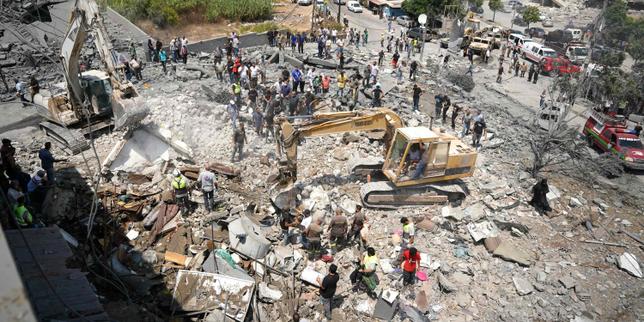
The fragile cessation of hostilities brokered between Israel and Hezbollah is buckling under the weight of persistent tactical escalations, leaving the security architecture of southern Lebanon hanging by a thread. When heavy Israeli airstrikes tore through southern villages, including Ansar and Deir al-Zahrani, killing at least eleven people, it was not merely an isolated breach of protocol. It exposed the structural flaws of an enforcement framework that was designed more for diplomatic optics than operational reality.
Understanding why this arrangement is failing requires looking past the immediate cycle of retaliation and examining the mechanics of the security zone itself. The recent violence erupted after a Hezbollah drone attack seriously injured three Israeli soldiers operating inside the southern border security belt. Israel responded with precision air raids targeting senior commanders of the elite Radwan Force, resulting in civilian casualties that drew immediate condemnation from Lebanese state officials.
This tit-for-tat dynamic highlights an inherent paradox within the current diplomatic arrangement. On one hand, international mediators and Lebanese state authorities are pushing for a transition toward exclusive state control over the south. On the other hand, Hezbollah maintains an operational footprint and a rejectionist stance toward disarmament mandates, viewing state-led negotiations as a unilateral capitulation.
The friction is amplified by competing interpretations of the agreement's terms. Israel asserts its military presence within the border zone is a non-negotiable prerequisite to protect northern communities from recurring infiltration threats. Conversely, the militant group frames any active Israeli footprint or intelligence-gathering flight as an ongoing act of war that justifies defensive action. When both sides operate under mutually exclusive definitions of compliance, diplomacy is reduced to a countdown toward the next kinetic explosion.
Civilians trapped in the southern districts bear the brunt of this conceptual deadlock. As international stakeholders prepare for upcoming diplomatic rounds in Rome, the ground reality demonstrates that high-level communiques cannot substitute for an enforceable local deterrent. Without a mechanism capable of restraining non-state actors while simultaneously compelling a phased military disengagement, the arrangement remains an illusion masking an active theater of war.