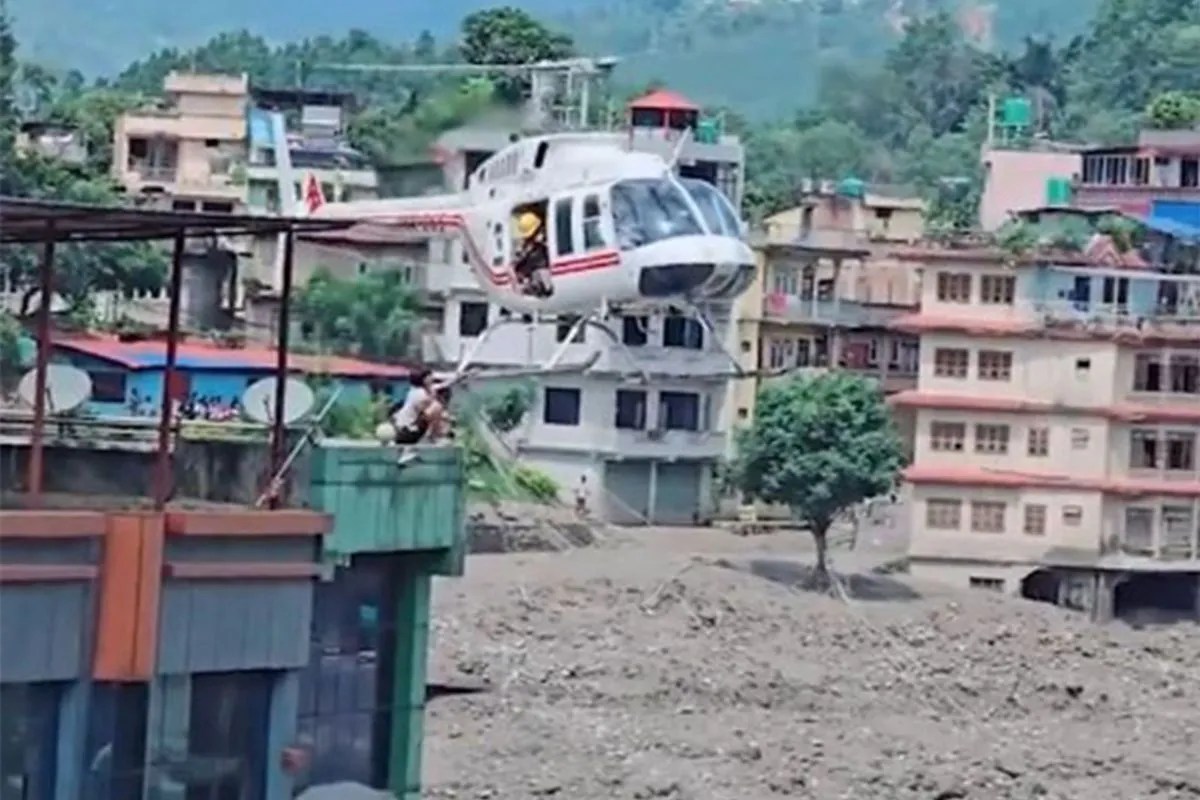
Heavy monsoon downpours triggered catastrophic landslides and overflowing rivers across Nepal, burying entire communities under layers of mud and stone while heavy machinery struggles to clear the debris. The immediate aftermath of the Nepal flood reveals a grim reality on the ground. Rescue workers use excavators and manual labor to sift through massive mounds of earth in search of the missing, while survivors recount the absolute erasure of their neighborhoods and families.
Behind the breaking news alerts and the grim statistics of displaced populations lies a systemic failure of early warning infrastructure, unplanned urban expansion, and a reactive disaster management framework that consistently catches authorities off guard. Years of unmonitored slope cutting for road construction, compounded by extreme weather anomalies linked to rapid climate shifts, have turned the Himalayan foothills into a ticking time bomb. When the skies open up, the mountains simply slide. If you found value in this article, you should read: this related article.
The Anatomy of a Himalayan Disaster
Monsoon rains are not a new phenomenon in South Asia. Communities have adapted to seasonal flooding for generations through traditional agricultural patterns and elevation-conscious settlement choices. Modern development pressures have completely upended these historical safeguards.
Unregulated road expansion projects across the middle hills destabilize fragile mountain slopes. Every monsoon season unleashes torrents of loose soil and rock debris into swollen river channels, transforming standard rainwater accumulation into high-velocity mudflows known locally as debris flows. These surges carry immense kinetic energy, capable of leveling concrete structures and burying entire villages within minutes. For another angle on this story, check out the recent coverage from NBC News.
Official disaster response protocols remain heavily centralized and chronically underfunded. When a remote valley is cut off by landslides, local government bodies lack the heavy equipment, satellite communication tools, and medical supplies needed to mount an immediate search and rescue operation. Days pass before state-level machinery reaches the epicenter, leaving local residents to dig through the rubble with bare hands and basic farming tools.
Voices From the Mud
Survivors wandering near the edges of devastated riverbanks share a unified narrative of sudden, terrifying displacement. Evacuation warnings either arrived too late or failed to account for the speed at which mountain torrents jump their banks.
"We heard a roar like a low-flying jet, and within seconds, the river was inside our living room. By the time we climbed to the ridge, our entire community was gone."
This testimony repeats across multiple districts affected by the disaster. The human cost extends far beyond the immediate casualties. Displaced families now crowd into makeshift relief camps set up in schools and community centers. Clean drinking water is scarce. Waterborne diseases loom as an immediate secondary threat, particularly for children and the elderly. Sanitation infrastructure in temporary shelters is rudimentary at best, creating ideal conditions for outbreaks of dysentery and cholera.
Economic recovery presents an equally daunting challenge. Agricultural land, the primary economic lifeline for rural households, has been buried under feet of sterile sand and gravel. Terraced fields cultivated for decades require heavy remediation before they can support crops again. Livestock perished in large numbers, and rural credit systems have collapsed alongside physical banking infrastructure in the hardest-hit zones.
Why Traditional Relief Fails
State response mechanisms rely heavily on post-disaster distribution of relief packages—tarps, rice, and blankets delivered weeks after the event. This aid model treats systemic vulnerability as a temporary logistical inconvenience.
True resilience requires shifting capital from emergency response to preemptive structural mitigation. That means halting haphazard road construction during monsoon windows, enforcing zoning laws along vulnerable river corridors, and investing in community-level sensor networks that can provide localized flood warnings hours before waters rise.
Neighboring countries and international aid organizations frequently pledge millions in emergency relief funds following major calamities. Yet these funds tend to concentrate on short-term relief rather than long-term engineering solutions like check dams, slope bioengineering, and reinforced embankment construction.
The heavy excavators currently clawing through the mud of Nepal represent a tragic symbol. They are necessary today because the structures to prevent yesterday's catastrophe were never built. Until local governance prioritizes ecological stability over fast, unengineered infrastructure growth, every monsoon season will bring the same desperate search through the rubble.