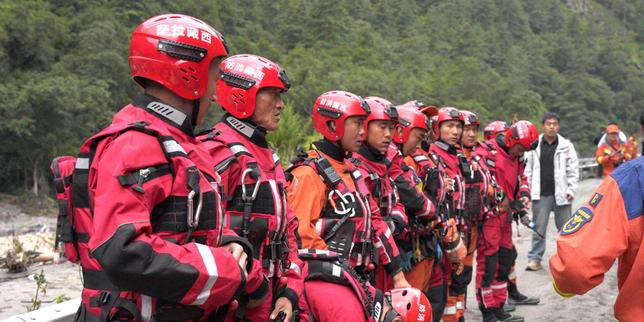
At least 33 British nationals remain unaccounted for following catastrophic flash floods across Nepal and the Tibet Autonomous Region, triggering an international rescue operation and exposing the fragile architecture of Himalayan tourism.
The numbers are stark. The grief unfolding in consular offices and living rooms across the United Kingdom is heavier. When monsoon systems stall over high-altitude watersheds, disaster arrives not as a slow-moving warning, but as a wall of water carrying entire hillsides down into narrow river gorges. Yet, focusing solely on the missing head count misses the structural failures that allowed thousands of trekkers into known hazard zones during peak instability windows.
Weather anomalies do not happen in a vacuum. Climate shifting across the third pole has rewritten the rules of seasonal monsoons, turning historic norms into dangerous fiction.
The Anatomy of a High-Altitude Disaster
Monsoon moisture sweeping up from the Bay of Bengal typically drops its heavy payload across the southern Himalayan foothills before exhausting itself against the Tibetan plateau. That pattern is breaking down. Trapped upper-level low-pressure systems now cause stalled cloudbursts that dump months of rain in a matter of hours onto fragile, glacier-scarred terrain.
When a glacial lake outburst flood occurs, the immediate downstream impact defies imagination.
- Thermal erosion weakens moraine dams holding back millions of cubic meters of water.
- Sub-surface piping creates invisible tunnels through earthen walls until sudden structural collapse happens.
- Debris flows transform standard rivers into dense slurries of boulders, mud, and snapped pine trees moving at highway speeds.
Tourists navigating classic routes through the Annapurna, Everest, or Langtang regions often assume that commercial trekking agencies possess real-time meteorological intelligence. They do not. Local guides rely on cellular networks that fail the moment a tower is washed away. Satellite messengers provide SOS capability, but they cannot broadcast a localized warning about a slope failure happening three miles upstream.
Regulatory Blind Spots in Himalayan Tourism
Nepal and the Tibet Autonomous Region draw hundreds of thousands of foreign visitors annually, pumping vital foreign currency into local economies. That economic dependency creates a perverse incentive structure. Authorities are frequently reluctant to issue sweeping trail closures or declare regional states of emergency until a crisis has already peaked.
Permit systems track entry dates, but they offer zero active accountability for daily whereabouts.
A trekker can register an itinerary in Kathmandu, change routes halfway through to avoid a minor snow flurry, and walk straight into an unmonitored flash flood zone without triggering a single automated alert.
Insurance companies operating in the region face their own reckoning. Standard travel policies routinely exclude extreme weather events or high-altitude search-and-operations costing upwards of fifty thousand dollars per helicopter sortie. When commercial pilots look at walls of dense fog and torrential rain, insurance coverage becomes secondary to basic physics. Grounded helicopters mean stranded civilians.
The Ground Truth of Search and Rescue Operations
Rescue coordination during a trans-boundary Himalayan disaster requires bureaucratic clearance that moves at a glacial pace, contrasting sharply with the speed of the floodwaters.
Nepal's domestic aviation sector relies on visual flight rules. Pilots cannot fly into narrow valleys choked with storm clouds and vertical rain shafts. Ground teams must hike into areas where footbridges have been sheared from their concrete anchor points and mountain roads have turned into sheer cliff faces.
In Tibet, the operational constraints multiply. Foreign rescue teams face strict jurisdictional boundaries, requiring specialized military clearance to deploy drones or ground-penetrating radar into restricted border sectors. This diplomatic friction delays life-saving interventions during the critical forty-eight-hour window following a catastrophic event.
Families back in the United Kingdom endure days of radio silence, caught between the Foreign, Commonwealth & Development Office and local tour operators who are often just as blind to conditions on the ground.
Redefining Himalayan Safety Protocols
If the missing 33 British citizens teach us anything, it is that adventure tourism requires a complete overhaul of risk assessment models. The romantic notion of escaping into the mountains must be paired with industrial-grade accountability.
Tour operators can no longer treat weather forecasts as a secondary itinerary detail. Mandatory satellite tracking for all commercial groups, standardized emergency exit thresholds tied to regional precipitation data, and bilateral rescue agreements between regional authorities are baseline necessities.
The mountains remain indifferent to human schedules. Until the systems managing those who visit them catch up to that reality, the valleys will continue to demand a heavy toll.