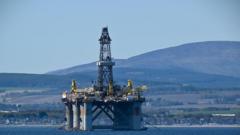
British Prime Minister Andy Burnham finds himself cornered by a geopolitical mismatch of his own making. When US President Donald Trump publicly declared that Downing Street was ready to throw open the valves on North Sea oil, he exposed a raw nerve in British energy policy. Burnham's subsequent defense of a "pragmatic approach" was meant to placate both Washington and domestic industrial lobbies. Instead, it triggered an immediate civil war within his own administration, illuminating the profound contradictions at the heart of the UK's transition away from fossil fuels.
The underlying tension is simple arithmetic. Britain requires reliable baseload power and tax revenues, yet political commitments point firmly toward green decarbonization. By uttering the word pragmatism, Burnham signaled a willingness to skirt the absolute boundaries of his party's 2024 election manifesto. That document explicitly barred the issuance of new exploration licenses. Yet offshore operators and trade unions have spent months arguing that refusing to develop existing or pending fields amounts to economic self-harm. You might also find this related coverage useful: Why Brazil is Refusing Trump's Choice for US Ambassador.
The White House Pressure Test
Diplomacy often thrives on ambiguity. Transatlantic phone calls between incoming British leaders and American presidents usually feature polite nods toward shared values and mutual security. Trump weaponized that diplomatic nicety. By asserting that Burnham agreed to unlock the basin, the White House forced Downing Street into an awkward corner.
Refuting the American interpretation outright risks alienating a vital trade ally at a volatile economic moment. Accepting Trump's version at face value invites open rebellion from environmental factions inside the parliamentary party. As reported in detailed reports by NBC News, the effects are worth noting.
Burnham chose a middle path that satisfied neither side.
"There is a resource there. When people are struggling, we can't ignore that," Burnham told reporters in Cumbria, defending his conversational pivot.
That statement strips away years of carefully crafted climate rhetoric. It frames energy extraction not as an ideological sin, but as a welfare measure for households crushed by high utility bills.
The Legal and Bureaucratic Trap
The practical reality of the North Sea goes far beyond political rhetoric. Two massive developments—the Rosebank oilfield west of Shetland and the Jackdaw gasfield east of Aberdeen—remain the immediate test cases for Burnham's administration. Legal challenges have bogged both projects down following court rulings that previous approvals failed to adequately account for downstream emissions.
Ministers now face a choice that defies easy resolution.
- Option A: Uphold the strict interpretation of the zero-expansion pledge, effectively killing multi-billion-pound projects and facing legal claims from energy majors.
- Option B: Permit tiebacks and approve pending developments under the guise of existing permits, risking accusations of bad faith from environmental watchdogs.
Energy security policy is colliding head-on with climate legislation. The previous administration engineered a heavy tax burden on domestic production, lifting the headline tax rate on oil and gas profits to seventy-eight percent. Companies responded by throttling investment capital. If Burnham wants extraction to rise to rescue ordinary citizens from economic strain, he must confront the fiscal architecture that made drilling economically unviable in the first place.
Fractured Alliances
The political fallout extends well beyond Westminster debating chambers. Green party leaders wasted no time condemning the prime minister's remarks, pointing to unseasonable droughts and heathland fires as evidence of an unfolding climate catastrophe. Conversely, industrial towns across the north of England view the defense of fossil fuels as a litmus test for whether Downing Street still cares about blue-collar livelihoods.
Ed Miliband’s transition to foreign secretary leaves a vacuum in domestic energy strategy, but his ideological footprint remains stamped across the Department for Energy Security and Net Zero. Any move by Burnham to circumvent manifesto constraints will invite coordinated pushback from ministers who view North Sea expansion as an irreversible moral hazard.
Pragmatism sounds like a sensible governing philosophy until it meets the hard edges of physical reality and uncompromising political factions. Burnham wanted to signal flexibility to the world stage. Instead, he has opened a debate his administration cannot easily close.



