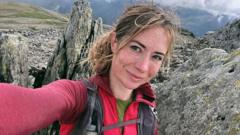
The obsession begins quietly, usually with a single rain-drenched map and an idle Saturday morning. Before long, a walker stands atop their 1,072nd summit, having completed what the British mountaineering community dryly refers to as the Full House. This monumental undertaking requires scaling every single Munro, Munro Top, Corbett, Graham, Donald, and Furth cataloged across Scotland, England, Wales, and Ireland. Most people struggle to climb a single flight of stairs after a sedentary week at a desk. These individuals spend decades walking thousands of miles across bog, scree, and frozen ridge to tick off lists compiled by eccentric Victorian and modern cartographers.
Yet, public fascination focuses almost exclusively on the final tally, ignoring the grueling physical toll and psychological obsession required to get there.
The Anatomy of an Obsession
The baseline metric for Scottish hillwalkers has traditionally been the Munro—any Scottish mountain over 3,000 feet. Rev. Sir Hugh Munro published his original table in 1891, accidentally spawning an entire subculture of peak-baggers. Completing the Munros is already a lifetime achievement for most. But for a select group of masochists, hitting all 282 Munros is merely an introductory exercise.
The Full House forces climbers to venture far beyond those famous Scottish giants. It includes:
- Corbetts: Scottish hills between 2,500 and 3,000 feet with at least 500 feet of drop.
- Grahams: Scottish hills between 2,000 and 2,500 feet.
- Donalds: Lowland hills in the Scottish Southern Uplands.
- Furths: Mountains over 3,000 feet located in England, Wales, and Ireland.
- Munro Tops: Every subsidiary peak associated with a Munro.
To understand the scale of this project, consider the topography. While Munros draw the crowds with their dramatic horn-like profiles, Corbetts and Grahams often lack established footpaths. Walkers must navigate trackless peat hags and dense heather under horizontal sleet.
The Cost of the Summit
Completing this registry is not an elite athletic feat supported by sports scientists and corporate sponsors. It is a blue-collar endurance test. The demographic of finishers skews heavily toward retired nurses, teachers, and ordinary folk who dedicate every weekend, annual leave day, and public holiday to the hills.
Joint destruction is standard. Knees bear the brunt of gravity on the descent, and chronic tendonitis becomes an old friend. Walkers routinely log days featuring twelve to nineteen hours of continuous movement across multiple remote peaks. Hypothermia, navigational errors in whiteout conditions, and dangerous river crossings are hazards managed quietly without emergency services involvement.
Financial costs add up too. Specialized waterproof shells wet out eventually, heavy-duty leather boots wear through their Vibram soles every two seasons, and petrol bills for driving to remote trailheads in the Northwest Highlands rival small mortgages.
Escaping Modern Monotony
Why chase stones? The standard psychological profile of a Full House finisher points away from simple vanity and toward a deep-seated need for autonomy. Modern existence is full of abstract metrics, digital notifications, and endless indoor confinement. Standing on a remote ridge where mobile phones fail offers a rare, tangible reality.
When a walker completes their final scheduled peak, the emotion is rarely triumphant celebration. It is often profound emptiness. The post-project blues hit hard because the rigid structure that governed their weekends for years has vanished. They are suddenly forced to look at a blank calendar.
Most do not stay retired for long. Some immediately start a second round, while others drift down the hierarchy into the metric landscape of Marilyns and Simms. The hills remain where they have always been, indifferent to the human ants crawling across their flanks, waiting for the next person foolish enough to count them all.
This video provides an interesting parallel look at home-based physical determination and unorthodox climbing challenges during lockdown periods.
http://googleusercontent.com/youtube_content/1