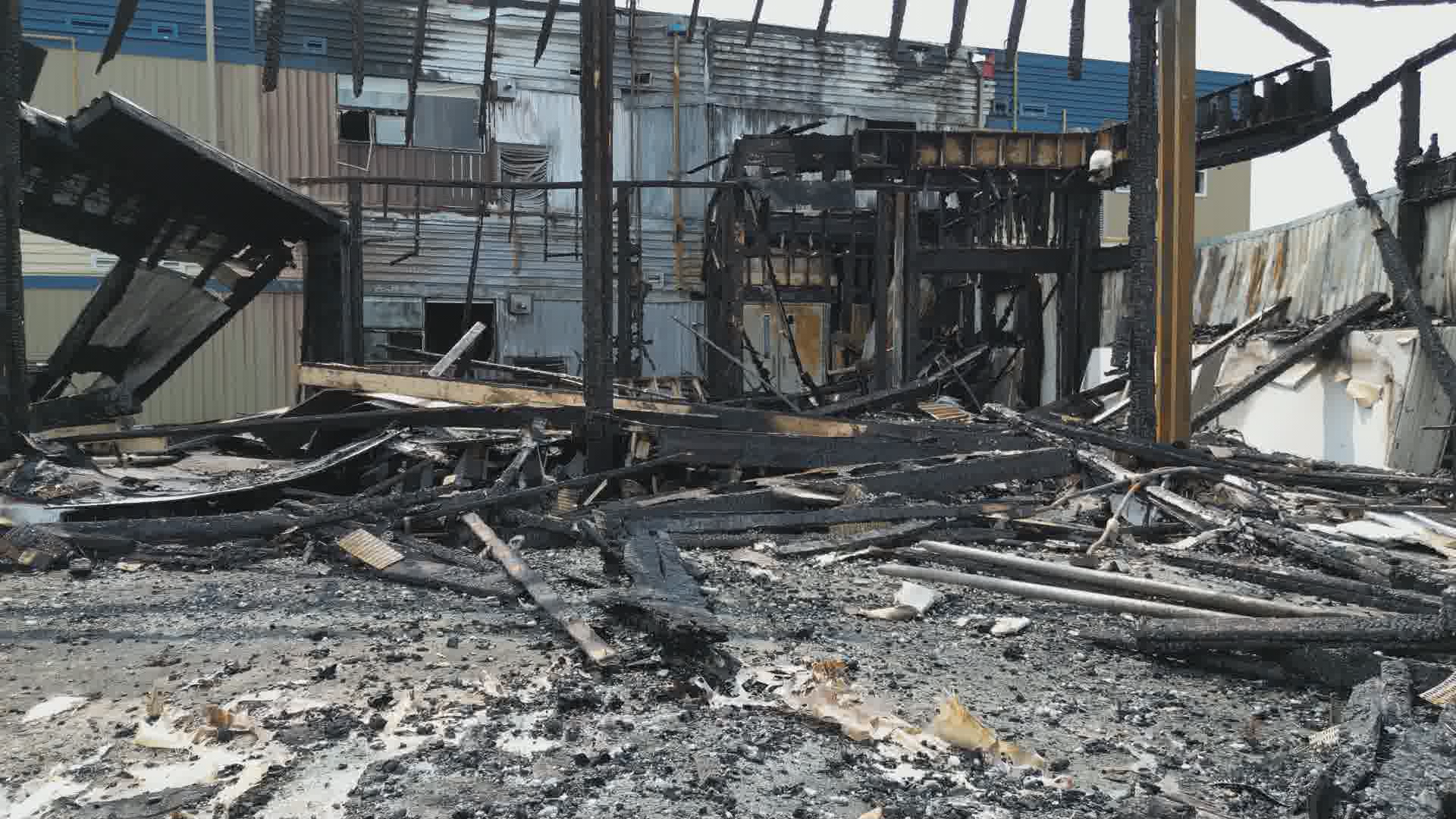
The flames did not just consume drywall and structural timber. They burned through a community's sense of security. When emergency responders rushed to the Saskatoon high school following reports of a suspicious fire, they stepped into a recurring nightmare for public administration officials. Arson in a scholastic institution is rarely just an act of property destruction. It is an assault on a shared civic anchor.
Police launched an immediate criminal investigation into the incident, treating the origin of the blaze as suspicious. Yet looking past the police tape reveals deeper vulnerabilities. Schools are built to be open, welcoming environments. That design philosophy makes them remarkably difficult to secure against targeted malicious intent.
The Anatomy of Institutional Vulnerability
Educational facilities present a unique challenge for public safety planners. Balancing accessibility with security requires a delicate calibration. During operational hours, hundreds of teenagers, staff, and visitors move freely through expansive corridors. After hours, those same buildings transform into sprawling footprints with dozens of entry points, aging infrastructure, and limited active surveillance.
Investigators looking into a suspicious high school fire immediately examine specific vectors.
- Access control logs
- Perimeter lighting functionality
- Blind spots in closed-circuit television coverage
- Storage protocols for combustible janitorial or maintenance supplies
A determined actor finds plenty of opportunity in a standard secondary school campus. Most facilities lack the biometric perimeter defenses common in high-security corporate offices. Budget constraints force school boards to prioritize classroom resources over hardened infrastructure.
When a fire breaks out under suspicious circumstances, it forces administrators to confront hard questions. How did someone gain unauthorized entry? Were automated fire suppression systems compromised or overwhelmed? Did aging electrical panels act as a catalyst, or was an accelerant introduced by human hands?
Beyond the Police Report
Local media outlets often stop reporting once the initial emergency clears and the police confirm an active investigation. That is where real investigative work begins. A crime scene investigation unit processes the physical evidence, testing ash samples for accelerants and reviewing digital access logs. However, the social ecosystem of a high school tells a parallel story.
Rumors spread quickly through digital channels among students long before official statements are released. Disgruntled students, external agitators, or individuals experiencing severe personal crises sometimes manifest their distress through destructive acts. Understanding the motive requires looking at the institutional climate leading up to the event. Were there recent tensions, budget cuts, or disciplinary crackdowns?
Arson investigations in public schools notoriously drag on for months. Forensic accounting of building damage must merge with digital forensics, tracking mobile phone location data and social media chatter. Investigators comb through hours of grainy exterior footage from neighboring residential properties when campus cameras fail or get disabled.
The Cost of Community Disruption
The immediate aftermath of a high school fire brings administrative chaos. Students face sudden displacement. Educational continuity shatters as classes shift to temporary online modules or auxiliary community spaces. Parents juggle sudden childcare challenges while worrying about the psychological toll on their adolescents.
The financial burden is equally staggering. Smoke damage permeates textbooks, athletic equipment, and delicate science lab apparatuses. Insurance claims take quarters to settle. Remediation requires specialized cleaning crews to scrub toxic soot from every surface before classrooms can safely reopen.
Taxpayers ultimately foot the bill for structural repairs and upgraded security architecture. Every dollar spent replacing charred lockers and burned drywall is a dollar pulled away from student enrichment programs, mental health counseling, and academic staffing.
Re-evaluating Modern Campus Safety
Traditional responses to school fires focus exclusively on reactive measures. Better sprinkler systems. Quicker response times from local fire departments. Stricter visitor check-in desks. These tools matter, but they address symptoms rather than the root vulnerability.
True reform demands a shift toward proactive risk assessment. School districts need dedicated threat-management teams that combine facilities management with behavioral health experts. When a student or community member exhibits severe volatility, catching the warning signs prevents physical disasters.
Architecture must also evolve. Future-proofing schools means designing with intrinsic safety in mind. Eliminating isolated alcoves, upgrading to intelligent lighting grids, and implementing multi-layered electronic access controls without turning campuses into literal fortresses remain the central challenge for modern educational architects.
The investigation into the Saskatoon high school fire will eventually yield an official report. Charges may be laid. Repairs will finish. The hallways will fill again with the noise of shuffling teenagers.
The deeper rot will remain untouched until public officials stop treating institutional arson as an isolated anomaly and start treating it as a symptom of a strained public infrastructure.