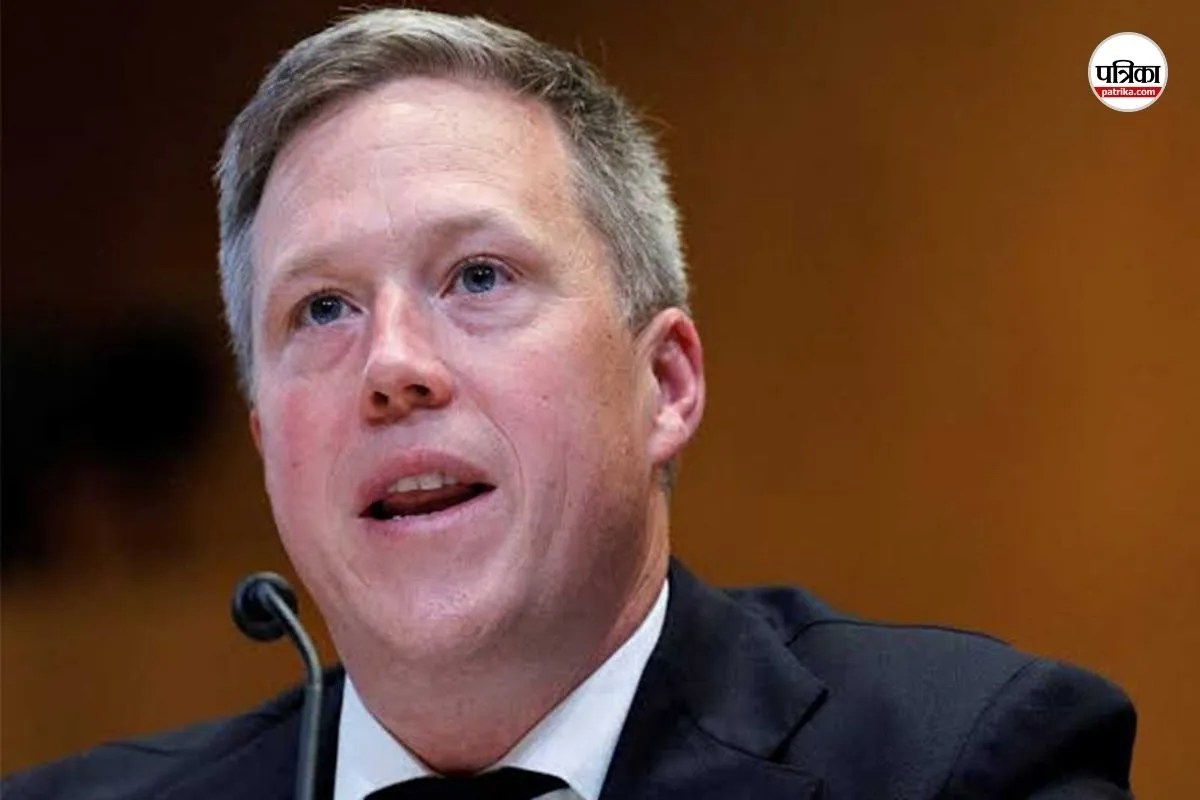
When United States Ambassador to India and Special Envoy for South and Central Asia Sergio Gor touched down in Bishkek alongside Montana Senator Steve Daines, the official line sounded like an eccentric diplomatic detour. They were supposedly there to cheer on American athletes at the World Nomad Games. But diplomatic credulity has its limits. The opening of traditional horse-riding and wrestling matches neatly coincided with the Shanghai Cooperation Organisation (SCO) summit, a gathering drawing Vladimir Putin, Xi Jinping, and Narendra Modi into the heart of the Kyrgyz capital.
Washington did not secure an invitation to the SCO table. It did not need one. By orchestrating a high-profile physical presence right outside the conference doors, Gor executed a classic diplomatic end-run. He turned Bishkek into a parallel stage, intercepting Central Asian leaders before, during, and after their engagements with the Russia-China axis. To understand why a sitting ambassador to New Delhi was suddenly working the room in Kyrgyzstan requires looking past the sporting cover story and examining Washington's raw panic over losing ground in High Asia. You might also find this related coverage useful: Inside the Vienna Museum Diamond Necklace Heist That Left Security Experts Stunned.
The Tashkent-Born Operative
Background matters in modern diplomacy, and Sergio Gor brings a specific toolkit to his dual portfolio. Born Sergey Gorokhovsky in Tashkent during the final years of the Soviet Union, Gor is culturally fluent and speaks the languages of the region. When the Trump administration handed him responsibility for South and Central Asia, it placed a Russophone loyalist close to the inner circle directly into a theater traditionally dominated by Moscow and Beijing.
This biographical detail is not trivial. Central Asian ministries are accustomed to dealing with Western envoys who require heavy translation and possess a textbook-only understanding of post-Soviet power structures. Gor operates differently. He navigates the local political grammar without an interpretive filter. That linguistic and cultural fluency allows him to press Washington's economic and security initiatives with a directness that professional career diplomats often struggle to execute. As discussed in recent articles by The Guardian, the results are notable.
His choice of travel companion in Bishkek further unmasked the mission. Senator Steve Daines is a key Republican voice on energy and natural resources who has long championed the dismantling of Cold War-era legislative hurdles—such as the legacy Jackson-Vanik restrictions—that still complicate trade with the former Soviet periphery. Daines and Gor did not fly halfway across the globe to watch archery on horseback. They flew there to talk supply chains, critical minerals, and alternative trade corridors that bypass Russian and Chinese customs checkpoints.
Breaking the Axis Monopoly
The urgency behind Gor's unscheduled arrival stems from a structural vulnerability in American foreign policy. The Trump administration views multilateral blocs like the SCO and BRICS with deep suspicion, recognizing them as incubators for alternative financial architectures designed to blunt the impact of Western sanctions. Yet, Washington faces a hard reality. It lacks an institutional seat inside the SCO and cannot fully trust any of its core member states to advocate for American interests.
Worse still from Washington's perspective, the Bishkek summit carried the risk of a sharp anti-Western consensus. With figures like Iran's Masoud Pezeshkian sitting at the table alongside Russian and Chinese leadership, the summit's joint declarations routinely target Western policies in the Middle East and Eurasia. Unlike BRICS, which includes balancing states like the United Arab Emirates capable of softening hostile rhetoric, the SCO lacks an internal counterweight willing to moderate Beijing and Moscow's anti-Washington messaging.
Because the United States cannot gatecrash the plenary sessions, it must work the margins. Central Asian republics—Kyrgyzstan, Kazakhstan, Uzbekistan, Tajikistan, and Turkmenistan—walk a precarious tightrope. They rely heavily on trade and security frameworks tied to Moscow and Beijing, but they actively resent being treated as junior provinces by their massive neighbors. They want foreign investment, technological modernization, and multiple trade outlets.
Gor's blitz of bilateral meetings targeted this exact anxiety. In rapid succession, he met with Kyrgyz President Sadyr Zhaparov, Tajik President Emomali Rahmon, and other regional powerbrokers. The pitch was pragmatic rather than ideological. Through the revived C5+1 diplomatic framework, Washington is dangling infrastructure investments, digital technology partnerships, and expanded economic connectivity. The message was clear. Alignment with the SCO does not have to mean economic isolation from the West.
The New Delhi Overlap
An overlooked angle in the Bishkek maneuver involves Gor's primary portfolio as Ambassador to India. Prime Minister Narendra Modi's presence at the SCO summit placed New Delhi in its familiar, uncomfortable posture of multi-alignment—sitting across the table from Vladimir Putin and Xi Jinping while simultaneously deepening defense and economic ties with Washington.
Having the US Ambassador to India operating in the same municipal airspace where Modi was navigating Russian and Chinese diplomacy creates an intriguing institutional friction. Critics in Washington often accuse the current administration of straining ties with New Delhi, while domestic Indian commentators frequently question the reliability of Western partnerships. Gor's presence in Central Asia bridges these two tracks. It demonstrates that America's regional ambitions in High Asia and India's continental diplomacy are running on increasingly overlapping tracks, whether officially coordinated or purely circumstantial.
India shares Washington's concerns regarding Chinese expansionism through the Belt and Road Initiative and the security vacuum left in Central Asia. By deploying an envoy who holds both the New Delhi embassy and the Central Asian regional brief, the White House is testing an integrated approach. It treats South and Central Asia not as separate diplomatic silos, but as a continuous geopolitical theater where influence in the Hindu Kush bleeds directly into the steppes of Kazakhstan and Kyrgyzstan.
The Limits of Parallel Diplomacy
Despite the tactical brilliance of showing up in Bishkek with a checkbook and a friendly smile, Washington faces steep structural headwinds. Central Asian capitals are landlocked between two nuclear-armed authoritarian giants that share a border with them. No amount of American charm or C5+1 summit promises can alter geography. Russian military presence through base agreements and economic dependency via migrant labor remittances remain heavy anchors. China's industrial scale and insatiable appetite for Central Asian natural gas, oil, and rare earth minerals dwarf anything the United States can offer on short notice.
Furthermore, Central Asian leaders are seasoned survivors of great power competition. They have watched Western powers pivot toward and away from the region for decades, usually driven by shifting security imperatives in Afghanistan or the Middle East rather than a permanent economic commitment. When Gor pitches digital infrastructure or mining cooperation, local leaders listen politely, pocket the diplomatic concessions, and immediately return to balancing between Moscow, Beijing, and Washington.
The Bishkek incursion succeeded in disrupting the narrative that Central Asia is a closed diplomatic shop where Western voices are permanently locked outside the perimeter. It proved that an agile delegation can use local events, cultural familiarity, and targeted economic carrots to break through the noise of a major adversary-led summit.
Yet, establishing a parallel microphone is only the first step. Whether Washington possesses the economic staying power to turn a sporting weekend ambush into lasting strategic leverage across the Eurasian landmass remains an entirely open question. For now, the dust of the Nomad Games has settled, but the diplomatic tremors in Bishkek will echo through every ministry from Tashkent to Ulaanbaatar.