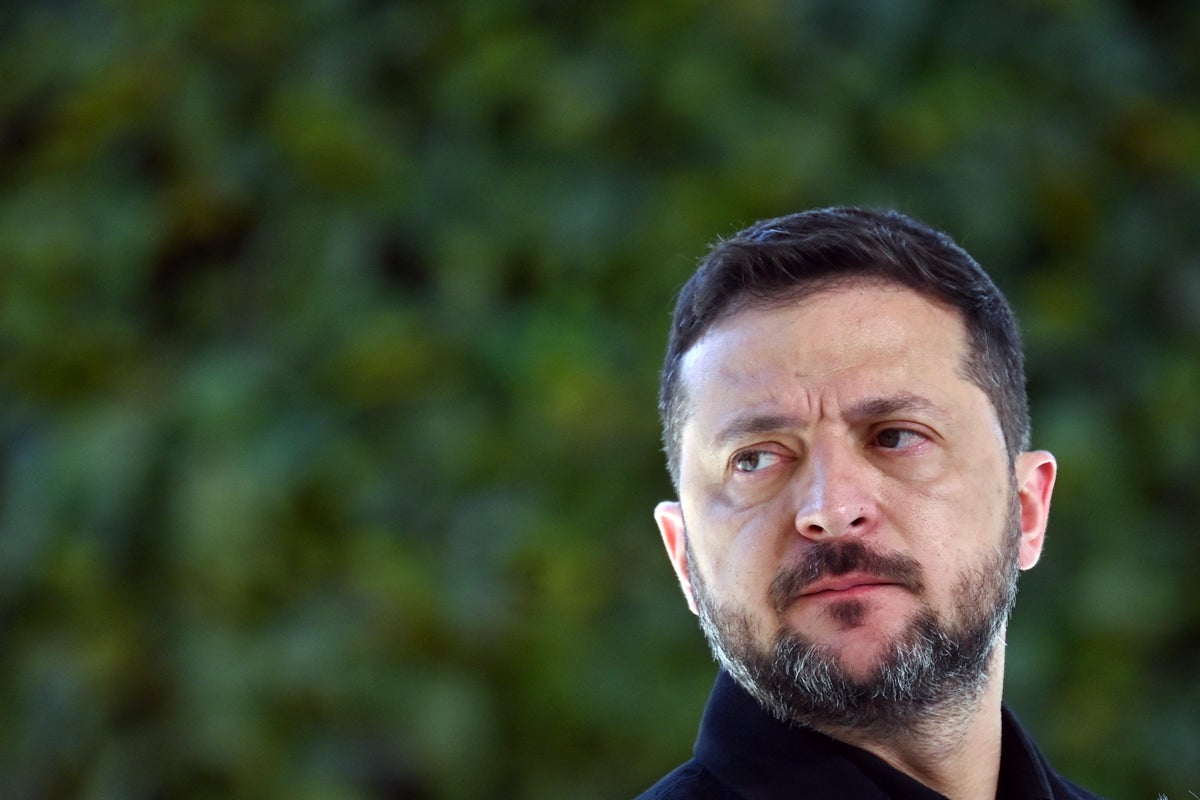
Ukrainian President Volodymyr Zelenskyy has formally declared Russian airspace completely unsafe for all international civil aviation. This unprecedented warning shatters any lingering illusion that commercial flight corridors adjacent to active conflict zones remain insulated from military escalation. Global carriers ignored the writing on the wall for years, treating airspace closures as localized inconveniences rather than systemic systemic threats. Commercial airliners are flying blind through geopolitical flashpoints. Insurance underwriters are panicking, and passengers are unknowingly serving as human shields in a high-stakes aerial standoff.
The psychological impact of another major civilian aircraft downing looms large over every flight path intersecting Eastern Europe. Memory runs long in aviation security circles. Malaysia Airlines Flight 17 did not vanish into a vacuum back in July 2014; it was blasted out of the sky over the Donbas region by a Buk surface-to-air missile operated by Russian proxies. That catastrophe should have permanently rewritten how the global aviation ecosystem manages airspace over contested territories. Instead, commercial pressures, slot availability, and fuel economics routinely override basic operational caution. You might also find this similar article useful: Why Moscow Winning the Skies is a Myth We Need to Drop.
Airlines want the shortest routes between Europe and Asia. Flying around Russian sovereign airspace adds hours to journey times and thousands of dollars in jet fuel expenses per flight. Corporate boards balance those extra costs against the statistical probability of a stray missile or electronic jamming interference destroying a wide-body aircraft mid-flight. For two years, carriers calculated that the risk was manageable. Zelenskyy's latest declaration strips away that convenient corporate fiction.
The Invisible War Zone in the Stratosphere
Modern anti-air warfare relies on advanced radar, thermal imaging, and electronic warfare suites that frequently malfunction, misidentify targets, or suffer from catastrophic human error under extreme pressure. When an air defense battery tracks a fast-moving radar return at thirty-five thousand feet, operators have seconds to decide whether that signature represents an incoming cruise missile, a surveillance drone, or an Airbus carrying three hundred vacationers. As highlighted in latest articles by BBC News, the implications are significant.
Electronic warfare units operating across the front lines broadcast intense GPS spoofing and radar jamming signals daily. These tactical jamming measures routinely bleed into civilian flight corridors. Pilots flying thousands of miles away from the active combat zone report ghost terrain warnings, compass failures, and complete degradation of navigation systems. When a cockpit loses its primary positioning data, crews are forced to rely on legacy analog backups while flying at Mach 0.85.
Air traffic management across Eastern Europe resembles a patchwork quilt of compromised jurisdictions. International civil aviation authorities issue warnings, but sovereign nations ultimately retain control over their designated flight information regions. Russia continues to permit domestic and select foreign carriers to traverse its airspace, aggressively marketing its routes as viable shortcuts. Yet, the ground-to-air threat environment below those routes features a dense concentration of mobile anti-air systems, ballistic missile batteries, and interceptor jets scrambling on hair-trigger alerts.
The Insurance Trap
No commercial airliner takes off without millions of dollars in hull and liability coverage. Following the escalation of hostilities, international reinsurance markets underwent a seismic shift. Underwriters scrambled to exclude war risk coverage for any flight path touching Russia, Ukraine, or Belarus.
Airlines operating near these zones either pay astronomical premiums or fly under self-insured corporate risk models that could face total insolvency if a catastrophic incident occurs. When a carrier loses a hull to hostile action, the financial fallout extends far beyond the immediate tragedy. Legal battles over liability can drag on for decades, pitting sovereign states against multinational flag carriers and leasing companies.
Insurance companies operate on cold, hard actuarial tables. Once a head of state formally declares an airspace completely unsafe, those risk calculations change overnight. Reinsurers can use official government warnings as legal justification to retroactively deny claims or spike premiums to prohibitive levels. Carriers refusing to heed Zelenskyy's warning risk finding themselves entirely uninsured for operational liabilities in the region.
The Dangerous Allure of Polar and Siberian Corridors
The economic pressure driving carriers back toward Russian airspace stems from brutal geography. Asian carriers connecting to European hubs gain a massive competitive advantage when they cut straight across Siberia. Western carriers, barred from Russian airspace by reciprocal sanctions, are forced to take circuitous southern routes over Central Asia, the Middle East, and the Caucasus.
This divergence creates a two-tiered global aviation market. Asian airlines enjoy shorter flight times, lower fuel burns, and cheaper ticket prices. European and North American carriers hemorrhage cash on extended routings, burning massive amounts of fossil fuel while trying to remain competitive against subsidized rivals.
Some operators have quietly tested the boundaries of acceptable risk, skimming the edges of prohibited flight information regions to shave minutes off their flight times. This behavior mirrors maritime behavior in the Red Sea, where commercial cargo ships weighed the risk of drone attacks against the immense financial cost of routing around the entire continent of Africa. Greed routinely triumphs over safety until disaster strikes.
Why Air Traffic Control Cannot Save You
Ground-based air traffic controllers are civilians caught in the crosshairs of geopolitical conflict. In many regions bordering the war, radar feeds are actively manipulated, intercepted, or jammed by military electronic warfare units. Controllers may not even possess accurate tracking data for aircraft traversing their sectors.
Communication between military command centers and civilian air traffic control is notoriously fragmented. Military commanders operate under strict operational secrecy, often failing to coordinate active missile tests or air defense sweeps with local aviation authorities. In this chaotic environment, civil aviation acts as an unintended participant in a deadly game of electronic hide-and-seek.
Pilots are trained to handle engine failures, severe weather, and hydraulic leaks. They are not equipped to negotiate with hostile military interceptors or identify rogue missile trajectories in low-visibility conditions. Relying on cockpit visibility and standard radio calls in a combat zone is a dangerous gamble that treats commercial passengers as collateral calculations.
The normalization of flying through active conflict zones represents a moral and operational failure of international aviation oversight. Organizations like the International Civil Aviation Organization possess advisory powers but lack the enforcement mechanisms required to ground carriers that prioritize profit margins over human lives. When leaders of nations directly involved in the fighting warn the world that the skies are hostile, ignoring that message is not a calculated risk. It is negligence.
Global aviation authorities must immediately transition from issuing weak advisories to enforcing mandatory global flight bans over any airspace impacted by active hostilities. Until the industry abandons its dangerous addiction to shortcut economics, the next civil aviation catastrophe remains an inevitability rather than a distant possibility. The warning has been issued. The skies above the eastern frontier are no longer a neutral highway, but a killing floor waiting for its next misidentified target.