The Persian Gulf is burning, and the global economy is slowly running out of oxygen. Iranian drones slammed into Kuwait and Bahrain early Wednesday, capping a punishing night of American aerial bombardment that shattered a fragile monthlong lull in hostilities. Behind the flashing warning lights of intercepted projectiles in Manama and the charred residential complex in Kuwait City lies a grim reality. This conflict is no longer a localized exchange of rockets and radar sites. It is a systematic strangulation of global supply lines centered on the Strait of Hormuz, where a fifth of the world's traded oil once moved freely in peacetime.
Washington insists that the maritime highway remains open. Reality on the water tells a starkly different story. Tanker traffic has slowed to a miserable trickle after weeks of steady escalation. Brent crude has surged past ninety-five dollars a barrel, climbing more than thirty percent since the shooting war began. Two Filipino sailors lost their lives earlier this week when a Saudi-flagged crude tanker came under fire and caught ablaze while attempting to thread the narrow channel. No faction claimed responsibility for that specific strike, but the message to international shipping is clear. Every captain steering through those waters is playing a high-stakes gamble with their life. Also making waves recently: The Long Road Home Between Two Rivers.
The United States Central Command maintains that its targets are strictly military. Air defense installations, radar nodes, and maritime infrastructure along the Iranian coastline absorb the brunt of American air power. Yet the human toll outside military perimeters continues to mount. Iranian state media reported that a U.S. strike devastated a home hosting a wedding celebration in Kuhestak, a small coastal town overlooking the strait. Local authorities confirmed multiple civilian fatalities, including children, alongside dozens wounded. Washington responds with standard military boilerplate, asserting that American forces never target noncombatants. Families burying their dead in southern Iran care little for tactical disclaimers.
The political architecture supporting this war is fracturing under the weight of its own contradictions. President Donald Trump's administration faces rising domestic pressure as the November midterms approach, with voters feeling the immediate sting at gas pumps and grocery stores. Treasury Secretary Scott Bessent spent his morning media rounds turning the screws on any foreign power still daring to conduct commerce with Tehran. The economic onslaught aims to sever every remaining external financial lifeline connecting Iran to the outside world. Total isolation, however, breeds total recklessness. When a regime has nothing left to export except chaos, it uses that chaos to exact a toll on its neighbors. Additional information into this topic are covered by USA Today.
Tehran’s retaliatory playbook relies on horizontal escalation. Unable to match the sheer tonnage of American air superiority, Iran’s Islamic Revolutionary Guard Corps redirects the vector of violence toward Washington's regional partners. Bahrain, host to the United States Navy's Fifth Fleet, intercepted incoming drones while accusing Tehran of blatant aggression against civilian infrastructure. Kuwait faced similar aerial incursions, culminating in a major structural fire inside its capital. In Iraq, explosive-laden drones targeted American positions near Erbil. In southern Lebanon, Hezbollah traded kinetic pleasantries with Israeli positions. Every sovereign state in the region is finding out that neutrality is an expensive luxury when superpowers collide.
Diplomatic off-ramps are being aggressively mapped out, mostly by intermediaries exhausted by the economic collateral damage. Top diplomats in Egypt and Qatar are frantically working the phones to resurrect a collapsed ceasefire framework. Pakistani leadership has stepped into the fray, holding direct talks with Iranian officials to break the military stalemate. Oman continues quiet, separate negotiations with Tehran to cobble together an independent mechanism for managing commercial vessel transit through the strait. Whether Washington will tolerate a localized maritime agreement brokered outside its direct control remains doubtful. The White House prefers unconditional submission over managed compromises.
Meanwhile, the economic shockwaves propagate outward, hitting nations far removed from the desert heat of the Gulf. Energy importers across Asia and Europe are absorbing punishing inflation prints. Manufacturing supply chains are buckling under soaring freight and insurance premiums. Governments that previously assumed they could sit on the sidelines of American Middle Eastern foreign policy are realizing that energy insecurity is an equal-opportunity destroyer.
The military calculus has calcified into a miserable war of attrition. Washington believes another wave of precision munitions will eventually force Tehran to capitulate at the bargaining table. Tehran calculates that by keeping the Strait of Hormuz hostage and lobbing asymmetric threats at regional capitals, it can inflict enough political and economic pain to crack the Western coalition. Neither side possesses the appetite for total capitulation, yet both are trapped inside an escalating spiral of retaliation.
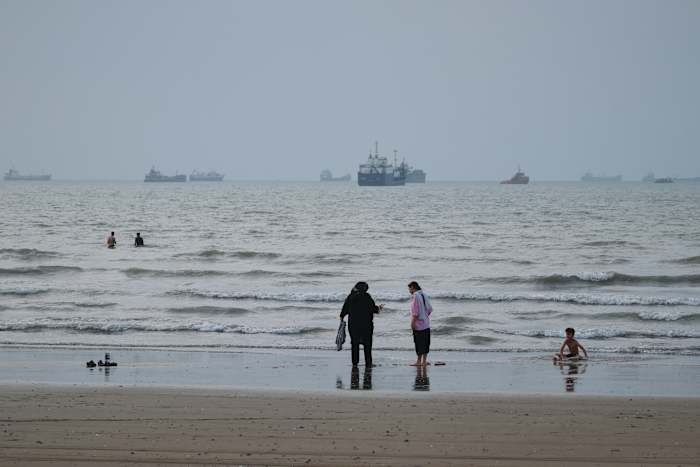
The water in the Strait of Hormuz remains dark, choppy, and largely empty of commercial tonnage. Every dawn brings the predictable cycle of intercepted drones, emergency statements from foreign ministries, and rising futures contracts on global energy exchanges. There is no neat policy conclusion or diplomatic silver lining waiting at the end of this trajectory. The region simply braces for the next launch window.