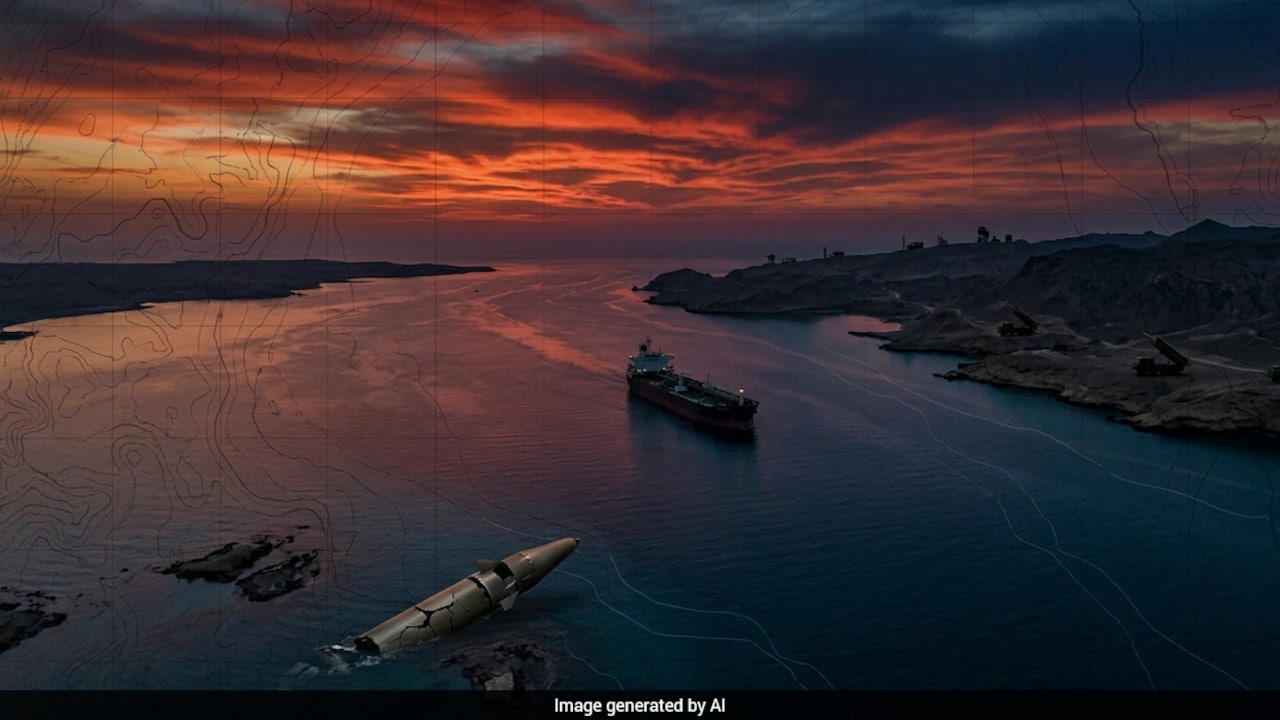
The Singapore-flagged container ship Ever Lovely was cutting through the Omani waters of the Strait of Hormuz when a low-flying projectile slammed into its starboard side, shattering the bridge structure. Within hours, the United Nations International Maritime Organization abruptly halted its delicate, days-old operation to evacuate thousands of stranded mariners from the Persian Gulf. The strike serves as a brutal reality check for global trade. While headlines celebrate a tentative ceasefire and dipping oil prices, this single drone strike exposes a critical flaw in international diplomacy. The United States and Iran are operating under two entirely different definitions of who controls the world's most vital energy chokepoint.
The incident occurred just 7.5 nautical miles southeast of Dahit, Oman. Though the vessel sustained notable damage, the master reported no casualties and no environmental leakage. The immediate fallout, however, is purely geopolitical. The attack occurred hours after the Islamic Revolutionary Guard Corps issued an explicit warning that any maritime transit outside Tehran-approved corridors was completely prohibited.
What the superficial news briefs missed is that the Ever Lovely was not a random casualty of war. It was a target of opportunity in a legal and technical turf war over international shipping rights.
The Illusion of the Sixty Day Truce
The White House recently lauded a memorandum of understanding establishing a 60-day ceasefire extension. The agreement was designed to buy time for complex negotiations, aiming to untangle a conflict that escalated dramatically following coordinated American and Israeli strikes inside Iran on February 28. Part of that diplomatic package involved reopening the strait, which normally handles roughly 20 percent of global petroleum.
The market reacted with typical short-term optimism. Brent crude briefly dipped to its pre-war floor of nearly 72 dollars per barrel. Shipping data firms reported a massive surge in traffic, noting that 125 vessels crossed the chokepoint last week compared to just 33 the week prior. Commercial operators, eager to chase the backlog of trapped cargo, assumed the risk had evaporated.
They miscalculated. The diplomatic architecture of this ceasefire contains a fatal structural error. The United States and its regional allies are operating under standard international maritime law, which guarantees the right of transit passage through international straits. Iran, conversely, is treating the waterway as its personal toll road and sovereign security zone.
The Secret Battle Over Transit Corridors
The International Maritime Organization, alongside the Sultanate of Oman, meticulously mapped out two distinct evacuation corridors to free more than 11,000 stranded seafarers. One path hugs the northern Iranian coast, while the other runs south through Omani waters. The Ever Lovely was tracking along the southern corridor when it was hit.
By striking a ship outside the northern route, the Revolutionary Guard sent an unmistakable physical message to Washington. The newly established Persian Gulf Strait Authority, a bureaucratic entity whipped up by Tehran specifically to manage the shutdown, announced that any vessel traveling outside its designated lanes would be denied safe passage guarantees.
This is a structural shakeup of maritime norms. Historically, the central corridor of the strait allowed unhindered passage. However, after mining those central shipping lanes following the February strikes, Iran successfully funneled traffic into narrow coastal channels. The strategy is clear. By restricting safe passage to lanes that fall directly under its coastal missile batteries, Tehran has effectively ended the era of open navigation in the gulf.
The Toll Road Precedent
The conflict is no longer just about military deterrence. It has shifted into an economic extortion scheme. Behind closed doors, Iranian negotiators are floating the concept of permanent transit fees and maritime service charges for any commercial vessel entering the Persian Gulf.
The United States has flatly rejected the proposal. Secretary of State Marco Rubio, speaking during a tour of the region to reassure Gulf Cooperation Council allies, stated explicitly that Washington would not tolerate tolls or arbitrary restrictions. The administration expects the waterway to remain open unconditionally.
Yet, the economics of modern shipping mean that Iran does not need to sink ships to win this dispute. It only needs to raise the cost of doing business. Every projectile strike spikes war-risk insurance premiums. If a state actor can unilaterally dictate which corridors are insurable, they control the global supply chain without firing a fleet action.
The International Maritime Organization's decision to freeze the evacuation plan proves that the shipping industry values predictability over diplomatic reassurances. Opportunistic operators may be willing to gamble when oil prices fluctuate, but mainstream logistics giants will lock down their fleets the moment a U.N. safety guarantee is revoked.
The administration’s strategy relies heavily on the assumption that economic pressure will force Tehran to abide by the interim agreement. But for a regime that has spent decades refining the art of asymmetric gray-zone warfare, a fragile 60-day window is not a bridge to peace. It is an opportunity to rewrite the rules of international navigation by force, one low-cost drone strike at a time.