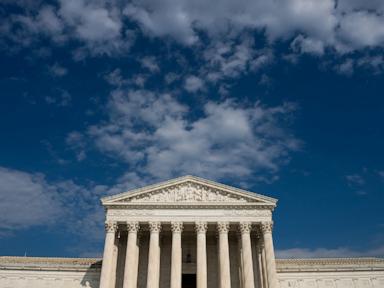
New Jersey authorities have formally petitioned the U.S. Supreme Court to decide whether prediction markets can offer sports wagers nationwide without complying with state gambling regulations. This high-stakes legal maneuver targets platforms like Kalshi, which operate under federal oversight as designated contract markets. At the core of the dispute is a fundamental constitutional question: Did Congress accidentally federalize the American sports betting industry when it passed financial reforms over a decade ago?
For years, the boundaries governing digital wagers seemed settled. States held absolute authority over local gaming operations, a principle reinforced when the Supreme Court struck down a federal sports betting ban in 2018. Then came the modern prediction market. Platforms began offering event contracts tied to athletic outcomes, framing these trades as federally regulated financial derivatives rather than traditional wagers. State regulators watched in alarm as multi-million-dollar betting pools bypassed local age limits, geolocation tracking, and consumer protection fees. For a more detailed analysis into similar topics, we suggest: this related article.
The collision between state sovereignty and federal market oversight has now shattered the federal judiciary, creating an untenable split that practically demands intervention from the nation's highest court.
The Anatomy of a Loophole
To understand how prediction markets built an end-run around state gaming boards, one must examine the fine print of the Dodd-Frank Wall Street Reform and Consumer Protection Act. Passed in the wake of the 2008 financial crisis, the law overhauled derivatives regulation, placing financial swaps under the watchful eye of the Commodity Futures Trading Commission. For additional context on the matter, comprehensive coverage can be read on Reuters.
Kalshi and similar operators seized upon this statutory machinery. By structuring sports-related outcomes as binary event contracts or financial swaps, they argued that federal oversight preempts state gaming laws entirely. Under this interpretation, a wager on whether a local NFL team wins its Sunday matchup is legally indistinguishable from a corporate hedge on interest rates.
State attorneys general view this argument as a legal fiction engineered to evade tax codes and consumer protection mandates. New Jersey Attorney General Jennifer Davenport noted that platforms market themselves aggressively across state lines, allowing users to bypass bans on collegiate sports betting and underage wagering. When a platform permits a teenager to trade financial contracts based on a college basketball tournament, state regulators see an illegal bookmaker operating without a license. When the platform points to its federal registration, federal commodities regulators under successive administrations have often nodded along, creating a jurisdictional tug-of-war.
Fractured Jurisprudence in the Federal Circuits
The legal friction reached a boiling point when federal appeals courts issued directly contradictory rulings.
In April, the Philadelphia-based Third Circuit Court of Appeals ruled in favor of Kalshi, concluding by a 2-1 margin that federal commodities law preempted New Jersey's attempts to enforce its gaming statutes. The majority treated the sports contracts as legitimate financial swaps shielded by federal authority. For a brief moment, prediction market operators celebrated a judicial green light to expand their footprint.
That celebration proved short-lived. Just months later, the Ninth Circuit Court of Appeals reached the exact opposite conclusion when evaluating Nevada's regulatory enforcement against the same company. The Ninth Circuit panel forcefully rejected the notion that Congress intended to dismantle decades of state and tribal gambling frameworks through a sweeping financial reform bill. Judge Ryan Nelson wrote that sports bets do not morph into exempt financial derivatives simply because an exchange lists them as event contracts.
When two federal appellate courts arrive at diametrically opposed interpretations of the same federal statute, the system breaks down. Operators face a fragmented map where a contract legal in Philadelphia becomes a felony violation in Reno.
The Stakes for State Sovereignty and Market Integrity
If the Supreme Court declines to hear the case, or ultimately rules for the prediction exchanges, the consequences for the domestic gambling ecosystem will be profound. Traditional sportsbooks pay heavy state licensing fees, submit to rigorous independent audits, and dedicate millions of dollars to problem-gambling intervention programs. Federally registered prediction markets face none of those specific state burdens, creating an uneven playing field where regulatory arbitrage wins out over consumer safety.
Conversely, a definitive ruling in favor of New Jersey could clip the wings of the prediction market sector, forcing digital platforms to either secure fifty distinct state gaming licenses or abandon sports-adjacent event contracts altogether. Tribal gaming operators, who hold exclusive compacts worth billions of dollars, watch the litigation with equal anxiety, knowing that unfettered national event contracts threaten their localized monopolies.
The justices must now decide whether a financial regulatory agency designed to oversee agricultural futures and corporate swaps was ever meant to serve as the nation's de facto gambling commission. Until they issue a writ of certiorari and hear oral arguments, the modern wagering economy remains trapped in a legal no-man's-land where federal law and state power stare each other down across a widening chasm.