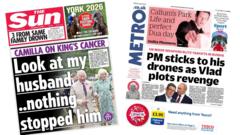
Tabloid headlines rarely arrive by accident. When front pages blare competing emotional hooks like personal marital turmoil alongside geopolitical threats of retaliation, they are engineering a specific public mood. The juxtaposition of domestic betrayal and foreign statecraft is a classic editorial sleight of hand. It is designed to keep an anxious populace tethered to the newsstand, consuming a steady diet of high drama that conflates personal soap operas with state-level friction.
Understanding how these narratives are constructed requires looking past the bold typography and examining the machinery of modern media curation. Editors do not merely report events. They sculpt a daily emotional environment.
The Anatomy of a Dual Headline
The juxtaposition of intimate scandal and geopolitical posturing is an old trick. On any given morning, newspaper editors face the daunting task of selling broadsheets in a digital ecosystem that bleeds subscribers by the hour.
To combat this attrition, they rely on a dual-engine format. Engine one is the domestic shock. It relies on universal human vulnerabilities like infidelity, divorce, and public humiliation. Engine two is the external threat. It invokes distant leaders, military escalations, and shadowy conspiracies.
When a front page pairs a desperate personal plea of marital betrayal with a narrative about a foreign adversary plotting retaliation, it captures the entire spectrum of human anxiety. You are meant to feel vulnerable in your own home and unsafe in the wider world simultaneously.
Manufacturing the Daily Panic
Look closer at the mechanics of these splash pages. The language is intentionally ambiguous. Phrases like "plots revenge" carry just enough cinematic flair to evoke spy thrillers while remaining detached from verifiable intelligence updates.
This is not journalism in the traditional sense. It is atmospheric storytelling. It operates on the same frequency as serialized television dramas or pulp fiction novels, blurring the boundary between verified public interest and manufactured spectacle.
[Raw Intelligence/Event] ---> [Tabloid Translation Layer] ---> [Maximized Emotional Output]
When complex geopolitical maneuvers or high-profile cultural touchstones are flattened into two-word emotional triggers, nuance dies. The public is left reacting to ghosts in the machine.
The Cultural Appetite for Retribution Narratives
Why do these themes dominate public consciousness? Whether the focus is a fictional academic obsession or real-world diplomatic chest-beating, the underlying currency is always retribution.
We live in an era characterized by a profound sense of institutional powerlessness. Ordinary people feel squeezed by economic stagnation, corporate consolidation, and bureaucratic inertia. In response, cultural and media products lean heavily into fantasies of payback.
- The wronged spouse demanding reckoning.
- The sidelined leader plotting a dramatic geopolitical comeback.
- The institutional outsider tearing down the system from within.
These archetypes resonate because they offer a clean, satisfying narrative arc where slights are addressed and power is reclaimed. Real life rarely offers such neat resolutions. Diplomacy is grinding, grindingly slow, and domestic estrangement is rarely solved with a witty parting line.
The Fiction Versus Reality Gap
The danger arises when the media ecosystem treats real-world geopolitics with the same narrative rules as a streaming drama. When state leaders are caricatured as comic-book villains plotting vengeance, diplomatic off-ramps disappear.
Consider how coverage of foreign adversaries has shifted over the decades. Nuanced regional analysis has been largely replaced by personalized psychodramas centered on individual heads of state. It is easier to sell a conflict as a personal feud between specific actors than to explain trade deficits, security guarantees, or historical territorial disputes.
Breaking the Cycle of Manufactured Outrage
Recognizing these patterns is the first step toward inoculation. When a headline demands an immediate, visceral emotional reaction, pause. Ask what the paper is trying to make you feel, and more importantly, what other stories might be buried on page four while the front page screams about revenge and betrayal.
The media diet we consume shapes our collective political courage. If we subsist entirely on sensationalized marital breakdowns and exaggerated foreign threats, our public discourse will mirror that insecurity.
True clarity requires looking past the bold ink. It requires demanding facts over theater, and context over caricatures.
The next time a front page attempts to hold your attention hostage with breathless claims of plots and personal confessions, remember that the real story is usually the desperation of the people trying to sell it to you.
My Husband Put Down The Divorce Papers With A Smile And Said Accept My Mistress Or... Violet Revenge
This video explores themes of marital betrayal and personal boundaries that parallel the domestic drama frequently spotlighted in tabloid headlines.
http://googleusercontent.com/youtube_content/1


