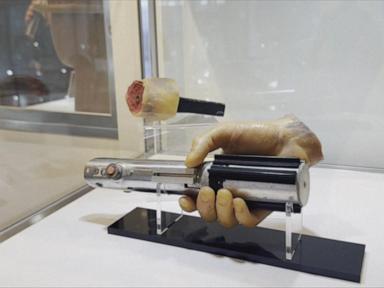
A million dollars for a hollow plastic head with a few lightbulbs inside.
That is what an eager collector just paid at a high-profile auction for a screen-used C-3PO head from The Empire Strikes Back. The trade trades call it "Hollywood history hitting the block." They frame it as a magical convergence of cultural preservation and elite asset investment.
It is neither. It is a manufactured bubble fueled by midlife crisis nostalgia, aggressive auction house hype, and an astonishing ignorance of basic chemistry.
If you are buying movie props as a financial investment, you are the mark in a very expensive game of musical chairs. The entire market relies on a collective delusion that items built to survive a two-week film shoot will somehow retain value over a multi-decade investment horizon.
They won't. Here is the reality behind the glitz of the auction paddle.
The Illusion of Fabricated Scarcity
The foundational pitch of the movie memorabilia market rests on scarcity. Auction houses scream about "one-of-a-kind" treasures. But anyone who has ever spent ten minutes on a commercial studio backlot knows how movies are actually made.
There is almost never just one prop.
There is the "hero" prop for close-ups. There is the stunt prop for action sequences. There are the half-dozen backup duplicates built because the lead actor keeps dropping the original. There are the background versions for the extras.
When a studio clears out its archives, or a production company wraps a show, dozens of identical or nearly identical items flood into private hands via crew gifts, quiet theft, or bulk studio liquidation sales.
Consider the "screen-matched" phenomenon. Bidders drop an extra 40% on an item because a specific scratch or paint smudge matches a single frame of high-definition film. It makes the collector feel like they possess the definitive piece of cinema history.
In reality, you have bought an asset whose value depends entirely on a subjective verification process that can be shattered tomorrow. Imagine a scenario where a retired prop master opens a dusty trunk in his garage and unearths three more "hero" variants of the exact same weapon, all in better condition. Your hyper-expensive, screen-matched investment instantly loses half its value because the scarcity was an artificial construct of incomplete data.
The Rotting Asset: A Chemical Nightmare
When you buy a classic oil painting, you are purchasing canvas and pigments that have proven they can survive for centuries under modest preservation conditions. When you buy a modern movie prop, you are buying a ticking chemical time bomb.
Hollywood props are built for speed and appearance, not durability. They are made of cheap, volatile materials:
- Polyurethane foam
- Latex rubber
- Industrial adhesives
- Vacuum-formed plastics
- Bondo
These materials are highly unstable. Polyurethane foam undergoes hydrolytic degradation—it literally absorbs moisture from the air and crumbles into yellow dust. Latex loses its plasticizers, becomes brittle, and cracks if a light breeze hits it.
I have watched collectors pull six-figure horror movie masks and creature suits out of custom climate-controlled crates only to find they have deformed into melted puddles of toxic goo. The cost of conserving these items is astronomical. You cannot just hang a screen-used Terminator jacket or a Jaws production artifact on the wall and watch it appreciate. You have to actively fight a losing battle against organic chemistry.
If your asset requires a master's degree in polymer science just to keep it from dissolving before you can flip it, you are not an investor. You are a glorified hazardous waste custodian.
The Liquidity Trap and Hidden Costs
The headline numbers look spectacular. An auction house proudly announces a $6.5 million weekend haul, boasting about six-figure sales for a worn leather jacket or a prop firearm.
What they do not emphasize in the press releases is the brutal friction of the transaction.
The buyer’s premium alone is a massive tax on your immediate equity. Most major auction houses charge between 20% and 26% on top of the hammer price. If you bid $100,000 on a prop, you are actually paying $125,000. The moment the gavel falls, you are down 25% on your investment. To break even when you eventually sell, the market value of that item has to jump by at least 50% just to cover the entry and exit fees charged by the middleman.
Furthermore, this market is incredibly illiquid. You cannot log onto a brokerage account and liquidate a screen-used Gladiator helmet at market price within seconds. You are at the mercy of the next scheduled specialized auction cycle, which might be six months away. If the broader economy takes a downturn, the pool of eccentric billionaires looking for oversized mechanical movie props completely evaporates.
The Nostalgia Expiration Date
Every collectible asset class relies on a generational wealth transfer. The things that command premium prices are the things that rich 50-year-olds watched when they were ten years old.
Right now, the market is propped up by Gen X and older Millennials who grew up on the original Star Wars trilogy, Indiana Jones, and 1980s blockbusters. They have reached peak earning potential, and they are spending their disposable income to reclaim pieces of their childhood.
But look at the generation behind them. Zoomers and Gen Alpha do not share the same relationship with physical cinema media. They grew up in an era dominated by digital green screens, streaming platforms, and fractured monoculture. A piece of green-screen fabric used in a modern superhero movie holds zero romantic or historical value.
As the current generation of nostalgic collectors ages out of the market, who is going to buy your million-dollar vintage spaceship miniature? The demographic cliff for movie memorabilia is real, steep, and rapidly approaching.
Where the Real Value Lives
If you genuinely love cinema and want to allocate capital to the space without being fleeced, stop chasing the physical artifacts of production. The smart money avoids the foam and plastic.
Focus instead on original, signed production art, hand-drawn animation cells from historic studios, or high-grade vintage film posters from the pre-1970s era. These assets are flat, easier to store, structurally stable, and possess a cross-generational aesthetic appeal that extends far beyond a niche fandom.
Stop treating the leftovers of a chaotic movie set like fine art. A prop is a tool used by an actor to tell a story. Once the camera stops rolling, its primary job is finished. Leaving it to rot in a private acrylic display case while convincing yourself it is a blue-chip financial asset is the ultimate Hollywood illusion.