Ahmed sits on a velvet sofa that smells faintly of cardamom and old dust. Outside his window, the rhythmic thrum of Brooklyn continues—the screech of the G train, the shouting of delivery drivers, the mundane sounds of a life built over a decade. But inside, the air is heavy. Ahmed is staring at a small plastic card. It is his work permit, his proof of existence, his Temporary Protected Status (TPS). For years, this sliver of plastic has been the only thing standing between his quiet life as a pharmacist and the screaming chaos of a homeland he barely recognizes anymore.
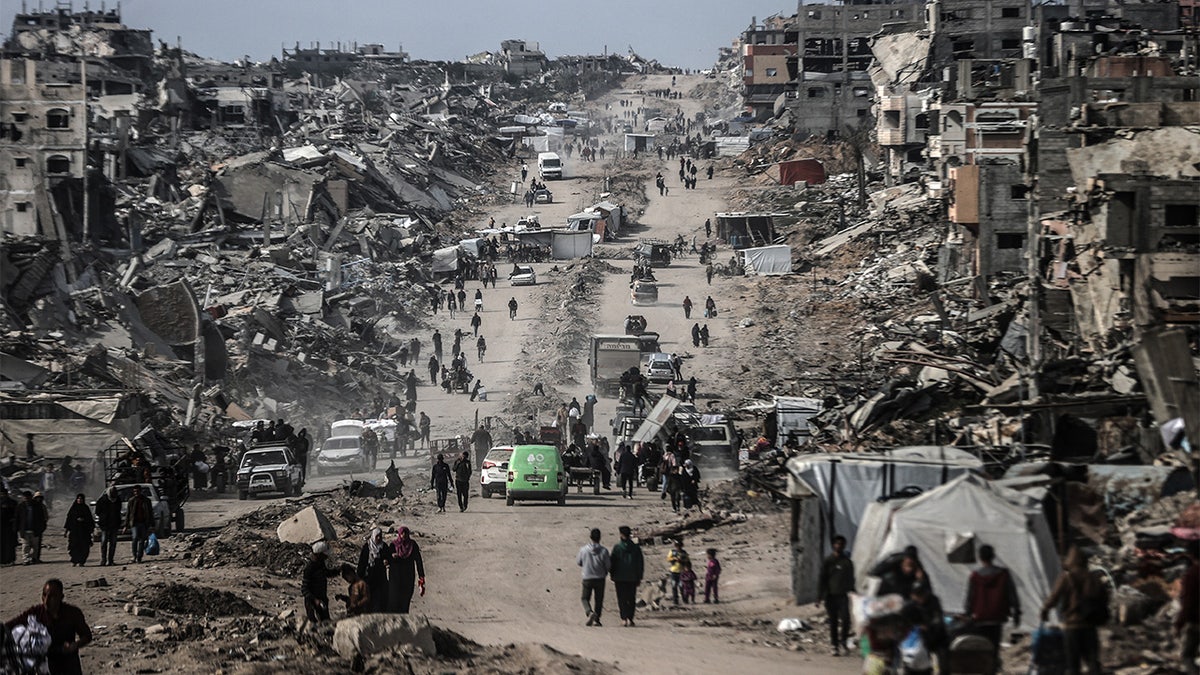
To the bureaucrats in Washington, Ahmed is a data point. He is part of a "nationals" category. To the Trump administration, he and thousands of other Yemenis were a policy problem to be solved by subtraction. They looked at the map of Yemen—a country fractured by proxy wars, famine, and a cholera outbreak that reads like a biblical plague—and decided it was time for people like Ahmed to go back.
Then came the gavel.
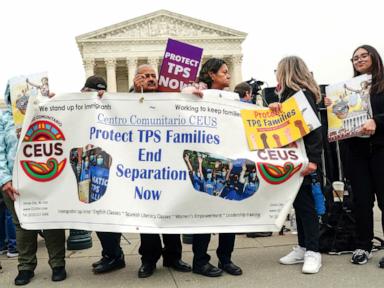
A federal judge stepped into the fray, halting the administration’s attempt to strip away this protection. It wasn't just a legal maneuver. It was a lifeline thrown to people who were already treading water in the middle of an ocean.
The Weight of a Signature
Imagine the sheer logistical terror of being told your life has an expiration date.
TPS was designed for exactly this kind of nightmare. It is a humanitarian tool used when a country is so decimated by war or environmental disaster that it cannot safely accept its own people back. Yemen, by every objective metric, is the definition of such a place. Yet, the push to end these protections suggested a different reality, one where the political desire for "border integrity" outweighed the physical reality of a city under siege.
The administration argued that the conditions justifying the original designation had sufficiently changed. This is the legal equivalent of looking at a house that is still actively on fire and claiming the situation has "stabilized" because the porch hasn't collapsed yet.
The court disagreed.
District Judge Edward Chen’s ruling was a blunt instrument. He pointed to evidence that the decision to terminate TPS for Yemen (and several other countries) may have been influenced by a predetermined political agenda rather than a cold, hard look at the facts on the ground. There were internal memos. There were warnings from career diplomats that were ignored. The court saw a pattern of behavior that prioritized a campaign promise over the lived reality of human beings.
The Ghost of Sana’a
To understand why this court case matters, you have to look past the legal briefs and into the streets of Sana’a.
When we talk about "returning" Yemeni nationals, we are talking about sending people into a landscape where the infrastructure has been pulverized. Power grids are memories. Clean water is a luxury. The sky is often filled with the drone of aircraft that do not bring aid.
Consider a hypothetical woman named Samira. She has lived in Detroit for six years under TPS. She pays taxes. She works as a lab technician. She has a daughter who speaks English with a Midwestern lilt and thinks "home" is a cul-de-sac near a park. If Samira’s TPS is revoked, she isn't just "moving." She is being forced to choose between the illegality of staying or the lethality of leaving. She would be taking a child who knows only safety and dropping her into a conflict zone where the primary currency is survival.
The administration’s logic rested on the idea that TPS was always meant to be temporary. That much is true. It is in the name. But "temporary" is a relative term when a war lasts a generation.
The legal battle highlighted a fundamental disconnect in how we view the law. Is the law a set of rigid rails that must be followed regardless of the human wreckage left behind? Or is it a framework meant to protect the vulnerable from the arbitrary whims of those in power? For now, the court has leaned toward the latter.
The Mechanics of Uncertainty
The ruling didn't grant Ahmed or Samira permanent residency. It didn't give them a path to citizenship. It simply hit the pause button.
This is the cruelty of the limbo.
Every six to eighteen months, TPS recipients must re-register. They must hand over their biometrics. They must pay fees. They must prove, yet again, that they are "good" enough to stay. It is a life lived in increments. You don't buy a house if you might be gone in a year. You don't always start the business you dreamed of. You wait. You watch the news. You refresh the USCIS website until the letters blur.
The judge’s block on the administration’s order provided a temporary reprieve, but it also exposed the fragility of the entire system. When a single signature in an oval office can uproot tens of thousands of lives, the "protection" offered by the status feels less like a shield and more like a lease that can be canceled without notice.
The administration’s lawyers argued that the President has broad authority over immigration and national security. They aren't wrong. Executive power is a massive, heavy thing. But the court reminded the world that even the broadest power has borders. You cannot make a decision that ignores the evidence of your own State Department experts just because it fits a narrative. You cannot use "national security" as a carpet under which you sweep human rights obligations.
The Cost of Silence
There is a quiet cost to these legal battles that rarely makes it into the headlines. It is the cost of anxiety.
When the news first broke that the administration wanted to end TPS for Yemen, the community didn't erupt in protests immediately. It retreated into a panicked silence. People stopped driving for fear of a broken taillight leading to a deportation hearing. They pulled their children out of extracurricular activities. They started hoarding cash in shoeboxes, preparing for a flight they hoped would never come.
This is what "ending" a program looks like in real time. It isn't just a policy change; it’s the systematic dismantling of a person’s peace of mind.
The court’s intervention was a rejection of that manufactured fear. By blocking the termination, the judge forced the government to justify its actions with more than just rhetoric. It demanded a standard of proof that the administration simply couldn't—or wouldn't—provide. It was a victory for the idea that facts still have a place in the hallowed halls of justice, even when they are inconvenient to the political goals of the day.
A Card on the Table
Back in the living room in Brooklyn, Ahmed puts his work permit back in his wallet. He knows this isn't the end. There will be appeals. There will be more hearings. There will be more headlines using words like "injunction" and "remand" and "statutory authority."
But for tonight, he can go to work tomorrow. He can fill prescriptions for the elderly neighbors who don't care about his immigration status, only that he remembers which pills they need. He can contribute to the economy of a city that has become his heart.
The invisible border remains, but for a moment, the gate is held open by a few sheets of paper signed by a judge who looked at the maps, read the reports, and decided that the fire in Yemen was still burning too hot to send anyone back into the flames.
The plastic card stays in the wallet. The G train continues its screeching journey. Life, in all its fragile, temporary glory, goes on.